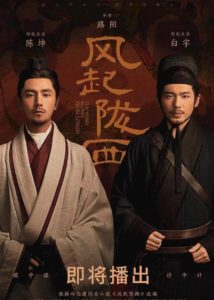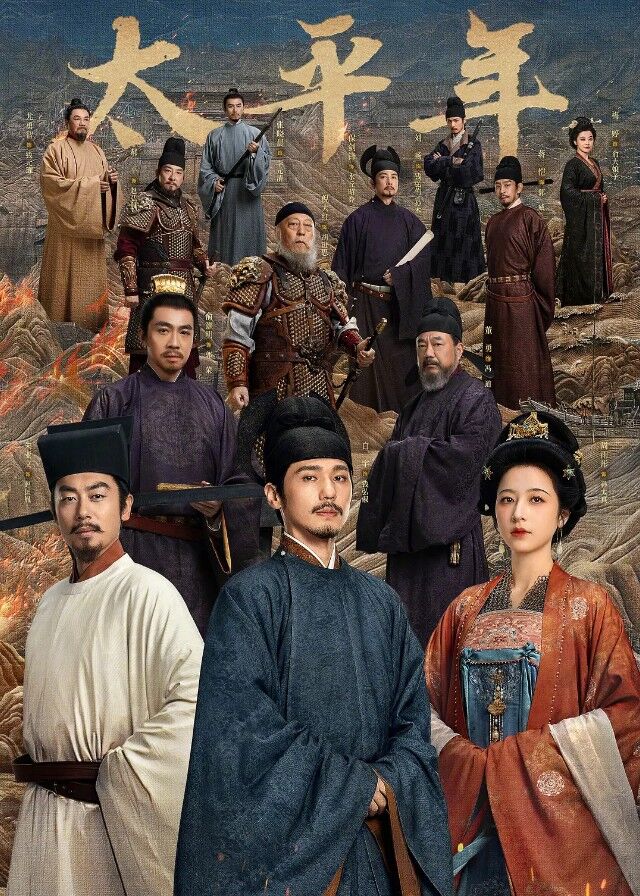



Swords into Plowshares Episode 46 Recap
> Swords into Plowshares Recaps
Guo Yue accompanied Ding Deyu, drinking in the room. After a few cups of strong wine, Ding Deyu, emboldened by drunkenness, gradually became wild, proclaiming that Zhao Kuangyin's subjugation of the southern states was an inevitable trend, and Wuyue would ultimately not be spared. He boasted about his past achievements, stating that his current banishment was merely a temporary expedient, and that Zhao Kuangyin would eventually recall him to the capital when he remembered old times.
Soon, Guo Yue, unable to hold his liquor, collapsed onto the table, drunk. Li Yuanqing, like a phantom, pushed the door open, and with a flash of a sword, Ding Deyu perished instantly. Not long after, Qian Hongchu received an imperial edict to enter the capital for an audience.
His ministers, led by Shen Yin, debated endlessly, with two core concerns: firstly, they worried that Qian Hongchu's journey would be like that of Li Yu, the Last Emperor of Southern Tang, who went to Bian and never returned; secondly, they feared that refusing the edict would provide a pretext for Zhao Song to raise an army and punish them, causing widespread suffering in the Two Zhe regions and following in the footsteps of Southern Tang's demise.
After careful consideration, Qian Hongchu decided to personally travel to Bianliang, taking his wife Sun Taizhen, along with Qian Weizhi and Qian Ying. He left his heir apparent, Qian Weijun, to supervise the state, entrusting Shen Yin and other important ministers to assist him and secretly prepare countermeasures. Shen Yin watched the entourage depart, reminding Qian Weijun to be prepared to "temporarily act as the acting Jiedushi of the two armies."
The multi-deck boat sailed away from Qiantang, slowly heading north. Sun Taizhen accompanied Qian Hongchu, gazing into the distance from the railing. She mentioned old family matters, recalling Huanglong Island, once a hub for maritime merchants and home to relatives, which had gradually become desolate since her uncle and third elder brother retired there. Now, merchant ships either sailed directly to Qiantang or transferred to Bo Yiwu in Taizhou.
Instead, it was ordinary fishermen and merchants who occasionally landed on the island to shelter from the wind and rest their feet. The unattended peach orchard bloomed freely year after year, so everyone gave it the name "Peach Blossom Island." When the fleet arrived in Bianjing, Lu Duan, the Lesser Minister of the Court of Imperial Sacrifices, represented the imperial court in welcoming them outside the city with full ceremonies.
Qian Hongchu and his entourage transferred to state carriages and entered the city. He saw bustling streets, dense crowds, and people lining the roads to watch. This was a stark contrast to the famine-stricken landscape he had witnessed twenty-nine years prior, making him deeply appreciate Zhao Kuangyin's governance achievements. After entering the city, the reception standards were raised again. Zhao Kuangyi accompanied Qian Hongchu, riding horses to parade along the imperial street.
During their conversation, Zhao Kuangyi highly praised Qian Hongchu's "achievements" in protecting his territory, bringing peace to its people, and helping pacify Jiangnan. However, his words were subtly sharp, constantly implying that the unification of the empire was an irresistible trend, and that Wuyue's submission was a wise move that conformed to the will of Heaven and secured its reputation for "preservation." Sun Taizhen looked out from the carriage.
The sight of children playing on the streets and people living in peace filled her with emotion, thinking that perhaps this was truly a time of great peace. When the entourage reached the palace gate, Zhao Kuangyin specially bestowed four great honors upon Qian Hongchu, the King of Wuyue: "no need to hurry in court, no need to call out his name when bowing, riding a horse within the forbidden city, and wearing swords and shoes while ascending the hall."
This was equivalent to granting a princely king a symbolic status almost equal to that of the emperor. Zhao Kuangyi personally led Qian Hongchu's horse into the hall. Zhao Kuangyin hosted a banquet in the Hall of Ten Thousand Years, preparing roasted meat to entertain Qian Hongchu. Lu Duan arranged for Sun Taizhen and her daughter to rest at the guesthouse.
Sun Taizhen looked at the surrounding layout, which was no different from how it was years ago, and couldn't help but think of Shuiqiu Zhaoquan, Qian You, and others. Lu Duan told Sun Taizhen that over the past twenty-nine years, the states of Nanping, Later Shu, Southern Han, and Southern Tang had successively surrendered. Therefore, the guesthouse specifically used to receive vassal kings had long been idle.
This time, with Qian Hongchu's arrival in the capital, Zhao Kuangyin had specially allocated eight thousand strings of cash to renovate the East Courtyard. Although the former residence of Feng Dao in the West Courtyard had been vacant for many years, imperial relatives and high-ranking officials never dared to occupy it without an imperial decree. By rights, Qian Hongchu should have stayed at Feng Dao's residence. Hearing this, Sun Taizhen indicated that Qian Hongchu would not agree to stay there.
In Hangzhou city, Shen Yin analyzed the general situation of the empire for Qian Weijun.
He stated that the fundamental causes of order and disorder were, firstly, land annexation, where the wealthy families in the southeast occupied seventy percent of the land but evaded taxes; secondly, currency fragmentation, where Wuyue used Kaiyuan Tongbao, the Song court minted Songyuan Tongbao, and even iron coins circulated in the Chu region; and finally, the growing power of aristocratic families, with eighteen clans in Jiangzhe controlling grain transport and salt profits. Similarly, Qian Hongchu had also considered this.
He sat around a stove with Zhao Kuangyin and Zhao Kuangyi, and their conversation gradually delved into the core difficulties of ceding his territory to the Song dynasty. Qian Hongchu explained the reasons for Wuyue's implementation of the "contract tax system" and his concerns about currency. Although both currencies were made of copper, their fineness, weight, and craftsmanship differed.
If an exchange rate were forcibly imposed, it would effectively be new money exchanging for old, creating a huge difference that could easily be exploited by corrupt officials. In a worse scenario, officials might compel people to exchange five hundred cash for one string, which would become an evil policy of plundering the people's wealth. Late at night, Qian Hongchu and Zhao Kuangyi were already drunk and sound asleep on the couch.
Zhao Kuangyin, however, walked out alone, holding his wine cup. He knew deeply that every word Qian Hongchu spoke tonight was true and sincere. The issues of aristocratic families, taxes, and currency were crucial to the national economy and people's livelihoods in the southeast, indicating that he had long weighed the pros and cons of ceding his state and territory. What he wanted to do was to hand over the southeast completely and peacefully to the imperial court, sparing the common people from unnecessary suffering.