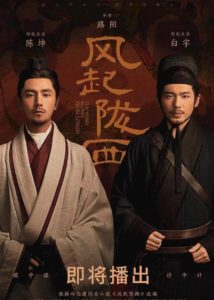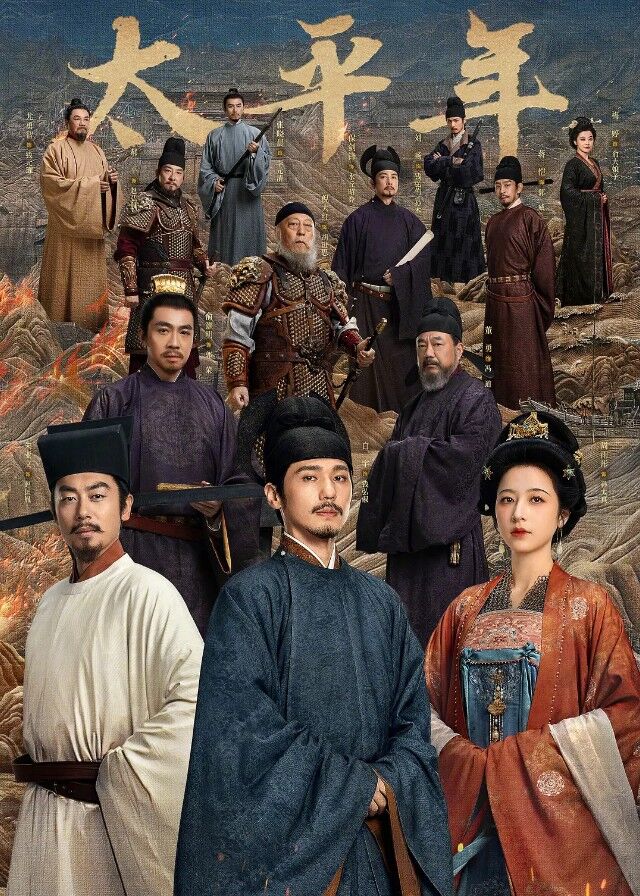



Swords into Plowshares Episode 40 Recap
> Swords into Plowshares Recaps
Leaving the Fanlou, Zhao Kuangyin strolled into a bamboo-sheltered tea stall by the street, inviting Sima Pu to sit opposite him and talk. Sima Pu, a commoner in plain clothes and straw sandals, possessed a keen eye that saw through worldly affairs.
He had once served as a secretary under Huangfu Hui, the military commissioner of Northern Han, and with just a brief glance at Zhao Kuangyin's demeanor and gait, he concluded that he was a high-ranking general in the army. Military men bore indelible marks in both body and spirit: calluses on their palms, their posture, and even the decisive ruthlessness in their eyes were hard to conceal. Speaking of his origins, Sima Pu came from Sima Guang's clan.
For much of his early life, he wandered, unfulfilled. Now participating in the regular examinations, what he sought was not to curry favor with the powerful or to get embroiled in the conflicts between regional governors, but rather to govern a prefecture or a county, personally visit the fields, adjudicate legal cases, and practice the art of governance and benefiting the people through tangible political affairs. After Sima Pu finished speaking, Zhao Kuangyin greatly appreciated him.
He took Sima Pu's hand and went straight into the palace, where he was exceptionally bestowed the title of "Jinshi" (palace graduate) and appointed as a Privy Council Attendant. This act initiated the "special recommendation" system, broadening the path for talent. In the Southern Tang palace, Xu Xuan suggested to Li Yu to reduce the tribute. Li Yu dispatched Xu Xuan to the Central Plains to test the waters, using the excuse of "unworthy to be named."
Zhao Kuangyin, hearing of the floods in Jiangnan, stated that the Jiangnan floods could exempt them from the annual tribute to aid the people, demonstrating benevolent governance and also serving as a warning to Southern Tang.
Qian Hongchu learned of this, interpreted the deeper meaning of Zhao Kuangyin's words and actions, and warned his officials that they must remember that among the hundreds of millions of people in the world, Zhao, Qian, Li, and Liu were merely four surnames among them. In contrast, Li Yu, though far away in Jinling, indulged in poetry and romantic affairs, yet he always maintained a sensitive vigilance towards the new monarch in the North.
To contend with the formidable northern forces, he defied all dissenting opinions to establish a Longxiang Naval Force. He ordered Poyang Lake to be used as a naval base, built warships, recruited sailors, with Zhu Lingyun holding the commander's seal, Li Yuanqing as the deputy commander, and Wang Hui, Sun Zhen, and others sharing various positions of authority, donning armor and wielding weapons to resist the Song state.
That night, Li Yuanqing sought out Xu Xuan to inquire about Li Yu's true intentions. Xu Xuan sighed, lamenting the increasing pressure from the Song emperor. No wonder His Majesty was overly suspicious (lit. mistaking the reflection of a bow for a snake), and he (Xu Xuan) was summoned to go on an envoy mission to Wuyue to purchase warships.
Similarly, Zhao Kuangyin implemented "work relief" domestically, utilizing the power of disaster victims to build warships along the Bian River, thereby stabilizing the people's livelihood and secretly accumulating a naval force. Li Yuanqing was secretly dispatched to Hangzhou, tasked with requesting to purchase warships from Qian Hongchu. Privately, the officials all advised against selling the ships, fearing that strengthening Southern Tang would lead to future trouble. Qian Hongchu specifically asked Qian Weijun for his opinion; Weijun held a cautious view.
Instead, Qian Weizhi offered a plan: selling the ships was not impossible, but a high price must be demanded from Southern Tang. Qian Hongchu was pleased to hear this, praising Qian Weizhi for being "good at managing the household and the state," and appointed Weizhi to oversee the matter. Weizhi sought private advice, and Qian Hongchu demanded that Southern Tang pay with grain, preferably purchasing the grain in Wuyue for disaster relief.
Li Yu was furious upon hearing the news, exclaiming that Wuyue was going too far in its deception. However, Xu Xuan calmly analyzed the situation, advocating for temporary forbearance and acceptance to acquire the warships as soon as possible. He also planned to subsequently open the borders, guiding some of the disaster victims into Wuyue, thereby shifting the relief burden to the other side.
Li Yuanqing immediately stepped forward to object, arguing that population was the foundation of national strength, and abandoning the people was tantamount to self-destruction. Unfortunately, Li Yu did not adopt the loyal advice and ultimately chose Xu Xuan's expedient plan. Qian Hongchu saw through Southern Tang's intentions and decided to turn their scheme against them. He widely set up congee stations at the border, taking in refugees, promising to allocate land, exempt them from taxes, and register them as households.
This move both resolved the crisis and increased his own state's labor force. In the Bianliang imperial court, Zhao Pu strongly advocated for moving the capital to Luoyang, to consolidate national defense by leveraging the strategic advantages of its mountains and rivers. Zhao Kuangyi vehemently opposed, pointing out that the national treasury was currently depleted, and the capital relocation project would be massive, exhausting both manpower and resources, and was by no means an urgent priority.
Zhao Kuangyin also knew the root cause of the state's financial difficulties. Since the Mid-Tang Dynasty, the regional military governors (fanzhen jiedushi) withholding local taxes and revenues had become an intractable problem, and central authority had long been severely hollowed out.
It was against this backdrop that Sima Pu stepped forward, directly addressing the accumulated malpractices and sharply pointing out that the court's ailment was "strong outside, weak inside," meaning wealth and power were excessively concentrated in the regional military garrisons. To this end, Sima Pu proposed a reform strategy of "weakening the periphery to strengthen the center," with its core being to centralize local fiscal authority and fundamentally reverse the situation through institutional construction.
The officials, fearful of drastic change, rushed to dissuade him. Sima Pu angrily denounced them in court for their complacency and adherence to old ways, asserting that they would only perpetuate the cycle of chaos. Ultimately, Zhao Kuangyin and Zhao Kuangyi discussed curbing the power of the regional military governors, intending to remove old generals and planning to promote Sima Pu to carry out the task.
Unexpectedly, Sima Pu refused the position of "Signatory Official of the Bureau of Military Affairs," directly advising that if the curbing of regional power was achieved solely through political maneuvering and personnel changes, even if successful, it would only create new power factions and fail to end the root causes of the chaotic era.
He emphasized that "to curb the regional military governors, one must first rectify the court's conduct," advocating that it was imperative to prioritize public and fair rule of law and institutional reconstruction, thereby uniting the hearts of the people, to truly end the vicious cycle of military strongmen wielding exclusive power and regional warlordism.