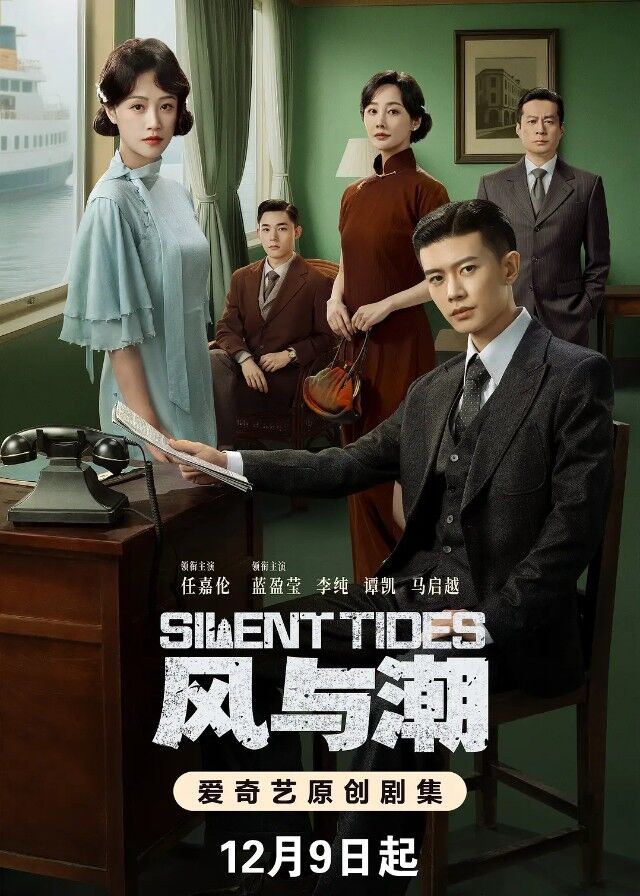



Silent Tides Episode 2 Recap
> Silent Tides Recaps
As December 8, 1941, dawned, Yazaki Kanjuro, a Japanese official, informed Sawa Eisaku that their Headquarters was considering Macau as a strategic replacement for Hong Kong. He explained that once the Empire controlled Hong Kong and Southeast Asia, Macau would become the sole isolated island in the South China Sea and Western Pacific, easy for Japanese imperial forces to occupy given Portugal's limited military presence. Their priority was therefore to attack Hong Kong.
Meanwhile, in Macau, Mr. Lin was assisting Ma Wanqi with a shipment of medicine when Rodrigues, a Portuguese merchant, suddenly halted the loading. Rodrigues announced that an urgent telegram from his American supplier required the payment to be changed from Hong Kong dollars to US dollars.
Ma Wanqi argued against the unreasonable demand, explaining that Macau transactions were typically in Hong Kong dollars and he couldn't procure such a large sum of US dollars on short notice, especially since Hong Kong banks and foreign exchange markets wouldn't open until 9 AM, well past their 8 AM shipping deadline. Rodrigues, however, was resolute, stating the deal would be canceled without US dollar payment.
Mr. Lin suggested sending a speedboat to Hong Kong for the exchange, but acknowledged the time constraints. Desperate, Mr. Lin contacted He Xian in Hong Kong, recommending him to Ma Wanqi. He Xian initially declined the urgent request, even when offered double commission. But when Ma Wanqi explained that the medicine was vital war supplies for frontline soldiers, and if delayed, could fall into Japanese hands, He Xian changed his mind.
He promised confidentiality and his utmost effort to secure the US dollars by noon. He immediately instructed his assistant, Quan, to prepare at Huilong Bank. During this frantic period, the Tai Ho Brotherhood discovered Fifth Master's body at the dock. Huang Sanhe, the gang leader, learned that Huang Gongjie had fled across Lingding Channel to Hong Kong. Enraged, he issued a manhunt order for Huang Gongjie in Hong Kong, instructing his men to kill him on sight.
Through the night, He Xian rushed around Hong Kong's Finance Street, seeking assistance from fellow money changers. Lyu and other proprietors generously pooled their available US dollars. Lyu, trusting He Xian's assurance that the client was legitimate despite the secrecy, personally helped contact several other money changers. By dawn, Assistant Manager Chen of Hengfengyu Bank arrived with the Hong Kong dollar payment, but upon calculation, they were still 6,000 US dollars short.
With banks not opening for hours, Assistant Manager Chen suggested He Xian visit Qiao Renyu, the Chinese chief accountant at HSBC, known for his willingness to help fellow Chinese. He Xian arrived at Qiao Renyu's residence, where a doorman initially tried to turn him away due to the early hour. Fortunately, Qiao Yinwan, Qiao Renyu's sister, was practicing piano on the balcony and recognized He Xian. She ushered him in and introduced him to her brother.
Qiao Renyu expressed admiration for He Xian's earlier feat of assisting the boat dwellers. He Xian apologized for the intrusion, stating the urgent and critical nature of his client's confidential business. Qiao Renyu hesitated, citing the large sum and the need to inform the bank's treasury to access the vault before opening hours. But Qiao Yinwan pressed him, reminding him of his respect for He Xian and insisting that helping a friend was reason enough.
With his sister's spirited persuasion, Qiao Renyu agreed to arrange the exchange immediately. He Xian thanked Qiao Yinwan, acknowledging her role in securing the help. Moments later, newsboys shouted headlines across Hong Kong and Macau: Japan had launched a surprise attack on Pearl Harbor and declared war on America. Panic erupted as people realized Hong Kong would soon be indefensible, and the Hong Kong dollar faced imminent collapse. Money changers, including Lyu, were furious.
They accused He Xian of insider trading, leveraging pre-knowledge of the war to convert their Hong Kong dollars into valuable US currency before the market crashed. Qiao Renyu, too, grew suspicious, expressing his dismay to Qiao Yinwan about He Xian's seemingly opportunistic actions. Confronted by angry peers demanding their US dollars back, He Xian stated he could not reverse the exchange due to his promise of client confidentiality and the urgent nature of the client's matter.
He offered apologies for any losses incurred. As the argument escalated, Japanese warplanes roared overhead, unleashing bombs on the city. He Xian, realizing the large sum of US dollars was still in Huilong Bank, ignored warnings to take cover and rushed back inside. A bomb directly hit the bank, reducing it to ruins. Assistant Manager Chen tragically perished, but Quan, though shaken, survived.
He Xian instructed Quan to take the suitcase of US dollars to safety while he re-entered the burning building, risking his life to retrieve the vital deposit ledgers from a collapsing safe. He Xian narrowly escaped the crumbling structure just before it fully gave way. Lyu, witnessing He Xian's perilous return to the bank, misinterpreted his actions, believing he was prioritizing the bank's assets over his own life and integrity.
Lyu felt utterly disillusioned, convinced He Xian was driven by greed. Meanwhile, the news reached Ma Wanqi and Mr. Lin in Macau. They learned from a fellow traveler that Huilong Bank had been destroyed. They immediately confronted Rodrigues, accusing him of changing the payment terms to US dollars because he had advance knowledge of the war. Rodrigues, concerned about his payment, demanded his money.
Ma Wanqi passionately declared that the sudden payment change and the war constituted force majeure, absolving him from legal obligation. He then made a solemn vow: if Rodrigues promised not to sell the seized medical and precision instrument shipments to the Japanese, he would pay the full amount, even if it meant selling his house, land, and borrowing from loan sharks. However, if Rodrigues betrayed them by selling to the Japanese, Ma Wanqi would refuse payment. Rodrigues reluctantly agreed.
Back home, Guo Qiwen tearfully confronted He Xian, expressing her terror over his reckless act of re-entering the burning bank. He Xian's father, He Chengxi, was also deeply upset, hearing rumors about his son's supposed dishonesty and nearly administering family punishment before their ancestors. He Xian defended his actions, explaining that his urgent currency exchange was purely coincidental with the war outbreak and was part of a critical, nationally important mission that he was sworn to keep secret.
He then revealed that he risked his life not for money, but to retrieve Huilong Bank's deposit ledgers. He explained that most of Huilong's clients were poor, who had entrusted their hard-earned savings to his family's integrity. With Hong Kong now in chaos, these deposits were life-saving funds for many, and he could not let them be lost. He Chengxi, moved by his son's explanation, acknowledged that He Xian had made the right choice.
However, the bank was destroyed, and most of their funds were inaccessible due to suspended trading and unpaid loans from other banks. He Xian calculated that by selling their house and all other assets, they could only cover forty percent of the deposits. Guo Qiwen, having overheard the conversation, reassured her husband that she would stand by him, willing to endure any hardship. He Chengxi then presented his entire life savings, urging He Xian to use them.
He emphasized that while a business or bank might fail, a person's conscience, honesty, and integrit must never be lost, for these values were far more important than wealth. The next morning, while other money changers were either unresponsive or offered only partial withdrawals, with Lyu explicitly demanding 20% interest from depositors at his Kwong Yik Bank for their withdrawals, He Xian and Quan set up a makeshift counter amidst Huilong's ruins.
He Xian announced that for the next fifteen days, the bank would provide full withdrawals to all depositors who presented their slips. Passersby and depositors, amazed that a destroyed bank was paying out in full when others were not, quickly formed a line. Lyu, observing the scene, scoffed, accusing He Xian of feigning kindness by exploiting his industry peers through wartime speculation.
Quan, angered, began to retort, but He Xian quietly stopped him, silently enduring the accusations, mindful of his father's teachings on integrity. On December 24, 1941, Christmas Eve, Hong Kong plunged into darkness and power outages as it faced imminent collapse. He Chengxi, relieved that most depositors had been paid, urged He Xian to leave for Macau, where he had already secured a financial services license. He Xian, however, appeared troubled and suggested delaying their departure.
He Chengxi, though curious, did not press him further. Later, Guo Qiwen noticed He Xian's distress and learned that one last, large anonymous deposit remained. He Xian could recall the depositor's face and the substantial sum of over 30,000 dollars, but no other identifying details as that ledger page had been burned. With the withdrawal deadline set for tomorrow, the depositor's continued absence deeply worried him, as paying out this final sum would leave the He family penniless.
Meanwhile, Qiao Renyu returned home late, bringing an apple pie for Qiao Yinwan. The siblings shared the pie, reminiscing about their childhood in an orphanage and the cherished tradition of Qiao Renyu making her an apple pie every Christmas Eve.