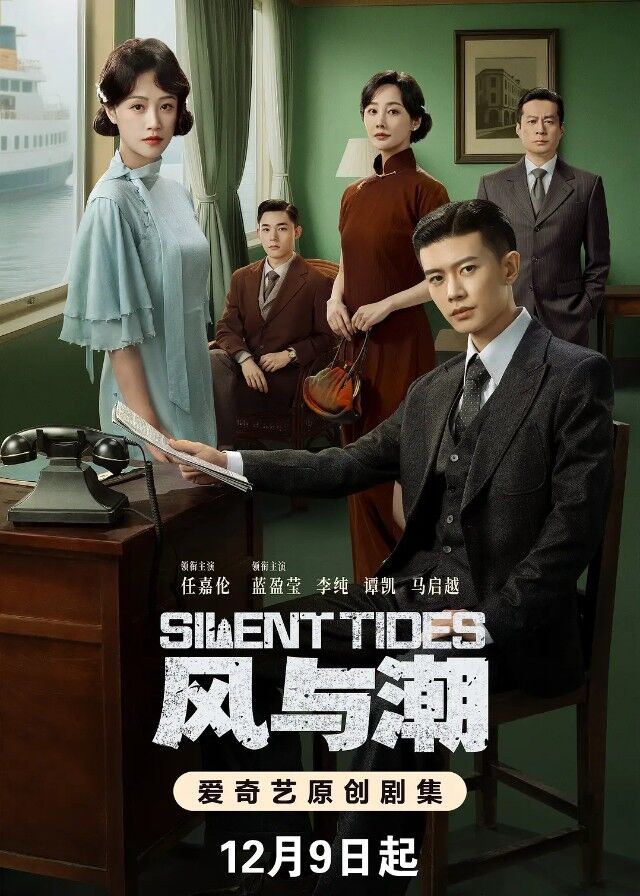



Silent Tides Episode 10 Recap
> Silent Tides Recap
He Xian presented the grain purchase contracts from Mr. Cui and Mr. Fu to Huang Gongjie. Huang Gongjie, impressed by He Xian's efficiency in securing the contracts and funds within a single day, was easily convinced. He Xian explained that given the large sum required, only Mr. Fu and Mr. Cui had the capability to provide the money quickly, which saved time.
As a condition for the deal, the merchants requested a handwritten authorization from Huang Gongjie, explicitly stating He Xian was entrusted to sell the grain at two dollars per catty. This authorization was essential to ensure their trust before releasing the six million cash. Huang Gongjie agreed but cautioned He Xian to keep this authorization strictly confidential, as revealing the actual selling price to the Imperial Army would jeopardize their profits.
Concerned about the transport fleet, Huang Gongjie questioned He Xian's arrangement with Datong Shipping, a Chinese-owned company, fearing complications with Japanese warships blockading the Lingding Channel. He suggested using Lyun Coeng's Japanese-controlled fleet and its manager, Saito, who was keen on the deal. Despite He Xian's concern about the tight deadline of just one day to secure transit permits, Huang Gongjie insisted that Saito could handle it, declaring the decision final.
To ensure oversight, Huang Gongjie assigned Lan Du Rong to accompany He Xian to Lyun Coeng and oversee the permit process. He explained that He Xian was needed in Zhongshan, and Lan Du Rong, having previously dealt with Magistrate Zhao during the grain seizure, could facilitate coordination. Huang Gongjie sternly warned Lan Du Rong to remain focused, threatening severe consequences if his gambling or drinking habits jeopardized the crucial business.
At Lyun Coeng, He Hongshen was struggling with the permit process. His superior, Deputy Manager Sakagami, chastised him, noting that the former Chinese staff had left and new approval procedures had been implemented between the Portuguese Macau government and the Imperial Navy. He Hongshen, who had rapidly become proficient in Japanese and Portuguese within a month, quickly provided the correct Customs phone number and efficiently handled the call, arranging for document submission the following morning.
Sakagami, surprised by He Hongshen's rapid language acquisition, asked He Xian if he trusted He Hongshen to manage the transit permits. He Xian agreed, prioritizing a swift resolution. Huang Gongjie later reported the early grain shipment plan to Ze Rongzuo, explaining it was for better profit, with 20% going to the Special Operations Team and 80% to Ze Rongzuo.
Ze Rongzuo, noting the Portuguese Macau government's delay in signing, received assurance from Huang Gongjie that his men would escort the ships and no grain would enter Macau before the contract was signed. Meanwhile, Huang Zixia brought Yang Chang to meet He Xian. Yang Chang, profoundly moved by He Xian's past kindness, knelt and offered a sincere apology for his previous wrongs, pledging his unwavering loyalty.
Later, after He Hongshen had efficiently processed the transit permit, He Xian offered him gambling chips from Mr. Fu as a thank you. He Hongshen politely declined, stating he never gambled. However, Lan Du Rong, unable to resist his gambling addiction, took the chips and, despite He Hongshen's initial reluctance to defy Huang Gongjie's orders, left for the casino with the transit documents.
He Xian advised He Hongshen, now promoted to secretary, to exercise caution and adhere to rules to avoid giving anyone leverage, especially in his new role and with such a significant deal. As planned, Yang Chang appeared at the casino and provoked Lan Du Rong, reminding him of past grievances, including being made a scapegoat. They engaged in high-stakes gambling, and Lan Du Rong quickly accumulated a debt of 50,000 dollars.
Yang Chang warned him that his boss, Huang Sanhe, was not to be trifled with. Huang Sanhe then made his appearance, intending to enforce Tai Ho Brotherhood rules, which meant taking Lan Du Rong's life. Mr. Fu intervened, reminding Huang Sanhe that they were in a casino in Macau, where the law prevailed, and a death would be inappropriate. Huang Sanhe agreed to respect Mr. Fu's wishes but insisted on collecting the debt.
Lan Du Rong begged for mercy, promising to pay in a few days. Liang Zhong, a kind-hearted elder in the brotherhood, suggested giving Lan Du Rong another chance, as he had been misled by Huang Gongjie. Huang Sanhe consented, but Lan Du Rong was made to perform the traditional finger-cutting blood oath, vowing to return to the Tai Ho Brotherhood and never betray it again.
While Lan Du Rong was intoxicated and unconscious, Yang Chang helped him back to his room and retrieved the crucial transit documents. During a subsequent meeting to finalize the plan, the group decided to leverage Lan Du Rong's predicament. He Xian reiterated his belief that He Hongshen was fundamentally decent, merely trying to make a living at Lyun Coeng, and thus unlikely to cause problems.
However, Ma Wanqi expressed significant concern: even with a few hours' delay, once 20 million catties of grain were loaded at Zhongshan Pier, the limited time remaining meant the real and decoy fleets would likely meet on the return journey, inevitably exposing their deception. Hearing this, Huang Sanhe proposed a decisive solution: directly blocking the Hengmen Waterway, which would force all incoming fleets to reroute via the Modaomen Waterway.
On the night before the grain transport, Guo Qiwen tearfully packed He Xian's bags, reminding him that he was their family's sole provider and urging his safe return. He Xian assured her he would return. His father encouraged him to act decisively. Ke Lin, Qiao Yinwan, and others came to bid him farewell. Qiao Yinwan played "Auld Lang Syne," also known as "Safe Journey," on her violin for He Xian's son, dedicating it to He Xian's safe journey.
At 5:15 AM on the fourth day of the Lunar New Year, a tardy Lan Du Rong arrived at Macau Pier No. 2, explaining he had overslept. He Hongshen demanded the shipping documents before departure, but Lan Du Rong couldn't find them.
He Hongshen, upholding company regulations, refused to allow the ships to depart without the proper paperwork, informing a distraught Lan Du Rong that replacement procedures couldn't begin until government offices opened at 8 AM and would take until at least 9:30 AM. Meanwhile, He Xian arrived at Shiqi Pier in Zhongshan, where Magistrate Zhao welcomed him and led him to inspect the stored grain. He Xian confirmed the quantity and handed over payment for the grain merchants.
The Tai Ho Brotherhood, disguised as Lyun Coeng's fleet, then arrived. Magistrate Zhao confidently confirmed the paperwork was in order, but He Xian still urged caution. As the loading commenced, He Xian offered Magistrate Zhao a "hardship fee," which was accepted. He Xian then requested Magistrate Zhao to change the transit permit to the Modaomen Waterway, citing reports of a blockage in the Hengmen Waterway. Magistrate Zhao, skeptical of the need for a detour, called the Hengmen checkpoint for verification.
The checkpoint confirmed a blockage but explained that a Japanese warship was currently clearing the waterway and expected it to be open soon. Magistrate Zhao relayed this information, assuring He Xian that no detour would be necessary. He Xian, despite his earlier plan, agreed to proceed via Hengmen Waterway and requested the permit. This unexpected turn of events put the plan in jeopardy.
Huang Zixia confronted He Xian, highlighting that it was already past noon, and taking the longer Modaomen route would make it impossible to reach Macau by 6 PM. If Lyun Coeng's real fleet arrived at Zhongshan Pier before they passed the Modaomen checkpoint, Magistrate Zhao's call could expose everything. He Xian, making a quick decision, realized there was only one solution: to alter the permit himself. He carefully erased "Hengmen" and rewrote it as "Modaomen."
When the fleet reached the Modaomen checkpoint, Japanese soldiers conducted an inspection. An officer discovered the altered transit permit and immediately questioned it. He Xian's subordinate explained that an accident on the Hengmen Waterway had necessitated the change, leading Magistrate Zhao to modify the permit. The Japanese officer then telephoned Magistrate Zhao for verification. By this point, Magistrate Zhao was under the control of the guerrilla team.
With no other option, he confirmed that he had indeed modified the permit, citing a shortage of blank forms. The guerrilla team expressed their gratitude to Magistrate Zhao for his cooperation. Despite these maneuvers, valuable time had been lost, and the signing deadline between the Portuguese Macau government and the Japanese side was rapidly approaching. Fukue and De Solaire grew increasingly anxious, while Ze Rongzuo remained outwardly calm, confident in his scheme.
Fukue urged Ze Rongzuo to contact De Solaire and reduce their demands, warning that the blockade would end that night, and their plan would fail if they dragged it on any longer, with only 34 minutes left until the 6 o'clock deadline. De Solaire, seeing no grain ships, rushed back to Government House in a panic. Just as he was telephoning Ze Rongzuo to agree to the signing, Lok Pak burst in, stopped him, and pointed to the window.
Outside, a flag signal proudly announced, "Grain has arrived! Macau has grain now!" Below, the Tai Ho Brotherhood's grain ships were steadily docking, greeted by jubilant crowds on the pier. Witnessing this overwhelming success, De Solaire, greatly relieved, immediately informed Ze Rongzuo and Fukue that the Macau government rejected Japan's unreasonable demands and would not sign the agreement, completely shattering Ze Rongzuo's intentions.
As the grain was unloaded, members of He Xian's team thanked Huang Sanhe and Huang Zixia for their arduous work, but also cautioned He Xian that Ke Lin had warned he could not expect to return to Macau unscathed.