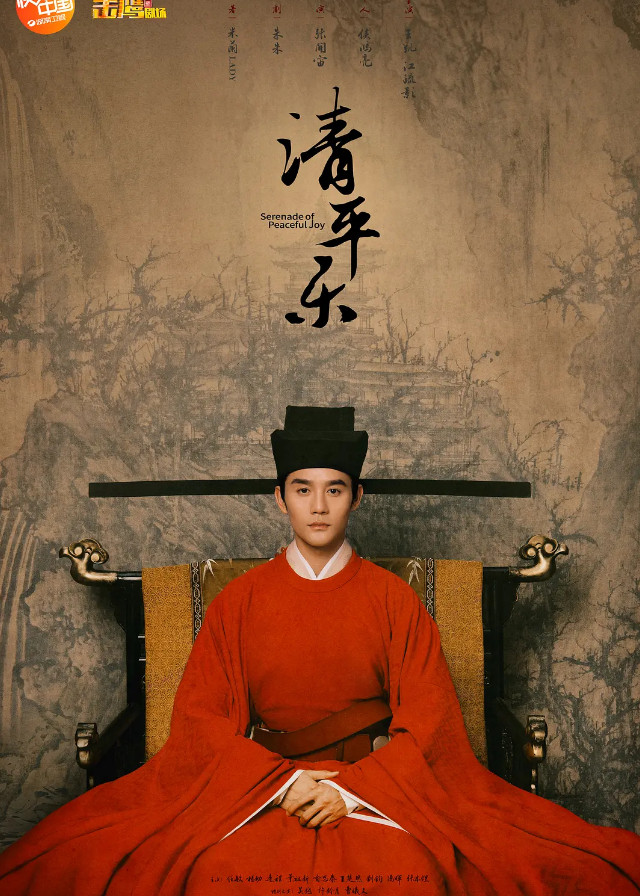



Serenade of Peaceful Joy Episode 3 Recap
> Serenade of Peaceful Joy Recap
- 1
- 2
- 3
- 4
- 5
- 6
- 7
- 8
- 9
- 10
- 11
- 12
- 13
- 14
- 15
- 16
- 17
- 18
- 19
- 20
- 21
- 22
- 23
- 24
- 25
- 26
- 27
- 28
- 29
- 30
- 31
- 32
- 33
- 34
- 35
- 36
- 37
- 38
- 39
- 40
- 41
- 42
- 43
- 44
- 45
- 46
- 47
- 48
- 49
- 50
- 51
- 52
- 53
- 54
- 55
- 56
- 57
- 58
- 59
- 60
- 61
- 62
- 63
- 64
- 65
- 66
- 67
- 68
- 69
- 70
Emperor Zhao Zhen confronted Han Qi, questioning his apparent timidity in court and whether he had forgotten his original aspirations as an official. Han Qi explained his reluctance stemmed from witnessing the ruin of the Liang family. Zhao Zhen was surprised, having believed he had already punished the bullies responsible.
However, Han Qi clarified that the Liang family's downfall was due to their candied plums becoming highly sought after by the gentry and palace, an initiative Zhao Zhen had promoted with good intentions. This popularity caused the prices of both the plums and the medicinal ingredients used to make them to skyrocket, making them unaffordable and ultimately costing the Liang family their livelihood, preventing Liang Sheng from affording medicine.
Zhao Zhen realized his preferences and well-intentioned actions could have such a severe, negative impact on commoners' lives, leading him to deep self-reproach. Meanwhile, Miao Xinhe, who was favored by Liu E, expressed her desire to remain in the palace to accompany Zhao Zhen.
Liu E suggested that to stay, Miao Xinhe should win the favor of Empress Guo, advising her to send hair ornaments to the Empress or stating that she needed to get Empress Guo to like her, and sending her with maid Juan Niang. When Zhang Maoze reported Zhao Zhen's self-reproach over the Liang family incident, Miao Xinhe became worried and volunteered to comfort Zhao Zhen and persuade him to eat before continuing his self-reflection.
However, Zhao Zhen, believing she was merely Liu E's messenger, left Miao Xinhe feeling wronged. At morning court, a significant disagreement arose between Zhao Zhen and Liu E concerning the Liao envoy's seating arrangement for the Yuanjie festival. Cheng Lin reported the Liao's demand for an elevated seat, which he had rejected and Liu E approved. Zhao Zhen viewed this as a minor issue that could be conceded to avoid nitpicking.
However, Cheng Lin vehemently opposed, warning that agreeing would signal weakness to the ambitious Liao, leading to further demands and potentially implying Liu E's ambition to become emperor, much like Wu Zetian. Zhao Zhen, despite his anger and his perception that Cheng Lin was Liu E's confidant, did not reprimand him in court. He listened to Cheng Lin's analysis and reluctantly allowed him to continue negotiations. Afterward, Zhao Zhen summoned Wang Zeng, expressing his deep dissatisfaction with Cheng Lin.
Zhao Zhen felt Cheng Lin's actions and suggestions, particularly the implicit comparison of Liu E to Wu Zetian, treated him as an incompetent puppet emperor akin to Li Xian. Wang Zeng offered his insights on effective emperorship, which Zhao Zhen initially interpreted as advice for excessive caution but later understood as a call for "Ren" (benevolence) when Wang Zeng wrote the character. A severe and prolonged drought, compounded by an insect plague, left commoners without harvest.
Zhao Zhen went to Kaibao Temple for self-reflection, questioning if his misgovernance had brought divine punishment. He dispatched Han Qi for disaster relief and, along with Yan Shu and top scholar Wang Yaochen, arranged for Fan Zhongyan and capable students at Yingtian Academy to copy medical prescriptions to aid the suffering populace. Cao Danshu, understanding Zhao Zhen's benevolent intentions, joined the effort to copy prescriptions.
While Zhao Zhen was in self-reflection, Fan Zhongyan and other ministers submitted a memorial requesting Liu E to withdraw from regency and for Zhao Zhen to assume full imperial power. This memorial was suppressed, prompting Zhao Zhen to immediately return to the palace to visit Liu E, claiming she was gravely ill. Liu E, recovering in her chambers, quickly prepared for his visit.
She praised Zhao Zhen's actions benefiting the people during the drought, but Zhao Zhen humbly credited Wang Zeng and Zhang Zhibai, denying personal achievement. Liu E understood his implication, believing that if he had done nothing, the drought must be due to her own lack of virtue.
She began her own self-reflection, asserting her virtue and sending Ren Shouzhong with tribute fruits to Yongding Mausoleum for a sacrifice, informing Zhao Zhen of her benevolent governance and personally reviewing all memorials for errors. At morning court, Liu E publicly attributed the drought to her own negligence in personally handling memorials, hoping for ancestral blessings and rain. Zhao Zhen followed, expressing his frustration that his self-reflection at the temple had yielded no divine guidance.
Following their public self-reflections, Wang Zeng and Zhang Zhibai led the ministers in publicly endorsing Zhao Zhen's assumption of full imperial power, affirming his coming of age and offering their full support. Under this collective endorsement, Liu E had no choice but to acquiesce. Soon after, a strong wind and heavy rain began. Liu E was surprised to find Zhao Zhen diligently reviewing memorials instead of offering thanks to his ancestors.
Zhang Zhibai, who had publicly supported Zhao Zhen, later fell ill, resigned to Liu E, and requested Yan Shu's return to the capital. Cao Danshu returned to the capital, noting its significant prosperity compared to a year prior. At Qingfeng Restaurant, where Liang Yuansheng worked as a porter, she learned from him and the waiter that this prosperity was attributed to Zhao Zhen's benevolent policies and his direct rule, instantly fostering a good impression of him.
The story of Zhao Zhen and Han Qi was also dramatized and spread throughout the city. The restaurant displayed a portrait of Zhao Zhen in gratitude, which Cao Danshu saw, and upon seeing it, she became deeply interested in him and instantly fell in love. At home, she carved a wooden statue of Zhao Zhen, lamenting that she was not a man who could serve the country as an official and meet him.
Before completing her studies and being confined to domestic duties, Cao Danshu had expressed a desire to experience more of the world, a wish that was somewhat realized through her observations and newfound admiration for Zhao Zhen, despite her uncle Cao Gu's urgings for her to return home early.