


Legend of the Magnate Recap, Plot, Synopsis
Legend of the Magnate Synopsis
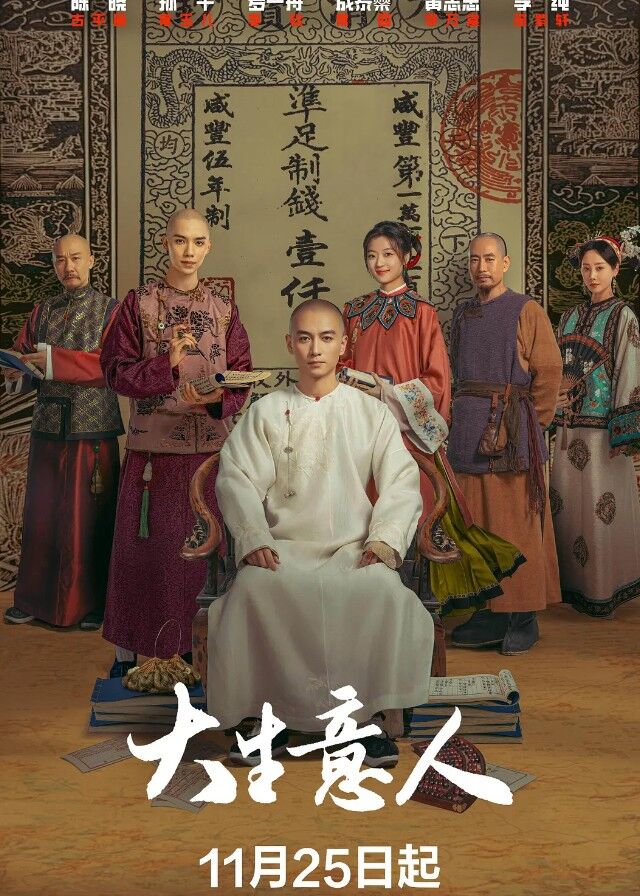
The drama is set in the late Xianfeng era of the Qing Dynasty. It tells the story of scholar Gu Pingyuan, who is framed during the imperial examinations and exiled. Starting from escaping with a private salt merchant caravan, he embarks on a business journey, establishing himself through banking, building wealth in the tea trade, and founding his enterprise in the salt industry. Through strategic competition with Shanxi merchants, Huizhou merchants, Beijing merchants, and foreign traders, he ultimately unites local merchant groups to save the nation's economic lifeline.
Legend of the Magnate Recap
Episode 1 Recap
Ningguta, located at the northernmost reaches of the Qing Dynasty, served as a desolate land of exile for officials convicted of serious crimes, fallen royalty, and even scholars who made literary mistakes. Sent along with their entire families, these exiles endured a perilous journey of thousands of miles through a frozen, sparsely populated wilderness, frequently stalked by wild beasts.
Those who survived the arduous trek were condemned to a lifetime of servitude, with no hope of escape from this "300-year-long frozen hell." The frigid landscape of Ningguta bore witness to an impending clash between Wu's Settlement and Huang's Settlement, sparked by an unforeseen murder. Liu Si of Huang's Settlement had gravely wronged Su Shuhe of Wu's Settlement, leading Su Shuhe’s son, Su Xiaohu, to avenge his father by killing Liu Si.
This act ignited a fierce feud, gathering the young men of both settlements on the icy river, drums beating as they prepared for battle. Head Liu of Huang's Settlement demanded Liu Si’s body, while Head Wang of Wu's Settlement, accompanied by Su Xiaohu, firmly refused. As tensions flared and a fight seemed inevitable, Head Wang cautioned young Su Xiaohu, who was still just a boy, against joining the fray, reminding him it was not his time to die.
Just as the two groups were about to erupt into violence, Gu Pingyuan, an exile himself since the fifth year of Emperor Xianfeng's reign, arrived with a cavalry unit. He declared that he had come on the orders of Commander Xu, the general of Ningguta, and displayed Commander Xu’s seal as proof of his authority. Gu Pingyuan warned them that if any deaths occurred, it would jeopardize the officials' careers and result in their own beheadings.
He ordered Mrs. Su, her child, and the heads of both settlements to come forward, stating that if they failed to reach a peaceful resolution, he would no longer intervene, even if the river filled with their dead. Three days prior, Gu Pingyuan had been at the Manchun Brothel, a gathering place for major pharmaceutical merchants from across the empire, including representatives from Guangzhou's Xing He Tang, Beijing's Tong Ren Tang, and Hangzhou's Hu Qing Yu Tang.
Among them was Li Qin, the young heir of Li Wantang, a capital merchant whose family owned 200 franchise pharmacies nationwide. They were all there to bid on a rare, millennium-old ginseng doll unearthed jointly by Su Shuhe and Liu Si. Su Shuhe explained to Gu Pingyuan that he had risked his life to find the ginseng, hoping to sell it to finance his son Su Xiaohu’s escape from Ningguta.
He wanted his son to assume a new identity, pursue an education, and build a better future, rather than die as an exile like himself. Gu Pingyuan supported Su Shuhe’s plan. Su Shuhe aimed to sell the ginseng for at least 100,000 taels, with a portion going to Commander Xu and the remainder split between himself and Liu Si. Gu Pingyuan, however, felt the price was too low.
Liu Si arrived shortly after, claiming an urgent need for money, and quickly departed, entrusting Gu Pingyuan with the full authority to handle the sale. Gu Pingyuan then gathered all the merchants for an open auction. Bidding quickly escalated, with Li Qin and another merchant driving the price up to 300,000 taels. Li Qin eventually withdrew, leaving the other merchant to claim the ginseng. After Gu Pingyuan verified the banknotes, Su Shuhe solemnly handed over the box containing the ginseng.
However, when the merchant eagerly opened the box, it was empty. The precious ginseng doll was gone. Stunned, Su Shuhe stripped off his clothes to prove his innocence, swearing he had never lied. Gu Pingyuan, recalling Su Shuhe’s conviction that Liu Si had not opened the box, suspected the ginseng had been stolen before the auction, though he lacked concrete evidence.
The enraged merchant, accusing Su Shuhe of being a scammer and insulting Ningguta as a "den of bandits," prepared to leave. Overwhelmed by the unjust accusation and unable to defend himself, Su Shuhe, a man of integrity, decided to prove his honesty with his life. Despite Gu Pingyuan's desperate pleas, Su Shuhe plunged a knife into his own chest, dying instantly. Gu Pingyuan was deeply pained and vowed to uncover the truth.
News of Su Shuhe's death reached Commander Xu and Magistrate Wang. Magistrate Wang expressed concern that the incident could jeopardize their careers, reminding Commander Xu that Su Shuhe had once been a second-rank military attaché, and the Emperor might one day reinstate him. Commander Xu, dismissing Su Shuhe as merely a "notorious convict" in Ningguta, nonetheless understood the need to stabilize the situation.
He dispatched Gu Pingyuan to the settlement, outwardly showing trust but privately wary of Gu Pingyuan's growing popularity among the exiles, observing that a mere scholar commanded such loyalty from the convicts. Gu Pingyuan proceeded to Wu's Settlement for Su Shuhe's funeral. Mrs. Su, seeking details, asked Gu Pingyuan if her husband had suffered. Gu Pingyuan, to spare her pain, falsely assured her that a single stab to the heart was painless.
Later, he confronted Liu Si, questioning his premature departure from the auction. Liu Si maintained that his son had died of "twisted bowel syndrome." A remorseful merchant also approached Gu Pingyuan, blaming himself for Su Shuhe's death with his harsh words. Gu Pingyuan reassured him that Su Shuhe's death was not his fault, hinting at deeper machinations. Li Qin then appeared, making light of Su Shuhe's death and suggesting the ginseng was never meant for him.
Gu Pingyuan directly accused Li Qin of orchestrating a secret deal with Liu Si through his butler, Zhang Guangfa. Li Qin, after some probing, confessed that his father, Li Wantang, had arranged it, claiming Su Shuhe was unworthy of the ginseng and reiterating his belief that "a gentleman's only crime is to carry a jade," implying Su Shuhe's possession of the ginseng was his downfall. Infuriated by Li Qin’s callousness, Gu Pingyuan pulled Liu Si aside and confronted him directly.
He revealed that the brothel girls had informed him that Li Qin's butler, Zhang Guangfa, had, in fact, taken Liu Si’s son out of Ningguta overnight, disproving Liu Si's lie about his son’s death. Facing undeniable evidence, Liu Si admitted to betraying Su Shuhe and selling the ginseng to Li Qin in exchange for his son's escape.
He confessed that he hadn't taken any money but had traded the ginseng for his son's freedom, hoping to give him a future away from the harsh exile land. However, Gu Pingyuan pointed out the grave danger such a young child would face traveling alone back to the Central Plains, pursued by officials and enemies. Overhearing this revelation, Su Xiaohu, consumed by grief and rage, rushed forward and fatally stabbed Liu Si, avenging his father.
Back on the icy river, the horse gang led by Chang Si and his daughter, Chang Yu’er, arrived at Ningguta’s city gates. Heizi, a member of the horse gang, called out to the guards, presenting their salt license and requesting entry. As the city gates opened, Gu Pingyuan and his cavalry rode out to intervene in the renewed conflict. Chang Yu’er was captivated by Gu Pingyuan’s resolute demeanor.
Mrs. Su, enraged by the betrayal that led to her husband's death, demanded vengeance, seeking the life of Liu Si’s son. Gu Pingyuan, holding young Su Xiaohu and making him admit his fear of death, appealed to Mrs. Su's compassion. He spoke of Su Shuhe’s loyalty to his comrades and questioned if he would find peace knowing his wife was seeking further bloodshed purely out of emotion.
Gu Pingyuan then made a solemn oath: if he were ever to return to the Central Plains, he would take Su Xiaohu with him, ensuring the boy would always be fed and clothed before himself, and raising him to adulthood. Convinced, Mrs. Su agreed to cease the conflict and allowed Liu Si’s body to be prepared for burial.
Upon returning to the general’s mansion, Commander Xu, though acknowledging Gu Pingyuan’s mediation, was furious about his unauthorized use of the general’s seal and the still-missing ginseng. Gu Pingyuan, attempting to explain, suggested the ginseng was a "spiritual object" that had simply disappeared, as Liu Si and Su Shuhe had removed the red, cinnabar-soaked rope and needles that bound it, allowing it to become a spirit and flee.
Commander Xu, mocking his explanation, threatened Gu Pingyuan, who, admitting he was merely a "servant ghost" to Commander Xu’s "Mountain God," promised to redouble his efforts to find the ginseng. Meanwhile, Chang Si and his horse gang settled into Ningguta. Chang Yu’er struggled to light a fire in their lodgings, choking on the smoke.
Gu Pingyuan, noticing her difficulty, offered advice on how to properly stack the wood to avoid smoke, and explained that the room would naturally warm up as she cooked. Later, he visited Chang Si, who explained he was transporting sea salt to repay debts after a failed attempt at farming, a business he knew nothing about. Chang Si asked Gu Pingyuan for guidance on doing business in Ningguta.
Gu Pingyuan, introducing himself as an exile who assisted Commander Xu due to his literacy and accounting skills, explained that Ningguta was a place where exiles, if they survived, were forced into military settlements. The strong hunted dangerous animals for the Mulan Hunting Ground to entertain the Emperor and princes, while others dug for ginseng, constantly risking their lives to become "food for wild beasts."
He emphasized that in Ningguta, "respect" was paramount, warning that even more ruthless forces than nature existed there. Later that evening, Gu Pingyuan encountered Li Qin, who had been stripped of his clothes and thrown out of a gambling den after being cheated. Li Qin, explaining he had lost his money when his "tiger heads" were supposedly beaten by "bronze hammers" according to unfamiliar local rules, pleaded for help. Gu Pingyuan, seeing Li Qin’s predicament, took him back inside the gambling establishment, where they saw a woman, Su Zixuan, immersed in a game of chance.
Episode 2 Recap
Gu Pingyuan found Li Qin shivering in the freezing street, stripped bare after losing all his money gambling. Gu Pingyuan offered Li Qin his clothes and brought him back to the bustling casino. There, Li Qin quietly pointed out the fierce-looking man who had cheated him. Gu Pingyuan immediately recognized him as a notorious local bully. At that moment, a woman named Su Zixuan was playing against the same man.
When she confidently revealed her winning hand, the man tried to cheat, claiming that according to the "rules beyond the pass," she had lost and he would take all the money. Su Zixuan challenged his dishonest rule, but the man aggressively stated that "locals always win" and threatened to break her fingers. Unfazed, Su Zixuan pulled out a pistol, asking if his head was harder than her bullet.
The man dared her to shoot, but when she fired a warning shot, he panicked and stumbled. She then invited the onlookers to place bets on whether she would shoot again. The man defiantly declared she wouldn't dare, but as Su Zixuan began to count down, he screamed and fled in terror. Seeing Li Qin, an old family acquaintance, Su Zixuan then called him over.
Meanwhile, Commander Xu led his soldiers into Wu's Settlement, storming into the Su family's mourning hall. He aggressively demanded Mrs. Su hand over the money from the ginseng sale, accusing her of trying to keep it for herself. Despite Mrs. Su's fervent denials that she had seen any money, Commander Xu dismissed her pleas, ordering her and her son, Xiaohu, to be tied up and taken away.
He further ordered his men to dig up Su Shuhe’s grave and search the entire house, vowing to find the money even if it meant digging three feet deep. Su Zixuan took Li Qin and Gu Pingyuan to a private location. Li Qin introduced Gu Pingyuan as a local friend knowledgeable about Ningguta. Su Zixuan explained she had purchased three hundred horses and needed help transporting them to the Central Plains.
Gu Pingyuan immediately deduced they were warhorses, questioning why she would risk her life traveling such a distance for ordinary local horses. When he pressed her about sending the horses south, he voiced his suspicion that she was a rebel. Su Zixuan did not deny it, stating she was an exile herself and feared nothing.
Li Qin, eager to help Su Shuhe's family, urged Gu Pingyuan to assist Su Zixuan, pointing out that if Su Zixuan could escape, he and Xiaohu could too. Gu Pingyuan agreed to think of a plan. As he left, Su Zixuan opened the door for him, revealing several men lying in ambush outside. Gu Pingyuan realized she had just saved his life. Later, Chang Si, a merchant from Pingyao, Shanxi, arrived to meet Commander Xu.
He informed Xu that his horse gang needed to pass through Ningguta with a shipment of sea salt and offered 400 taels of silver as a "gift." Commander Xu, well aware of Shanxi's reputation as a wealthy province, greedily demanded more. He then summoned Gu Pingyuan, initially accusing him of trying to escape. Gu Pingyuan assured him he was working on the Su family matter.
Commander Xu disclosed that he had incarcerated Mrs. Su and Xiaohu in the dungeon and even exhumed Su Shuhe’s body, demanding Gu Pingyuan find the missing money within three days. Xu also instructed Gu Pingyuan to extract several hundred more taels from Chang Si, threatening to prevent the salt shipment from leaving Ningguta otherwise. Dejected, Chang Si returned to his camp.
He confessed to his daughter, Chang Yu'er, that he had offered Commander Xu 100 taels more than suggested, but Xu had only become greedier. He resolved to wait for Gu Pingyuan's advice. Chang Yu'er recalled seeing Gu Pingyuan enter the city and how he had kindly helped her start a fire. Chang Si, however, sternly warned his daughter against talking to strangers in Ningguta, a place filled with exiles.
Undeterred, Chang Yu'er pressed her father to inquire about Gu Pingyuan's past. Under the cover of night, Gu Pingyuan secretly visited Mrs. Su and Xiaohu in the dungeon. He informed Mrs. Su that he had reburied Su Shuhe's body. Mrs. Su recounted how Commander Xu had tried to bribe her with a house and a military position for Xiaohu if she revealed the money's location, but she saw through his deceit.
She implored Gu Pingyuan to take Xiaohu away from Ningguta, refusing to leave herself. Xiaohu desperately clung to his mother, unwilling to part, but Gu Pingyuan promised to find a way to rescue both of them. The next morning, Gu Pingyuan met with Chang Si. Chang Yu'er brazenly asked Gu Pingyuan why he was exiled. He shared the true story: five years prior, while taking the imperial exam, someone falsely cried out that his mother was gravely ill.
Rushing to leave, he argued with the officials and was accused of disrupting the examination hall, leading to a fifteen-year exile. He later learned his mother was fine and realized he had been framed. He warned Chang Yu'er about the treacherous nature of human hearts. Sympathetic, Chang Yu'er wished him well and asked him to visit them in Shanxi if he ever returned to the Central Plains.
At the military horse camp, Li Qin remarked to Su Zixuan that his father, Li Wantang, had only agreed to help because she had protected the Li family's businesses in the south. Gu Pingyuan arrived to finalize their plan. He expressed concern for Xiaohu's safety, insisting on knowing the exact route. To gain his trust, Su Zixuan revealed a travel pass, explaining that the commander of Liaoyang Fortress was their ally.
They planned to pass through Shanhai Pass, enter Zhili, then Shandong, and finally take a ship south. Relieved, Gu Pingyuan agreed to help. Su Zixuan invited him to join her, but Gu Pingyuan declined, explaining his desire to return to his ailing mother and clear his name. Understanding his resolve, Su Zixuan gave him a pistol for self-defense.
To execute his plan, Gu Pingyuan brought Li Qin to Manchunyuan, a brothel, informing him that he would have to get married to create a grand spectacle. The madam introduced various courtesans to Li Qin, proclaimed as a wealthy young master from the capital. A girl named Zhaojun pushed others aside and enthusiastically embraced Li Qin. Gu Pingyuan instructed Zhaojun to prepare for her journey, and the madam quickly arranged a wedding for that night.
Gu Pingyuan also promised to return Zhaojun's contract of indenture, for which she knelt gratefully. That night, Manchunyuan was adorned for the wedding, attracting many citizens. Seizing the opportunity, Gu Pingyuan returned to Commander Xu, falsely claiming that Mrs. Su had agreed to hand over a large sum of money in exchange for her and Xiaohu's freedom to return to the Central Plains.
Commander Xu, believing him, promised to reduce Gu Pingyuan's sentence by five years once the money was delivered. Later, after Commander Xu was drunk, Gu Pingyuan bribed the guards, overpowered Xu with the pistol, and tied him up, forcing him to hand over a crucial travel pass. Gu Pingyuan declared that his five years of patience were for this day and that he would ensure justice for Su Shuhe. Xu, bound and helpless, cursed him, vowing to skin him alive.
The next morning, a calculated chaos ensued. Chang Si's horse gang, with the acquired pass, exited the city. Simultaneously, Li Qin, leading a grand wedding procession with Zhaojun, also departed, providing cover for Su Zixuan to transport her three hundred warhorses out undetected. In the midst of this diversion, Gu Pingyuan successfully led Mrs. Su and Xiaohu out of Ningguta. Gu Pingyuan met the others at a predetermined location.
He entrusted Mrs. Su and Xiaohu to Li Qin, who promised to settle them in his pharmacy in the capital with new identities. Gu Pingyuan then explained that he could not travel with them, as he needed to draw Commander Xu's inevitable pursuit away from their group.
Su Zixuan tried one last time to persuade him to join her in the south, but Gu Pingyuan declined, reiterating his need to clear his name and not return to the Central Plains as a fugitive. Declaring their debt settled, Gu Pingyuan parted ways, riding in the opposite direction towards Shuangjia Mountain. Commander Xu, having been freed, was furious and immediately ordered his soldiers to pursue Gu Pingyuan. Gu Pingyuan led the chase away from the others.
Xu’s men relentlessly pursued him, eventually shooting him with an arrow. Wounded, Gu Pingyuan galloped towards a cliff edge and disappeared over it. Commander Xu arrived at the cliff, saw the blood trail, and ordered his men to search the area thoroughly, vowing to find Gu Pingyuan, dead or alive.
Episode 3 Recap
Gu Pingyuan, having been shot by Commander Xu and fallen from a cliff while helping Su Zixuan and her son escape Ningguta, was found and rescued by Chang Si's horse gang. He lay unconscious in a cart as they traversed the snowy landscape. Upon regaining consciousness, he found himself being cared for by Chang Si and his daughter, Chang Yu'er. Chang Yu'er informed him that she had just removed a barbed arrow from his injury.
Chang Si then expressed his deep gratitude, explaining that Chang Yu'er's insistence on searching for Gu Pingyuan at the foot of the mountain saved him from freezing to death, acknowledging the great risk Gu Pingyuan took to help them. Gu Pingyuan immediately expressed concern that Commander Xu would undoubtedly pursue them, and if he were discovered, Chang Si and his entire horse gang would be implicated.
Chang Si, however, dismissed these fears, declaring that he lived by a code of honor and would never abandon someone in need, especially not one who had helped him. He attempted to reassure Gu Pingyuan that their early departure would keep them ahead, but Gu Pingyuan pointed out that Commander Xu's elite cavalry could easily catch up, and their cart tracks were clearly visible in the snow.
Indeed, Commander Xu soon located the bloody arrow at the cliff's base and, noticing the cart tracks, ordered his troops to follow. Anticipating this, Gu Pingyuan declared to Chang Si that he had devised a plan for them to escape alive. Commander Xu soon caught up with the horse gang and interrogated Chang Si about the contents of his carts. Chang Si claimed they were carrying "big fish" and no salt. Skeptical, Commander Xu ordered a search, which yielded nothing.
Dissatisfied, he personally plunged his weapon into one of the carts, and water gushed out, confirming Chang Si’s story. Despite finding no evidence, Commander Xu threatened Chang Si about the severe consequences of harboring exiles before rushing off to meet his superiors in Jilin. Once Commander Xu departed, a cautious Chang Si sent Heizi ahead to scout for any return. He then opened a cart, revealing Gu Pingyuan who had been hidden inside.
Gu Pingyuan explained his ingenious plan: they had sent the actual salt-filled carts ahead, while he had hidden himself in a cart filled with river water and fish that the men had caught by luring them with oil-soaked flatbread. Gu Pingyuan then confirmed that the stolen ledger, detailing Commander Xu’s crimes, had been dispatched as a "life-saving letter" to the Military Governor of Jilin's residence.
Commander Xu arrived at the Military Governor of Jilin's residence, bearing extravagant gifts including high-grade fox pelts, tiger skins, and ginseng wine, hoping to appease his superior. However, he was too late. The Military Governor, visibly enraged, confronted Commander Xu with a ledger titled "Accounts of General's Mansion Made by Gu Pingyuan," which had already been delivered. Commander Xu attempted to deny the accusations, claiming they were fabricated by prisoners, and reiterated his loyalty.
But the Governor, holding an attached note, accused Commander Xu of rampant corruption, abusing his power, treating imperial prisoners as personal slaves, and flagrantly disregarding human life. He warned Commander Xu that if he didn't address these accusations, Gu Pingyuan intended to report them directly to the capital, which would implicate the Governor himself.
Furthermore, the note exposed Commander Xu's most heinous crime: supplying warhorses to southern rebels—a treasonous act punishable by the extermination of his entire clan, which would also implicate the Governor.
Overruling Commander Xu's desperate pleas and denials, the Military Governor, to protect his own position, immediately issued an order: Xu San, the fourth-rank battalion commander of Ningguta, was stripped of his rank, sentenced to 50 lashes, and condemned to penal labor at the military horse camp for his greed, collusion with rebels, and gross dereliction of duty. With Commander Xu dealt with, Chang Si's horse gang safely reached Songshan Inn.
A doctor was summoned, and Chang Yu'er tirelessly nursed Gu Pingyuan, who was suffering from severe injuries and a high fever. During his delirium, Gu Pingyuan vividly relived a traumatic memory from five years prior. He recalled being in the capital's examination hall when a man from Anhui frantically sought "Gu Pingyuan," falsely claiming his mother was on her deathbed and needed him to return home.
Heartbroken, Gu Pingyuan rushed out, declaring his identity and his intention to abandon the exam. For this, an official immediately condemned him, accusing the scholar Gu Pingyuan of Anhui of disturbing the examination hall, insulting his superiors, and gross insubordination. He was sentenced to 50 blows and 15 years of exile in Ningguta. Outside, people whispered that he had clearly been framed, lamenting such a harsh fate for a young man.
Meanwhile, Heizi repeatedly urged Chang Si to abandon Gu Pingyuan, fearing further trouble, but Chang Si firmly refused, citing Gu Pingyuan's past kindness and his own code of honor. Gu Pingyuan's fever finally broke, and he began to recover, with Chang Si acknowledging that "heaven lent a hand" and praising his resilience.
Gu Pingyuan expressed profound gratitude to Chang Si for saving his life and to Chang Yu'er for her tireless care, noting she was always by his side when he awoke. When asked about his future, Gu Pingyuan admitted he was unsure, fearing that returning home would alert the authorities since his stripping of rank and exile were well-known. Chang Si offered for him to return to Pingyao with the horse gang.
Gu Pingyuan, however, hesitated, revealing he had an elderly mother, a younger brother, and a fiancée—his teacher Mr. Bai’s daughter—to whom he was betrothed, with their marriage awaiting his return from the imperial exam. Chang Si, who had previously understood Gu Pingyuan to be unmarried, was surprised but then cautioned Chang Yu'er, who was still intent on caring for Gu Pingyuan.
He told her to stop her diligent care, reminding her of her unmarried status and his desire for her to settle down properly. Chang Yu'er, defiant, retorted that her care stemmed from Gu Pingyuan being a good man who had helped them, not from any desire for marriage, declaring she would save him even if he were a demon.
As Gu Pingyuan’s health steadily improved, he and Chang Yu'er found themselves engrossed in conversation during their journey, particularly as they approached the historic Yanmen Pass. Chang Yu'er vividly recounted tales of legendary heroes like "Lord Yang with his golden blade" defending the pass, lamenting how treacherous officials had brought about their tragic ends. She reflected on the transient nature of happiness, wondering if their current joyful moments would one day bring sadness upon reflection.
Gu Pingyuan appreciated her philosophical musings, expressing his admiration for her perspective and admitting that his past experiences had led him to reconsider his path. He confessed his desire to join the horse gang and learn the trade from Chang Si, acknowledging that his scholarly title had been stripped, rendering him unqualified for officialdom. Chang Yu'er encouraged him, even offering to teach him herself if her father wouldn’t.
Gu Pingyuan then confided the true reason for his escape: a deep-seated need to uncover the bizarre misfortunes that plagued his family. He recounted how his father had vanished years ago while traveling to the capital for an imperial examination, and how, during his own attempt to find him in the capital, he was inexplicably framed during his exam. He believed an "invisible hand" was orchestrating their downfall and vowed to find out why.
Feeling lost and without a clear path forward, he contemplated settling there to learn business, as Chang Yu'er suggested, until a more opportune time to pursue his quest for truth. Li Qin returned to the capital, believing he had successfully completed his mission. However, his father, Li Wantang, was already aware of everything, having received a detailed letter from Su Zixuan.
Li Wantang immediately reprimanded Li Qin for associating with Gu Pingyuan, a runaway exile, reminding him of the severe Qing law that equated harboring an exile with their crime, and warning that their prosperous family was under scrutiny. Li Qin defended his actions, stating that they wouldn't have made it back without Gu Pingyuan, whom he considered a righteous and responsible man worthy of friendship.
Li Wantang scoffed at the idea of befriending an exile, pointing out that Gu Pingyuan brought two additional people out, which could bring ruin to their family. He then redirected his anger towards Su Zixuan, accusing her of rebellion for buying warhorses and questioning Li Qin's involvement. Li Qin, frustrated, retorted that he was simply following his father's instructions to assist Ms. Su and questioned his father’s own moral standing if she was a rebel.
Li Wantang described Su Zixuan as a "beautiful, cold, venomous snake" whose ruthless methods instilled fear. He acknowledged her as the smartest businesswoman he had ever encountered and admitted he dared not refuse her help or provoke her, resigning himself to her being his "calamity." He explained that she enticed people with profit, exploiting the universal desires for wealth, fame, or power, making them willing to risk anything. The horse gang finally returned to Pingyao, a bustling ancient city.
Gu Pingyuan was captivated by the sight of a massive silver sculpture outside the Taiyufeng draft bank, remarking on its immense weight and calling it "Bandit's Bane." Chang Yu'er, however, harbored deep resentment for the bank’s proprietor, Wang Tiangui, whom she deemed the most "heartless bastard" in Pingyao. She revealed that Wang Tiangui was responsible for her father's forced return to the perilous horse gang life.
Two years prior, Chang Si had purchased a prime quadrangle in Pingyao and leased government salt fields, intending to retire. But Wang Tiangui, coveting Chang Si's strategically located property, had instigated Li Laizi to file a false complaint with the local magistrate. The bribed official then stalled the case and sealed Chang Si's salt fields, almost bankrupting his family and leaving him no choice but to resume his dangerous work.
From a hidden vantage point, Wang Tiangui observed Chang Si's return and, noticing the unfamiliar Gu Pingyuan, immediately dispatched Li Laizi to investigate his background. Back at his own impressive quadrangle, Chang Si showed Gu Pingyuan around and offered him traditional "Daughter's Red" wine. He then instructed Heizi to distribute New Year red envelopes to the men, adding an extra ten percent, as they were heading home for the holiday.
Heizi expressed concern that the earnings wouldn't be enough to repay Wang Tiangui's debt, but Chang Si prioritized his men, asserting that "where there are people, there is money." Their conversation was abruptly interrupted by the arrival of Li Laizi and Wang Tiangui's bank butler, who stormed in demanding payment for the salt fields. Heizi moved to confront them, but Chang Si, ever the pragmatist, ordered them to be politely invited inside, noting it was almost New Year.
Episode 4 Recap
Upon Chang Si's return, Wang Tiangui dispatched his man, Li Laizi, to demand Chang Si's house. Specifically, Li Laizi brazenly demanded two acres of salt fields that were part of the property, claiming they had belonged to his ancestors in the Ming Dynasty. Gu Pingyuan, observing the scene, intervened. He pointed out that Chang Si had acquired the fields legally from the government, suggesting Li Laizi should address his claims to the authorities, not Chang Si.
Gu Pingyuan then escalated the situation, accusing Li Laizi of being a rebel seeking to restore the Ming Dynasty by claiming ancestral property. He theatrically threatened Li Laizi with an imperial case, a transfer to the capital, and public execution by flaying at Caishikou. Terrified and realizing he had been set up by Wang Tiangui, Li Laizi denounced them as a "heartless lot" and fled. Wang Tiangui's butler then pressed on, presenting the loan agreement to Chang Si.
Chang Si, tired from his recent trip, mentioned he had already settled the accounts and paid what was due. He told the butler to inform Wang Tiangui to collect the silver himself, as he was going to drink with his men. However, the butler revealed that, due to compounding interest at a 5% rate, Chang Si still owed 718 taels.
He highlighted a clause in the agreement stipulating that if the debt wasn't fully settled "within this year," the house would be mortgaged to Wang Tiangui, who intended to celebrate the New Year there. Chang Si was furious, asking where he was expected to go in the freezing weather if evicted on New Year's Eve.
Gu Pingyuan calmly took the agreement and pointed out that it specified "within this year," and since tomorrow was New Year's Eve, the deadline had not yet arrived. The butler, confident that Chang Si couldn't possibly raise such a sum with all businesses closed for the holiday, reluctantly conceded and departed, vowing that they would still be out on the street the next day.
Chang Si, devastated, lamented his foolishness for falling into Wang Tiangui's trap, calling himself the dumbest person alive. He spent the evening drinking heavily with his horse gang members, drowning his sorrows. Chang Yu'er, worried, tried to comfort her father, but Gu Pingyuan gently held her back, realizing Chang Si was trying to drink his worries away. Overwhelmed by the thought of being homeless on New Year's Eve, Chang Yu'er started to cry.
Gu Pingyuan reassured her that he would find a solution to save their home. To lift her spirits, he took her for a walk through the lively, celebratory streets of Pingyao. As they enjoyed the lion dances and festivities, Chang Yu'er's hat fell, and Gu Pingyuan quickly picked it up for her. Later, they heard an announcement from a team of soldiers.
The Horqin Grasslands were suffering from an equine plague, and the prince needed a horse gang to deliver medicine. The original deadline was 60 days, but many horse gangs were unwilling to take the dangerous job due to the ongoing war among the Mongolian princes and the harsh winter conditions. Gu Pingyuan saw this as an opportunity.
Taking Chang Yu'er with him, he went to the horse gang office and, despite having no prior business experience, acted on Chang Si's behalf. With Chang Yu'er's guidance, he negotiated with Hanlong, the Mongolian merchant. Gu Pingyuan initially feigned walking away, deeming the 60-day deadline impossible given the journey through Black Water Marsh and Duozhe Mountains in winter. Hanlong, desperate, extended the deadline by ten days and offered higher travel fees.
Gu Pingyuan then cleverly demanded an advance payment, a settling allowance, for the workers to ease their fears, emphasizing that human lives were paramount. Hanlong reluctantly agreed to the terms. The next morning, Chang Si awoke to a pile of silver notes. He called Chang Yu'er, who explained that Gu Pingyuan had secured a medicine delivery job to the Horqin Grasslands.
Chang Si was furious, scolding Chang Yu'er for agreeing to such a dangerous venture, given the ongoing war in Horqin. Gu Pingyuan then gathered the horse gang workers, explaining the dire situation regarding Chang Si's house and how this job could save it. Initially, some workers hesitated, but when Chang Si, deeply moved, personally appealed to them for help rather than giving an order, they all volunteered.
Chang Si promised each man a 20% increase in their wages and instructed them to get their families' approval before committing. With the money secured, Chang Si, accompanied by Gu Pingyuan, went to confront Wang Tiangui. Wang Tiangui, confidently awaiting the transfer of Chang Si's house, greeted him with mocking politeness, even suggesting Chang Si sell his horse gang business and invest in salt fields instead.
Chang Si, however, presented the bank notes and affirmed that he had fulfilled his part of the agreement. Wang Tiangui's clerk verified the notes, confirming the debt was fully paid. A stunned Wang Tiangui returned the property deed and loan agreement. As Chang Si and Gu Pingyuan left, Chang Si subtly but cuttingly advised Wang Tiangui to perform good deeds and have children before he died, implying Wang Tiangui's childlessness was a consequence of his malice.
Enraged, Wang Tiangui vowed revenge and immediately ordered his butler to investigate Gu Pingyuan, noting his "strange scent" despite his scholarly appearance. Soon after, Chang Si held a ceremony for his horse gang, wishing them good fortune, and they set off for the Horqin Grasslands. Chang Si expressed his admiration for Gu Pingyuan's unexpected business acumen and hoped this would be his last long journey.
As they traversed the treacherous Duozhe Mountains, a heavy snowstorm descended, trapping one of their carts. Chang Si rallied his men, and together they pushed the cart free. During a break, Gu Pingyuan, still unaccustomed to the harsh northern food, commented on the spicy "pot helmet flatbread." Chang Si explained its origins as an ancient Qin military ration.
Despite the delays caused by the blizzard, Chang Si instructed his foreman, Heizi, to send two men ahead to clear the path, emphasizing that human life was more precious than sticking to a schedule, even if they were already two days behind. Meanwhile, after the New Year, Su Zixuan traveled to the capital to meet Li Wantang.
She explained the escalating conflict in the South, attributing the imperial court's enduring power to its robust economic infrastructure of taxes, draft banks, and pawnshops. Tasked with organizing financial circulation in Jiangnan to fund the Southern Revolutionaries, she sought to establish new draft banks and pawnshops in Pingyao, Shanxi, and urgently needed talent. Li Wantang agreed to accompany her to Shanxi, a region known as the Qing Dynasty's treasury, dominated by the "Eight Major Shanxi Merchant Families."
He planned to open a branch of the Li family draft bank and pawnshops there. Li Qin, having heard of Su Zixuan's arrival, unexpectedly appeared and volunteered to undertake the mission himself, believing his father's prominent status would attract too much attention. Li Wantang initially dismissed his son, calling him a "spoiled rich kid" with no real business experience. However, Su Zixuan supported Li Qin, reiterating that Li Wantang's direct involvement would create unnecessary complications.
She then revealed to Li Qin that his "old friend," Gu Pingyuan, the scholar exiled to Ningguta, was currently in Pingyao. Shocked that Gu Pingyuan had escaped alive, Li Qin expressed a desire to meet him. Su Zixuan, lamenting that such talent was wasted by the "unjust" imperial court, declared her intention to recruit Gu Pingyuan.
Li Wantang, still wary of Gu Pingyuan's past as an exile, questioned his suitability and reminded Li Qin of his noble status, advising him against associating with such a person. Su Zixuan, almost betraying her own revolutionary alignment, let slip the word "rebel."
Episode 5 Recap
Chang Si leads his horse gang, including Gu Pingyuan and Chang Yu'er, on a perilous journey to deliver medicine to the Horqin Grasslands. One night, as they camp, Gu Pingyuan, unable to sleep, sits alone outside his tent. Chang Yu'er approaches him, having watched him for some time. Gu Pingyuan explains he is contemplating his future, and Chang Yu'er surmises he is thinking of his mother.
She shares her own vague memories of her mother, whose hair was still black when she was buried, and whose temperament her father refused to describe. Gu Pingyuan then confesses his sorrow, noting his mother is still in Anhui, but he cannot return to fulfill his filial duties due to his exile. He reflects on his escape from Ningguta, realizing that "the world is vast, yet there's nowhere to settle.
Only a home I cannot return to, and a country I cannot serve," likening his plight to "Lin Chong's Night Escape" from the opera. Chang Yu'er expresses her concern that he intends to stay in Horqin. Gu Pingyuan confirms his inclination, explaining he believes his continued presence will only bring greater trouble to Chang Si and the horse gang, and their safe return would be his way of repaying Chang Si's kindness.
Offended by his words, Chang Yu'er calls him "ridiculous" and abruptly returns to her tent. Meanwhile, in the capital, Su Zixuan is tasked with convincing Li Wantang to open a draft bank in Pingyao, Shanxi, to raise funds for the Southern revolutionary party. Li Qin volunteers to go to Shanxi in his father's stead, driven partly by the news that Gu Pingyuan, having escaped Ningguta, is now in Pingyao, and he wishes to meet him again.
With Su Zixuan's support, Li Wantang initially agrees. However, he later takes Li Qin to a secret vault, showcasing immense wealth, including gold ingots, freshwater pearls from Goryeo, Hotan jade, and medicinal herbs, notably the ginseng Li Qin acquired. Li Wantang urges Li Qin to stay in Beijing and manage their family's existing shops, regretting having allowed him to go to Ningguta where he befriended the exile Gu Pingyuan.
He expresses fear that Gu Pingyuan's connection could bring disaster upon their family. Li Qin vehemently rejects the notion of being a "spoiled heir" and insists on establishing his own business in Shanxi, desiring to forge his own path like his father. He defiantly states that nothing short of being "bricked inside that wall" can stop him. Facing his son's resolute determination, Li Wantang reluctantly yields.
Chang Si leads his horse gang through the perilous Black Water Marsh, a route he describes as "gambling our lives with Heaven." He meticulously directs his men, having groups of six scout ahead with wooden sticks to test the ground. Despite their caution, one carriage carrying medicine sinks into the marsh, forcing them to abandon the goods to save the driver and horses.
Moments later, panic erupts as Chang Yu'er, who had wandered off briefly, falls into the marsh and quickly sinks. Chang Si rushes to her, but his men hold him back, unwilling to let him risk his life. Without a word, Gu Pingyuan throws himself to the ground and rolls towards Chang Yu'er. He reaches her, grabs her hand, and calmly reassures her, warning her not to struggle.
As Gu Pingyuan also begins to sink, Chang Si instructs his men to quickly fashion a rope by tying their belts to a large stone. Gu Pingyuan, still encouraging Chang Yu'er, even jokes about dying together, finding company on the road to the underworld. Chang Si throws the makeshift rope to them, which Gu Pingyuan secures around himself and Chang Yu'er. The horse gang pulls them both to safety.
Relieved, Chang Yu'er whispers to Gu Pingyuan that she will never be angry with him again, feeling their lives are now intertwined, and asks him to keep her words a secret, which he promises to do. Meanwhile, Wang Tiangui's butler travels to Ningguta to investigate Gu Pingyuan. He locates Commander Xu, now known as Xu San, serving at a military horse camp. The butler presents a portrait of Gu Pingyuan.
Xu San becomes intensely agitated, recognizing Gu Pingyuan from Pingyao County on New Year's Eve and claiming him as his personal slave. He vehemently demands to personally capture Gu Pingyuan, but the butler informs him that higher authorities have been notified, and Gu Pingyuan will be officially apprehended and brought back to Ningguta to raise horses alongside Xu San.
Upon arriving at the Horqin Grasslands, Chang Si and his horse gang are greeted by Hanlong, who explains the Prince is away fighting the Junior Khan of Western Mongolia. Hanlong hosts a grand banquet, but repeatedly evades discussions about payment for the medicine. Gu Pingyuan urges for immediate distribution of the medicine, citing the urgency of the plague, and Chang Si requests to settle accounts.
Hanlong, however, insists on consulting the Prince, dismissing their concerns by stating the "worms are in our stomachs, not in yours." Gu Pingyuan later expresses his suspicions to Chang Si and Heizi, believing Hanlong is a deceitful non-Mongolian who intends to steal the tens of thousands of taels worth of medicine. At another gathering, Gu Pingyuan pointedly asks Hanlong if the "worms" in his people's stomachs are as patient as he is.
Hanlong tries to persuade Gu Pingyuan to hand over the medicine first, promising potential extra rewards from the Prince. Gu Pingyuan offers to stay as collateral if Hanlong settles the payment for Chang Si and the men, allowing them to return home. Hanlong then falsely accuses Gu Pingyuan of not caring about Mongolian lives, but ultimately feigns concession, promising to inquire about payment. That night, Hanlong's true intentions become clear.
He surrounds the horse gang's tents with cavalry, preparing to seize the medicine. He storms a tent, captures Heizi, and takes all the medicine boxes. As Hanlong and his men are occupied, Chang Yu'er, who has secretly procured two horses, urges Gu Pingyuan to flee with her. Despite Gu Pingyuan's initial reluctance, they escape. Hanlong discovers the medicine boxes are empty, realizing he has been outwitted.
Enraged, he rounds up Chang Si and the remaining horse gang members, intending to bury them alive in a large pit. Chang Si, fearless, accuses Hanlong of being worse than a bandit and threatens him with the Prince's wrath, daring Hanlong to bury them. While Hanlong's men search for the hidden medicine, Chang Yu'er and Gu Pingyuan ride towards the front lines, witnessing the devastation of war.
Gu Pingyuan spots the Prince's battle flag and decides to cut across the battlefield to deliver his message, despite Chang Yu'er's desperate pleas against the suicidal risk. Gu Pingyuan insists, worried that Hanlong will soon uncover their hidden stash. Meanwhile, Hanlong's men eventually locate the medicine hidden under the stable. Hanlong gloats to Chang Si, ordering his men to bury the horse gang. However, Chang Si and Heizi, having covertly untied themselves, take advantage of the distraction.
Chang Si pulls Hanlong into the pit with Heizi's help, effectively taking him hostage and preventing the soldiers from filling the pit. Simultaneously, Gu Pingyuan and Chang Yu'er, attempting to cross the war-torn landscape, are surrounded by soldiers and captured. Gu Pingyuan is imprisoned, while Chang Yu'er is taken to the Prince's consort's tent as a slave. Inside his cell, Gu Pingyuan begins to untie himself, intending to rescue Chang Yu'er.
A fellow prisoner warns him that escape is futile and will only lead to death. Gu Pingyuan, however, states he must find his friend, a word the other prisoner has not heard "in years." Suddenly, a prisoner collapses from the "Black Plague," causing a chaotic scramble among the other inmates. Gu Pingyuan seizes this moment of confusion to escape, evading arrows shot by the guards.
Meanwhile, the Horqin Prince, having suffered a defeat due to a general's betrayal, rages to his wife in his tent. He laments the disparity between his archers and the enemy's firearms and vows to never surrender the Horqin Grasslands to the "traitorous" Junior Khan of Western Mongolia, even if it means fighting until "the blood here runs dry." Chang Yu'er, hidden and terrified, overhears this as the arrival of the Junior Khan of Western Mongolia is announced.
Episode 6 Recap
As Prince Jelme returned to his camp, he expressed his deep frustration to the Queen. His warriors, armed with traditional spears, were no match for the Western Mongolian soldiers' firearms, leading to heavy losses. The Queen urged him to calm down, warning that continued fighting would be catastrophic. Moments later, the Junior Khan of Western Mongolia, son of Abu, arrived seeking an audience.
After being searched, he entered and directly confronted Prince Jelme, accusing him of killing many of his men. The Junior Khan proposed a negotiation: if Prince Jelme would renounce his allegiance to the crumbling Qing dynasty, Western Mongolia would immediately withdraw its troops. He argued that the Qing emperor was finished and that this was a prime opportunity, supported by outside forces, to break away.
Prince Jelme, however, vehemently refused, reminding his nephew of the ancient oath sworn by their ancestors, including Abu, at the Dolon Nor assembly to the Eternal Heaven, pledging unity and loyalty to the imperial court. He condemned the Junior Khan’s actions as betraying kin and conspiring with outsiders. Unyielding, Prince Jelme declared he would not join them. The Junior Khan then sweetened his offer, promising to share half of his firearms and suggesting they expand their territory westward together.
Prince Jelme again rejected the offer, telling him to leave. At this, the Junior Khan revealed two hidden firearms, mocking Prince Jelme's ignorance of such weapons and his guards' inability to find them. He warned Prince Jelme to be wise, threatening to kill both him and the Queen right then and there, as no one would know. At this critical moment, Chang Yu'er, who had been hiding, emerged and held a dagger to the Junior Khan's throat.
He attempted to bribe her with a pouch of priceless gems, urging her to leave and ignore the situation. Unmoved, Chang Yu'er fatally stabbed him. Prince Jelme, grateful for his life being saved, immediately adopted her as his goddaughter. Meanwhile, Chang Si and Heizi successfully cornered and subdued Hanlong, ensuring the safety of the horse gang, who celebrated their freedom. Amidst the chaos of the battle and negotiations, Gu Pingyuan seized the opportunity to escape the military camp.
Exhausted from his ordeal, he eventually collapsed from his horse. He awoke some time later in Prince Jelme’s tent, bewildered to find Chang Yu'er, dressed in fine attire, at the Queen's side. The Queen confirmed that Chang Yu'er was now her daughter and that a wedding to Gu Pingyuan had been arranged, set to take place after the troops withdrew. She warned him to recover quickly and "watch his neck," hinting at the political complexities.
As Prince Jelme and the Queen returned with their army, Gu Pingyuan and Chang Yu'er were presented to the awaiting crowd. Chang Si, who was present, was both relieved to see them alive and utterly perplexed by the announcement that his adopted daughter was now a princess and that Gu Pingyuan was her consort. Gu Pingyuan admitted he was equally confused.
During the celebratory feast, Prince Jelme made a heartfelt speech, explaining that their retreat was not a victory, but a recognition that the world was changing, with new threats like firearms disrupting the peace of the grasslands. He reaffirmed his resolve never to bow to enemies and united his people in a toast.
He then formally announced Chang Yu'er as a Horqin princess and introduced Gu Pingyuan as her consort, praising him for delivering vital medicine and doing a great service by foiling Hanlong’s treachery. He asked Gu Pingyuan what reward he desired—land, herdsmen, or a military command. Gu Pingyuan, however, made a different request.
He pleaded for the release of the captured herdsmen and war prisoners, explaining that having been a slave himself, he understood their suffering and did not wish anyone to endure such a fate. He asked Prince Jelme to grant them freedom. Prince Jelme, initially angered by what he perceived as a challenge to his authority and rules, offered to gift them all to Gu Pingyuan as his personal slaves.
Gu Pingyuan reiterated his desire for their complete freedom, arguing that in these chaotic times, old rules should be re-evaluated. He pointed out that showing kindness to these people would likely gain them future allies against foreign enemies. Though displeased, Prince Jelme reluctantly agreed and ordered the immediate release of all prisoners. The freed individuals, overwhelmed with gratitude, knelt before Gu Pingyuan to thank him.
Later, in their tent, Chang Yu'er expressed her admiration for Gu Pingyuan's bravery in challenging Prince Jelme. Gu Pingyuan, downplaying his actions, joked about losing his head. Chang Yu'er told him Prince Jelme offered to keep him safe in Horqin, and she would stay with him. Gu Pingyuan admitted he would enjoy a free life on the grasslands but emphasized that he was not a free man.
He then confessed that while Chang Yu'er was a "real princess," he, as a "consort," was a fake, because he was already engaged back home. He explained that his fiancée, Bai Yimei, was the daughter of a kind teacher, Mr. Bai, who had taught him for free when he was poor. They had exchanged betrothal gifts before he left for the imperial examinations. He added that he now had no idea where she was.
Gu Pingyuan concluded by stating that as an exile with a fiancée, he was not worthy of Chang Yu'er. Heartbroken, Chang Yu'er tried to hide her pain by pretending to be drunk, declaring that the whole "princess and consort" situation was merely "play-acting." As Chang Si and the horse gang prepared for their return journey to Shanxi, Prince Jelme and the Queen came to see them off. The Queen expressed her deep reluctance to part with Chang Yu'er.
Prince Jelme presented Chang Yu'er with a jade pendant, promising that if she ever faced trouble, Horqin warriors would come to her aid, pointedly adding, "Especially the problem next to you," referring to Gu Pingyuan. He again urged Gu Pingyuan to stay, offering him protection, but Gu Pingyuan respectfully declined, citing his longing for home and his elderly mother, and thanking Prince Jelme for his hospitality.
With heavy hearts, Chang Yu'er, Gu Pingyuan, and the horse gang departed, bidding farewell to the Prince and Queen. In the capital, Li Wantang meticulously instructed his son, Li Qin, and Zhang Guangfa before their departure to Pingyao to establish a draft bank and pawnshop. He provided them with land deeds and reserve funds, emphasizing the importance of unity among merchants and warning against arrogance.
Zhang Guangfa voiced concerns about the substantial investment and the potential risks of aligning with "southerners" (revolutionaries), but Li Wantang reassured him that he had his own strategic plans. Li Wantang gave Li Qin detailed advice on the intricate balance of pawnshop and banking operations, stressing that while he was a vanguard, he would face severe consequences if he failed. Li Qin vowed to succeed.
Upon their arrival in Pingyao, Gu Pingyuan and Chang Yu'er shared a tearful farewell, with Gu Pingyuan reiterating his conviction that he should not burden her further. Moments later, a guerrilla general and his soldiers surrounded them, arresting Gu Pingyuan as a fugitive from Ningguta and Chang Si for harboring him, a capital offense. Simultaneously, Wang Tiangui was furious upon discovering fraudulent accounts at his pawnshop, a slight he believed stemmed from his childlessness.
The Pingyao county magistrate arrived, hoping to capitalize on Gu Pingyuan's capture for a promotion. However, Wang Tiangui, recognizing Gu Pingyuan's extraordinary capabilities, sharply reprimanded the magistrate, reminding him that Wang Tiangui himself had paid for his current position. He ordered the magistrate to suppress the case, claiming a mistaken identity for Gu Pingyuan and assuring him that he would personally bribe the general to avoid further trouble. Gu Pingyuan and Chang Si were subsequently imprisoned.
Chang Si, deeply regretful, blamed himself for implicating Gu Pingyuan due to the conflict over his house. Gu Pingyuan, unfazed, argued that confronting a "petty person" like Wang Tiangui was necessary, as concessions would only lead to further exploitation. Wang Tiangui later visited Gu Pingyuan in prison, mockingly informing him of his immediate execution sentence and Chang Si's impending death for harboring him. Gu Pingyuan, unperturbed, insulted Wang Tiangui, leading to a heated exchange.
Finally, Gu Pingyuan asked for Wang Tiangui's true intentions. Wang Tiangui, acknowledging Gu Pingyuan's reputation for making money for others, offered him a deal: he would ensure the safety of Chang Si's entire family if Gu Pingyuan helped him regain control of his pawnshop from his disloyal managers.
Wang Tiangui then launched into a detailed explanation of pawnshop and draft bank operations, describing them as "legal robbery" and "the greatest business in the world," where money flows in and out while the actual silver remains untouched. He needed Gu Pingyuan to "stir things up" in his "stagnant pool" of a business and restore his authority.
Gu Pingyuan, accepting the terms, asked when he should start, and Wang Tiangui gave him one month to accomplish the task before Chang Si would be released. Shortly after, Li Qin and Su Zixuan made a grand entrance into Pingyao, drawing considerable public attention. Gu Pingyuan, having been released, immediately sought out Chang Yu'er and Heizi to inform them of the situation.
He explained that Chang Si was being held by Wang Tiangui and that he had agreed to work at Wang Tiangui's pawnshop for a month to secure Chang Si's release. He would live and work at the pawnshop and asked them to look after Chang Si. Chang Yu'er, distressed, offered to give up the house and money, but Gu Pingyuan explained that money would not resolve the legal issue of harboring a fugitive.
Angered that Gu Pingyuan’s status as a fugitive had endangered Chang Si, Heizi confronted him but was held back. Gu Pingyuan affirmed that their only option was to fulfill the terms, despite the challenge of controlling the "wily old foxes" who managed the pawnshop within a mere month.
Episode 7 Recap
Gu Pingyuan formally began his work at Wang Tiangui's Taiyufeng Pawnshop. The Head Manager and Second Manager immediately questioned if he had any prior experience in the pawn business, to which Gu Pingyuan honestly replied that he had none. They mockingly proclaimed him a "genius" and introduced him as the new Fourth Manager, giving him no specific duties and intentionally making him feel unwelcome. Despite being openly ridiculed by the other staff, Gu Pingyuan remained calm and quietly observed everyone.
Meanwhile, Li Qin and Su Zixuan arrived in Pingyao. Su Zixuan felt it was necessary to present a gift to the county magistrate, but Li Qin dismissed the idea, confident that with the Li family's influence, their new draft bank and pawnshop would be established in Pingyao within three months.
He boasted about placing a huge silver gourd in front of their shop to attract wealth and planned to acquire nearby properties for a large draft bank, believing his family's full support would easily outdo the local businesses. Su Zixuan, however, reminded him that Pingyao, though not a large city, was the financial hub of the Qing Empire, and challenging the 200-year-old local "Eight Families" might prove more difficult than he imagined.
After finishing work, Gu Pingyuan went to visit Chang Si in jail, bringing him a meal prepared by Chang Yu'er. Chang Si was surprised to see the improvements in his cell, which now had new cabinets and a portable stove. Gu Pingyuan revealed he had traded his own freedom for these comforts, explaining that Wang Tiangui had given him 30 days to reorganize the pawnshop in exchange for Chang Si's and Chang Yu'er's safety.
Chang Si worried, knowing that Wang Tiangui himself, despite being the owner, had been unable to assert control over the long-serving appraisers his father had trained. Gu Pingyuan, however, was resolute, declaring that while "different trades share the same principles," he would crack open the pawnshop's "iron walnut" no matter the cost. One day, a grave robber brought an ancient-looking jade to the pawnshop, claiming it was a Shang and Zhou dynasty family heirloom and demanding 500 taels of silver.
The Head Manager, a veteran appraiser, instantly recognized it as a recently crafted fake that had been artificially aged by being placed inside the abdomens of animals. He publicly exposed the man's deceit, smashed the jade, and drove him away, citing the Great Qing Legal Code's severe punishment for grave robbery. When Gu Pingyuan arrived, the Second Manager taunted him for being late.
Gu Pingyuan ignored the hostility and asked a junior staff member about the Fourth Manager's typical duties before requesting to see the previous years' ledgers, only to be told they were kept upstairs. Later, General Bao Qingde, under the Marshal's command, arrived at the pawnshop to pawn his waist sword and an Imperial Yellow Jacket for 500 taels to pay his soldiers, who hadn't received their military funds for six months.
The Second Manager initially dismissed him as a fraud and tried to have him thrown out, angering Bao Qingde. The Second Manager then pushed Gu Pingyuan forward to handle the irate general. Gu Pingyuan recognized Bao Qingde and, understanding the dire situation, not only agreed to pawn the items but insisted on giving him 1,000 taels of silver, confirming they were banknotes from the Four Major Banks, accepted nationwide. The other managers were furious at Gu Pingyuan's generosity.
The enraged Second Manager ordered Gu Pingyuan to be confined to a room to "cool down," and the Head Manager later announced that the pawnshop would close for business the next day. Confined upstairs, Gu Pingyuan diligently reviewed the past account ledgers. A sympathetic junior staff member named Jin secretly brought him a meal, revealing that the Head, Second, and Third Managers had closed the shop and gone to resign to Wang Tiangui.
Wang Tiangui, who had married several wives but still had no children, was frustrated by gossip about his inability to produce an heir. Gu Pingyuan went to see him, acknowledging he had been "kicked out" by the appraisers. He suggested Wang Tiangui accept their resignations. Wang Tiangui explained that the managers were influential figures in the pawn industry, and their departure would be a significant loss.
He predicted that the managers would take 20 to 30 days to fully transition, and during that time, Gu Pingyuan would find it even harder to gain a foothold. Gu Pingyuan confidently countered that he would sort out the pawnshop in much less than 30 days and ensured the Head, Second, and Third Managers wouldn't be able to leave even if they resigned.
Gu Pingyuan then sought out Li Qin at his Wanyuan Pawnshop, admitting he had been "kicked out" of Taiyufeng. Despite Li Qin's father's warnings against associating with Gu Pingyuan, Li Qin, captivated by the idea of "beating experienced masters with amateur tactics," agreed to collaborate. The two set up a "city gate pawn stall" in Pingyao. Li Qin dramatically displayed large chests of silver from his draft bank, inviting people to pawn their belongings and promising the highest prices.
He also offered high-interest savings accounts with rates 1. 5 points higher than other local draft banks. This initiative quickly drew a large crowd, with many redeeming their items from Taiyufeng and pawning them at Wanyuan for a higher profit, then depositing the money into Li Qin's draft bank. The Taiyufeng managers were initially dismissive, finding Li Qin and Gu Pingyuan's "overpaying" strategy laughable.
However, the Head Manager soon realized the gravity of the situation as Taiyufeng's shelves emptied and funds were withdrawn from their associated draft bank. The Head Manager ordered his staff to transfer large amounts of silver every two hours to their own draft bank to counter the drain, defiantly stating that he would not let "amateurs" outcompete professionals.
As their city gate stall became overwhelmed with goods, Gu Pingyuan proposed extending their services to the surrounding villages, calling it "door-to-door pawning." In the capital, Li Qin's father, Li Wantang, expressed concern upon hearing about his son's collaboration with Gu Pingyuan, fearing that the two "amateurs" would eventually turn against each other, even as he acknowledged their surprisingly inventive methods. The managers of Taiyufeng, seeing their pawnshop shelves and draft bank vaults empty, summoned Wang Tiangui.
They retracted their resignations, admitting they would have no prospects if they left now. They blamed Gu Pingyuan, calling him a "black sheep" who had stirred up public outrage by overpaying for goods and offering exorbitant interest rates, emptying all the pawnshops and draft banks in Pingyao. They urged Wang Tiangui to use his influence with the county magistrate to stop him. Wang Tiangui, however, rebuked them for their outdated business practices, comparing their methods to "waiting for death."
He pointed out that Gu Pingyuan was profitable despite offering better terms, while they, with their "blood-sucking" business model, were failing. During their meeting, a staff member announced that General Bao Qingde had returned to redeem his sword and Imperial Yellow Jacket but refused to do so unless Gu Pingyuan was present. Wang Tiangui sent the staff to find Gu Pingyuan at his Wanyuan operation. He then looked at his managers, reflecting that they, who had "hunted eagles all their lives," were now being "pecked in the eyes by an eagle."
Episode 8 Recap
General Bao Qingde, the commander of the Bao Regiment and the greatest warrior of the Qing Empire, sought out Gu Pingyuan to express his gratitude. He had pawned his beloved sword and Imperial Yellow Jacket to secure military funds for his soldiers, and Gu Pingyuan had offered a generous thousand taels for them.
As a token of appreciation, Bao Qingde deposited all of Pingyao's allocated funds into Li Qin's Wanyuan Bank, a sum so significant that even the provincial governor's office wouldn't question it. Meanwhile, Wang Tiangui, observing Li Qin's growing influence in Pingyao, chastised his own head, second, and third managers at Taiyufeng Pawnshop. He attributed Li Qin's success to their actions, which had effectively driven Gu Pingyuan away.
He warned them that if they wished to remain in the business, they must thoroughly review their accounts and clarify everything, otherwise, they should go home and tend to their children. During a celebratory banquet hosted by Bao Qingde, Li Qin expressed his admiration for Gu Pingyuan and his desire to have him join Wanyuan Bank, even suggesting his father, Li Wantang, could help clear Gu Pingyuan's name.
However, Gu Pingyuan remained resolute, explaining that his primary goal was to clear his own name and secure the release of Chang Si. He emphasized that his current collaboration with Li Qin to disrupt the pawnshop market was solely for Chang Si's freedom, and once that was achieved, their paths would diverge. Gu Pingyuan then met with Wang Tiangui, expecting Chang Si's release after successfully unsettling Taiyufeng's managers.
To Gu Pingyuan's surprise, Wang Tiangui declared that he no longer wanted Chang Si's house and would not release Chang Si. Instead, Wang Tiangui presented a new, more formidable task: finding King Li's treasure hidden within the powerful Eight Families.
He revealed that after King Li's defeat, 70 million taels of silver were abandoned in a Shanxi valley, discovered by eight local families who used it as their initial capital, leading to the lasting prosperity of the Eight Families of Hedong. To facilitate this mission, Wang Tiangui appointed Gu Pingyuan as the Head Manager of Taiyufeng Pawnshop, organizing a grand ceremony and banquet to mark his official assumption of the role.
Heizi, upon hearing of Gu Pingyuan's new prestigious position, felt resentful that Gu Pingyuan was thriving while his father, Chang Si, remained imprisoned. Chang Yu'er, however, defended Gu Pingyuan, asserting that he was not someone who would abandon his principles for personal gain. At the banquet, Li Qin extended his congratulations to Gu Pingyuan.
Wang Tiangui seized the opportunity to publicly admonish Li Qin, urging him to cease his disruptive "antics," which led Li Qin to offer a public apology to the other draft bank managers in Pingyao. Gu Pingyuan, having learned that Su Zixuan had brought dozens of skilled appraisers to Pingyao, warned Li Qin to be wary of her.
Li Qin, still hoping for an alliance, reiterated his offer for Gu Pingyuan to join Wanyuan Bank or for his father to clear Gu Pingyuan's name. Gu Pingyuan once again declined, emphasizing his commitment to Chang Si's liberation. Meanwhile, Su Zixuan assembled a large group of Shanxi's most renowned pawnshop appraisers and bank managers. She provided them with money, hosted a lavish banquet, and then dramatically revealed herself as a revolutionary from the south.
She sought to recruit them to reorganize the economy of Jiangnan, promising to safely relocate their families to Nanjing and help them establish prosperous businesses within three years. After this period, they would be free to choose whether to stay in the south or return. However, by having already moved their families without their knowledge, she implicitly held their safety hostage, ensuring their cooperation.
From Beijing, Li Wantang expressed satisfaction at Li Qin's success in securing Bao Qingde's millions in allocated funds but worried about the enemies his son was making and his association with Gu Pingyuan. He instructed his manager to send a letter to Li Qin, advising him to distance himself from Gu Pingyuan, asserting that business acquaintances were the least trustworthy.
Concurrently, Wang Tiangui learned that the Kang family, one of the Eight Families, faced severe repercussions from the imperial court for losing military supplies. He saw this as an opportune moment to purchase their assets, thereby gaining entry into the Eight Families and a share of King Li's treasure. As Gu Pingyuan left Wang Tiangui's residence, he encountered Chang Yu'er. She was distressed, having not seen him for days and subjected to Heizi's negative remarks about him.
Gu Pingyuan explained his predicament, which helped ease her worries. Noticing someone observing them from above, Gu Pingyuan deliberately staged a loud argument with Chang Yu'er, then they parted ways, creating a false impression for their observer. Li Qin later confronted Su Zixuan, accusing her of sending the appraisers to the south and warning her to stay away from his father.
Su Zixuan calmly admitted that her presence in Pingyao was to use Li Qin as a shield for her revolutionary endeavors. When Li Qin brandished a pistol, she revealed it was an unloaded gift from a Russian friend, then swiftly disarmed him, fired a warning shot into the ground, and declared that she would not let go of either his father or him.
She then ordered Li Qin to accompany her to Jinyang Villa the next day to bid for the Kang family's assets and instructed him to warn Gu Pingyuan not to interfere. The following day, Gu Pingyuan arrived early at Jinyang Villa and sought out First Madam Jin. He found Master Jin gravely ill and, respecting their privacy, stepped aside. First Madam Jin confirmed her husband's lifelong frailty, which she attributed to his extraordinary business acumen draining his life force.
Gu Pingyuan then conveyed Wang Tiangui's wish to purchase the Kang family's property and join the Eight Families. First Madam Jin, however, offered vague responses, claiming the Eight Families were fragmented. Undeterred, Gu Pingyuan left and encountered Li Zhongdeng, another prominent member of the Eight Families. Li Zhongdeng initially scoffed at Wang Tiangui's ambition but became impressed by Gu Pingyuan's insightful explanation of the Kang family's predicament.
As Su Zixuan and Li Qin arrived at Jinyang Villa, along with other interested buyers, Gu Pingyuan advised Li Qin to inform Su Zixuan that Wang Tiangui was determined to acquire the Kang family's assets. Inside, the Eight Families convened to discuss the Kang family's fate.
Mr. Kang explained that his family was forced to sell their property not merely to repay debts for the lost military supplies, but to dispel the imperial court's suspicions that the Eight Families were secretly guarding King Li's treasure. He reasoned that quietly settling the debt would only confirm these rumors. First Madam Jin then cynically suggested that they allow outsiders to buy the Kang family's assets, as it would expose the truth that there was no such treasure.
Episode 9 Recap
At Jinyang Villa, Kang Suyuan, the eldest son of the Kang family, addressed an assembly of influential Shanxi merchants. Dressed in mourning, he recounted his family’s rise from humble beginnings, starting with an ancestor who, through integrity, gained the trust of friends who helped establish an escort agency. He acknowledged the Kang family’s recent overconfidence, which led them to accept a perilous mission to transport military supplies for the imperial court.
A devastating fire destroyed these supplies, leading to his father’s death from distress. To compensate the government and mitigate further national suffering during wartime, Kang Suyuan announced the public auction of his family’s extensive properties, which included 40,000 mu of farmland, 217 shops, and three large restaurants across Shanxi, Shaanxi, and Sichuan.
He stated that out of respect for his ancestor’s vow never to burden his peers, he would not seek assistance from the other seven families of the "Eight Families" alliance. During the bidding, offers quickly climbed, reaching fourteen million taels. Li Qin noted Su Zixuan’s unusual silence, prompting him to ask why she wasn't competing for the valuable assets. Su Zixuan responded cryptically that "there are lots of things in this world more valuable than money," then exited the hall.
Gu Pingyuan, hearing this, immediately interpreted her words as a veiled threat concerning "human lives." Moments later, chaos erupted as several merchants who had made high bids were found murdered outside. As the terrified crowd panicked, Manager Li attempted to restore order by falsely claiming the commotion was due to drunken guests. Su Zixuan returned calmly, and when Gu Pingyuan cautiously asked her to step aside in the bidding, she subtly threatened him, causing him to concede.
First Madam Jin and Manager Li suspected that an opportunistic individual among the attendees was attempting to seize the Kang family's assets without payment. Their concerns were abruptly overshadowed by the dramatic arrival of Prince Shen, an imperial Prince of the Iron Hat, accompanied by soldiers.
The Prince, enraged that his military campaign was being delayed in Shanxi due to the missing supplies and the merchants' continued haggling amidst a national crisis, ordered the immediate arrest of all Eight Families' managers, including Gu Pingyuan, for failing to resolve the supply issue. He declared that if the money was not produced within three days, none would survive. As they were led away, Su Zixuan cynically remarked that despite their wealth, they were "nothing."
Imprisoned and forced to subsist on spoiled porridge, the once-proud merchants of the Eight Families found themselves in a dire situation. Gu Pingyuan, now inextricably linked to them as the new owner of the Kang family's property, accepted his fate, even consuming the foul food.
Meanwhile, Li Wantang, Li Qin's father, revealed his ambitious scheme to Su Zixuan: to establish the "Taiping Bank" in Pingyao, expanding its reach across the Qing Empire to "swallow" all regional draft banks and secure a monopoly over Shanxi's financial landscape, all while also pursuing King Li's treasure.
Li Qin later confronted his father, denouncing his methods as "robbery, bullying with power, and kicking people when they're down," but Li Wantang dismissed his son's moral qualms, advising him to pursue an official career instead. Elsewhere, Wang Tiangui recognized the sinister implications of Li Wantang's plan, understanding that any loans extended by Taiping Bank would effectively enslave the Eight Families.
Prince Shen's aide visited the prison, offering the merchants a proposition: Taiping Bank would cover the demanded 24 million taels if they signed loan agreements. The merchants rejected this outright, arguing that the funds belonged to their depositors and that such a massive withdrawal would destabilize Shanxi. Li Wantang then made a personal appearance, feigning concern and offering his assistance. The merchants, however, remained defiant, refusing his help and denying the existence of King Li's treasure.
Gu Pingyuan engaged Li Wantang in a philosophical debate, asserting that money is a "public tool" devoid of inherent morality and that human failings should not be attributed to wealth. Li Wantang, impressed by Gu Pingyuan’s intellect and insight, acknowledged him as the young man his son, Li Qin, had often spoken about.
Back with Prince Shen, Li Wantang admitted the merchants were more cunning than anticipated, comparing them to stingy individuals whose money was "strung on their ribs," requiring force to extract. He reiterated that to obtain King Li's treasure, they needed to be pushed to "the brink." He then unveiled his grand conspiracy: he had orchestrated the burning of the military supplies as a "chain of traps," deliberately implicating the Kang family and, by extension, the Eight Families.
His ultimate goal was for Prince Shen to secure the treasure, while he would dominate Shanxi's financial power. Prince Shen, facing pressure from the imperial court to advance into Shandong to suppress a rebellion, issued a stark warning: if the plan failed and the treasure remained unfound, Li Wantang's head would compensate for the lost supplies. In the prison, as starvation set in, Gu Pingyuan's keen intellect unraveled the conspiracy.
He realized the entire sequence of events, from the burned military supplies to their imprisonment, was a "chain of traps" aimed at coercing them into revealing King Li's treasure. He convinced the other merchants that mere payment would not suffice, as the true target was the treasure. He proposed a counter-strategy: they should feign compliance by signing IOUs with Prince Shen to gain time.
Then, they would unite to confront Li Wantang directly, believing that without Prince Shen's backing, Li Wantang would be less formidable. To address concerns about potential bank runs and to facilitate seamless inter-family transactions without needing physical silver, Gu Pingyuan introduced the concept of a "chief manager" to monitor finances and declare an "alliance of the Eight Families," ensuring collective support against any individual bank runs.
He volunteered for the role, earning the trust and support of the other merchants, who now recognized him as one of their own. With the Eight Families united under his leadership, Gu Pingyuan declared his intent to negotiate with Prince Shen, confidently stating that by the next day, they would no longer endure spoiled porridge. He called for the guards, demanding a private audience with Prince Shen.
When challenged, he asserted that while he, an ordinary person, might not warrant such an audience, the "silver" he represented certainly did. Meanwhile, Prince Shen ordered 20,000 troops to be deployed to the Mount Liang area, tightening his grasp on the region.
Episode 10 Recap
Gu Pingyuan, representing the Eight Families, negotiated with Prince Shen, who was impatient to lead his troops to battle and demanded directness. Gu Pingyuan explained the impracticality and risk of transporting 24 million taels of actual silver, which would require hundreds of carts and men, attract unwanted attention, and even draw scrutiny from imperial censors. He affirmed that the Eight Families were prepared to raise the sum, even at great personal risk, acknowledging Prince Shen's dangerous service to the nation.
Prince Shen initially suggested the Eight Families issue an IOU to Li Wantang, praising Li Wantang's efficiency. Gu Pingyuan vehemently objected, arguing that the credit for such a significant contribution should go to the Eight Families, not Li Wantang. He analogized it to a general tolerating another taking credit for his hard-won victory. He also warned that aggressively pressuring the influential Eight Families, who had powerful connections in the capital, could backfire.
Gu Pingyuan then offered an even larger sum, matching any payment Li Wantang might have made to secure Prince Shen's intervention. Prince Shen, though calling Gu Pingyuan sharp-tongued, asked for his proposal. Gu Pingyuan suggested the 24 million taels be designated as military provisions for Prince Shen's Yellow River campaign.
To ensure discretion and avoid public uproar or attempts by others to claim a share, he proposed transporting the silver to the capital to be exchanged for banknotes from the Four Major Banks, which would be convenient for Prince Shen to carry. Prince Shen agreed to the plan and requested a timeline. Gu Pingyuan committed to delivering the banknotes within two months, emphasizing the constant travel required.
He presented Prince Shen with a signed pledge from the Eight Families for the 24 million taels, bearing their personal seals. Prince Shen initially scoffed at the "flimsy paper," questioning if Gu Pingyuan took him for a child. Gu Pingyuan defended the pledge by highlighting the centuries-old credibility of the Eight Families, asserting their reliability surpassed Li Wantang's.
Prince Shen accepted the pledge, threatening to "raze their ratholes" if the banknotes were not delivered within two months, and ordered Gu Pingyuan to leave. Immediately after Gu Pingyuan departed, Prince Shen instructed his men to prepare for immediate departure to Shandong. After leaving Prince Shen, Gu Pingyuan went to see Li Qin. Li Qin, ashamed of his father Li Wantang's schemes against Gu Pingyuan, was initially hesitant to meet him.
However, Li Wantang insisted that Li Qin confront Gu Pingyuan. Li Wantang, dreaming of dominating Shanxi, was then informed by his manager that Gu Pingyuan and the Eight Families had successfully negotiated with Prince Shen, who had accepted their pledge and already departed for his campaign. Furious, Li Wantang criticized Prince Shen as a fool for accepting a mere IOU.
Gu Pingyuan then met with Li Qin and told him to "see them off," indicating that Li Wantang's aggressive tactics had alienated all the local draft banks and he should leave Shanxi. He confidently vowed that he would force Taiping Bank to close within three months. When Li Qin relayed Gu Pingyuan's message, Li Wantang furiously berated his son.
Stressing that one must be ruthless in Shanxi, he ordered Li Qin to return to the capital, indicating he would remain to personally oversee the downfall of the Eight Families. As a frustrated Li Qin left, he encountered Gu Pingyuan again, who delivered a final warning from the Eight Families to Li Wantang: "A businessman must abide by the business code. Do not continue to rely on power to bully others."
Before leaving, Li Wantang instructed his men to spread false rumors that the Eight Families owed the imperial court millions, intending to trigger widespread bank runs and seize their assets. On the grand opening day of Li Wantang's Taiping Bank, the rumors sparked a bank run—but at Gu Pingyuan's Taiyufeng Bank. As a massive crowd gathered to withdraw their silver, Gu Pingyuan remained calm.
With the help of Jin First Madam, who sent several carts of silver for a public display of financial strength, confidence was restored. The spectacle was so effective that many not only canceled their withdrawals but made new deposits. By day's end, Taiyufeng had weathered the storm and even increased its capital by over 600,000 taels. In stark contrast, Taiping Bank had a disastrous opening with no customers. A humiliated Li Qin sent word of the failure to his father.
Gu Pingyuan reported back to Wang Tiangui, explaining his credit-based strategy with Prince Shen was a method he learned in the penal colony and admitting it was a gamble. Pleased with the outcome, Wang Tiangui again pressed Gu Pingyuan for the location of King Li's treasure, refusing to release Chang Si until it was found.
Wang Tiangui offered Gu Pingyuan the prestigious position of chief manager of the Eight Families, but Gu Pingyuan refused to discuss anything until Chang Si was freed. Later, Gu Pingyuan visited Chang Si in prison, where Chang Yu'er was also present. Chang Yu'er jested that rumors were spreading of Gu Pingyuan becoming Wang Tiangui's "godson." Chang Si dismissed this, clarifying that Wang Tiangui was detaining him only to pressure Gu Pingyuan for the treasure.
Deeply concerned, Chang Si warned Gu that Wang Tiangui was ruthless and untrustworthy, urging him to escape Shanxi now that he had proven himself. However, Gu Pingyuan steadfastly refused, vowing to personally overthrow Wang Tiangui and free Chang Si. After the visit, Gu Pingyuan found Chang Yu'er weeping outside the prison. He comforted her and walked her home.
On the way, Chang Yu'er shared her heartfelt wish: for him and her father to be free, and for Gu Pingyuan to return home to his fiancée, Bai Yimei, and live a life of peace. She confessed that simply having known him in this life was enough for her. Moved, Gu Pingyuan responded with a philosophical quote, "Where the heart rests, there lies my home."
Meanwhile, Li Wantang and Su Zixuan were staying at Fenglingdu Inn when they received Li Qin's message about the failed opening. Su Zixuan, disappointed, urged Li Wantang to use his final trump card: withdraw the 6 million taels he had strategically deposited in the Eight Families' banks months ago to trigger a decisive bank run.
However, Li Wantang wrote back to Li Qin, instructing him not to touch the 6 million ("dead silver") and to send any unused funds back to the capital. Incensed by his father's retreat, Li Qin decided to defy his orders. Arguing that they had nothing left to lose, he resolved to withdraw the 6 million taels for a final, desperate attack against Gu Pingyuan. When Jin First Madam learned of Li Qin's plan, she feared a devastating bank run.
Gu Pingyuan proposed a bold counter-strategy: since Taiping Bank offered a higher interest rate, the Eight Families should turn Li Qin's tactic against him. He suggested they withdraw their own funds and deposit the entire sum into Taiping Bank to earn the higher interest. The managers enthusiastically agreed, with Jin First Madam pledging 4 million taels and others committing their entire remaining silver.
The next morning, a massive procession of silver carts, seemingly from the Eight Families and the public, lined up outside Taiping Bank, ready to make deposits. Li Qin's manager, Zhang Guangcai, begged him not to open, warning of the huge financial loss. However, driven by a belief in business integrity and refusing to be seen as a coward, Li Qin ordered the doors opened. To his astonishment, the street was empty.
Only Gu Pingyuan stood there, who revealed it was all a bluff. Explaining that in business one should not push rivals to ruin, he had called off the "joke" at the last minute.
Episode 11 Recap
Li Qin, though facing ruin, decided to open his Taiping Bank's doors. To his surprise, the large crowd that had gathered had vanished, leaving only Gu Pingyuan standing alone. Li Qin questioned where everyone had gone. Gu Pingyuan smiled, explaining that in business, one should not push people to their absolute limit. He promised Li Qin time for a graceful exit from Shanxi.
Gu Pingyuan asked Li Qin how the six million taels owed to the Eight Families should be delivered—by cart or as banknotes. Li Qin relayed his father Li Wantang's decision to leave the money as a gesture of goodwill. Gu Pingyuan expressed admiration for his father's magnanimity, prompting Li Qin to ponder if it was praise for his father or a dig at him. He admitted he still did not understand where he had truly lost.
Gu Pingyuan deferred, promising to tell him in person when Li Qin returned to the capital. Meanwhile, at a gathering, the Eight Families managers celebrated Gu Pingyuan's success. First Madam Jin and other managers, including Manager Li and Manager Sun, offered him fine Da Hong Pao tea from the mother trees in Fujian. Though they addressed him as "Chief Manager," Gu Pingyuan politely declined the title, stating he was unworthy and merely "a monkey dressed in royal robes."
One manager commented on the difficulty of getting another to speak more than two words at a time, jokingly referring to him as a "cripple," to which the man retorted, "Piss off." First Madam Jin directly asked Gu Pingyuan if he genuinely wished to join the Eight Families. He confessed he did not. Gu Pingyuan then revealed his true identity as an exile who had escaped from Ningguta.
He explained that Wang Tiangui had captured his benefactor, Chang Si, and coerced him into working for him. Wang Tiangui's ultimate goal in trying to get Gu Pingyuan into the Eight Families was to uncover the secret of King Li's Treasure. Now that they knew he was a man without legal standing, he questioned his suitability to be their chief manager.
He expressed deep respect for the Eight Families, stating that merely knowing them was a great fortune, and he dared not hope for more. He offered to leave so they could discuss confidential matters without risk. The managers, however, were moved by his sincerity and insisted that a hero's worth was not determined by his origins, reminding him that even Emperor Taizu of Ming was once a beggar.
They expressed immense respect for his character and ideas, and one by one, they accepted him into their confidence, acknowledging the immense prosperity their businesses had seen since his involvement. They pressed him to accept the role of chief manager, which he eventually did. Manager Li then revealed his plan to deal with the Prince, showing Gu Pingyuan a military map. He disclosed that the Prince's troops had reached Caozhou, at the border of Shandong and Henan.
Gu Pingyuan questioned the plan to use unarmed Resistance Army against the Prince's formidable cavalry. Manager Li explained that they had funded the Resistance Army multiple times and maintained good relations with their leaders, emphasizing that "money is the whetstone" that sharpens the blade.
He revealed his strategy: acquiring 2,000 horses from the Horqin Grasslands via Hebei branches, shipping them down the Grand Canal to Shandong, and then using this cavalry to unite the entire Shandong Resistance Army to besiege the Prince. His single directive to them was to ensure the Prince did not leave alive. Manager Li later clarified that they had also bribed Ling San, the Prince's trusted general, who was deep in gambling debt.
Ling San had agreed to betray the Prince during battle, creating chaos from within while the Resistance Army attacked from without, ensuring the Prince's defeat. Indeed, the Prince's forces were ambushed at Caozhou. His troops scattered as his general Ling San turned against him, and the Prince was fatally struck by an arrow, dying on the spot. Back in Pingyao, Li Qin oversaw the packing of Taiping Bank's belongings.
As he prepared to return to the capital, he ordered the large silver gourd, a symbol of the bank, to be smashed and taken with them. He lamented that he had promised for it to stand for centuries, yet it was being shattered within months.
His servant tried to console him, reminding him that "victory and defeat are both part of warfare," but Li Qin insisted on breaking it himself, stating it would allow him to leave with peace of mind. Gu Pingyuan came to bid Li Qin farewell. Li Qin addressed him as Manager Gu, a prominent figure in Shanxi's banking world, and expressed envy, noting that he only had his status while Gu Pingyuan, despite his exile status, held immense influence.
Gu Pingyuan humbly responded that he was merely playing a role, still without a legal identity. He asked Li Qin not to hold a grudge against him, as they had both served their masters. Li Qin confessed he secretly wished for his father's defeat, as Li Wantang relied too much on power and connections, straying from proper business ethics. He expressed his own desire to be an honest merchant but felt stifled by his father's methods.
Gu Pingyuan was pleased by Li Qin's sentiments and then shared his thoughts on the "Dao" of business. He explained that true commerce is built on "trust and integrity," which, when practiced to the extreme, allows businesses like the Eight Families to thrive with agile capital and widespread trust. He advised Li Qin that some truths seem simple but reveal their profundity only through practice.
Gu Pingyuan then revealed his intention to leave Shanxi once he had saved the people he needed to, likening his current situation to an opera that must eventually end. He promised Li Qin that he would seek him out in the capital once he gained his freedom after a general amnesty. Li Qin, remembering their past exploits in shaking Pingyao's banking world, wished him well.
At a celebratory dinner, First Madam Jin revealed the true secret of King Li's Treasure to Gu Pingyuan. It was not, as some believed, accidental findings, but a vast collection hidden deep within mountain strongholds, protected by high walls and intricate mechanisms, accessible only to the Eight Families. She clarified that King Li, knowing his mandate had passed, entrusted his accumulated wealth to eight loyal generals to serve as the foundation for restoring the Han Chinese homeland.
These generals became the ancestors of the Eight Families, who, under the guidance of scholars Gu Tinglin and Fu Qingzhu, established a rule to annually convert 10% of their business profits into gold and silver artifacts to be stored there. This ever-growing treasure was intended to be dispersed for the people in times of national crisis, embodying the "Great Way of commerce" – to serve the people and aid the world, as wealth truly belongs to all living beings.
Gu Pingyuan accepted this teaching with humility. Later, Wang Tiangui confronted Gu Pingyuan, questioning if he hated him for capturing Chang Si. Gu Pingyuan admitted to feeling only resignation. Wang Tiangui, impressed by Gu Pingyuan's ability to generate immense wealth for Taiyufeng in a few months, offered him a "real path forward": to become his adopted son, take the Wang surname, and guard all his wealth. He dismissed Chang Si as a mere mortal and Gu Pingyuan's conscience as irrelevant.
When Gu Pingyuan refused to be his "dog slave," Wang Tiangui became enraged. He revealed that he had Chang Si imprisoned and his daughter, Chang Yu'er, kidnapped, threatening to kill them both that very night. To manipulate Gu Pingyuan, he revealed he had already arranged for the blame to fall entirely on himself. In a desperate move, Gu Pingyuan offered to reveal the location of King Li's Treasure.
Wang Tiangui, initially skeptical, was quickly intrigued when Gu Pingyuan stated he had just visited it. Wang Tiangui immediately ordered Chang Si and Chang Yu'er to be released. Gu Pingyuan then led Wang Tiangui to the Pingding Temple, where a portion of the treasure was hidden. Disguised as a monk, Gu Pingyuan gained entry to the temple.
Wang Tiangui and his men, overcome with greed upon seeing rooms filled with golden Buddha statues, arhat figures, and countless treasures, began frantically grabbing artifacts. Seeing skeletons among the riches, Wang Tiangui gloated that the dead could not enjoy their treasure. Gu Pingyuan cryptically replied, asking why Wang Tiangui had come, if only to join them. Wang Tiangui then ordered his men to silence Gu Pingyuan, revealing his true murderous intentions.
As Wang Tiangui and his men were consumed by their avarice, stuffing their pockets with gold, Gu Pingyuan quietly slipped out of the vault. He activated the ancient mechanism, lowering the heavy "Dragon-breaking Stone" door, which had been built by imperial tomb craftsmen, permanently sealing Wang Tiangui and his men inside the treasure chamber. Outside, Wang Tiangui's manager anxiously awaited his master. Gu Pingyuan informed him that Wang Tiangui was now "guarding King Li's gate."
He advised the manager to take some gold and silver, flee Shanxi, and return to his hometown, warning him that Wang Tiangui would have also intended to kill him to keep the treasure a secret. Some time later, Chang Si informed Gu Pingyuan of the Xianfeng Emperor's passing and the impending general amnesty from the new Emperor, which would grant Gu Pingyuan his freedom. Gu Pingyuan, eager to return to his mother in Anhui, immediately wanted to buy a horse.
Chang Yu'er confirmed that the pardon had already been announced by the local magistrate. Chang Si tried to persuade Gu Pingyuan to stay longer, but Chang Yu'er noted his undeniable yearning for home. At their farewell, Gu Pingyuan invited Chang Si to recover from his injuries and then come to Anhui to establish a tea business. Chang Si eagerly accepted, mentioning his own family's tea mountains producing fine Silver Bud and Hou Kui teas.
Chang Yu'er asked about the Emperor's tea preferences, leading Chang Si to lament that by the time good green tea reached the capital, it would be stale and scented with jasmine, losing its original flavor. Gu Pingyuan expressed his anticipation for their reunion in Anhui. As Gu Pingyuan departed, Chang Yu'er, with visible reluctance to part, arranged for warriors from the Horqin Grasslands to escort him safely home.
Episode 12 Recap
Chang Yu'er accompanied Gu Pingyuan to the outskirts of the city, her heart heavy with unspoken words. She gave him the jade pendant bestowed upon her by the Horqin prince, wishing him peace and safety and expressing her hopes for his happiness with Bai Yimei. She then tearfully rode away, leaving him behind. That night, Gu Pingyuan gazed at the jade pendant, and memories of their shared hardships and life-or-death experiences flooded his mind.
He had developed feelings for Chang Yu'er, but bound by his engagement to Bai Yimei, he suppressed his emotions. Gu Pingyuan rode tirelessly, making his way back to Anhui and finally reaching Shanjian Village. The Horqin warriors, who had faithfully escorted him, bid him farewell, affirming their mission was complete. They promised to serve him drinks again when he and the Princess returned to Horqin. Gu Pingyuan gratefully offered them a meal, but they politely declined, citing military orders.
Upon arriving at his long-abandoned home, Gu Pingyuan found his mother weaving in the courtyard. He immediately knelt, deeply moved, as his mother, whose eyesight had suffered from years of crying, recognized her eldest son. They embraced, weeping tears of joy for their unexpected reunion. He then went to the fields to find his younger brother, Gu Pingwen, who was equally shocked and overjoyed to see him, having presumed him dead for years.
During dinner, as his mother's eyes seemed to improve with his return, Gu Pingyuan casually inquired about Mr. Bai and Bai Yimei. His brother and mother, no longer able to conceal the truth, revealed that a month prior, a battle had ravaged the tea plantations. All able-bodied women in the village, including Bai Yimei, had been taken by the southern Resistance Army to care for wounded soldiers and do laundry, despite promises of their swift return.
Villagers had tried to retrieve them but were turned away by armed guards. Gu Pingyuan learned that the leader of this Resistance Army was a formidable General Li Cheng. Heartbroken by the news of Bai Yimei’s plight and Mr. Bai’s distress, Gu Pingyuan vowed to rescue her. He reassured his mother that once the war was over, he and Pingwen would restore their tea business and rebuild their lives.
The next morning, Gu Pingyuan and Pingwen went to visit Mr. Bai, delivering water and firewood. Pingwen playfully noted Gu Pingyuan's newfound strength, contrasting it with his past as a scholar. Gu Pingyuan explained that his time in Ningguta, where he hunted tigers and panned for gold, had made carrying a shoulder pole "a piece of cake." Mr. Bai, ever the stickler for precision, gently chided Pingwen for his imprecise language.
Upon seeing Gu Pingyuan, Mr. Bai was overcome with emotion, pulling him up from his bow and expressing his profound worry. Gu Pingyuan, now experienced from his time in exile, asserted his transformation from a mere scholar and offered to act as the village's representative to the military camp. He promised Mr. Bai that he would bring Bai Yimei back and marry her immediately, vowing to care for his future father-in-law.
Overjoyed, Mr. Bai felt blessed in his old age to have such a student and son-in-law. Gu Pingyuan then instructed Pingwen to gather large quantities of thick hemp ropes, around 400 or 500 taels worth, an amount Pingwen found astounding. Gu Pingyuan offered to mentor Pingwen in business, emphasizing the importance of observation, discretion, and unwavering support for his decisions.
They loaded a cart with hemp ropes, and Gu Pingyuan, after acquiring a pair of glasses, declared their mission to sell the ropes. Arriving at General Li Cheng's Resistance Army camp, Gu Pingyuan and Pingwen were initially blocked by guards. Gu Pingyuan, using his newfound cunning, asked the guard for his name, implying he would report the refusal to General Li Cheng.
He then asserted that their cartload of hemp ropes was urgent supplies for the naval forces, which were difficult to procure. When the guard still hesitated, Gu Pingyuan feigned departure, prompting the guard to relent. Once inside, they followed the rule of dismounting from their cart. As they approached Li Cheng's main tent, another soldier tried to redirect them. Gu Pingyuan, adopting a more aggressive stance, insisted on seeing General Li Cheng, claiming to be his cousin.
The soldier, surprised, allowed them to proceed. Pingwen observed Li Cheng's disciplined troops, and Gu Pingyuan, drawing on his experience with soldiers in Ningguta, agreed. Pingwen, however, questioned Gu Pingyuan's audacious "cousin" bluff, to which Gu Pingyuan replied it was a necessary tactic to gain entry. Gu Pingyuan then loudly demanded an audience with General Li Cheng, stating his name.
This drew the attention of Li Cheng’s officers, who promptly had him seized, knocked unconscious, and tied up inside the tent. Gu Pingyuan soon regained consciousness, overhearing Li Cheng’s war council. Officers expressed grave concerns about besieging Hefei, citing the imperial army’s resurgence, the navy's strategic position, and the risks of prolonged engagement. They lamented their deteriorating situation, insufficient forces, extended defense lines, and low morale due to frequent night raids in Anhui.
Li Cheng sternly reminded his old comrades from Guangxi of their oath to overthrow the Qing Dynasty, emphasizing that they were in a war to the death with no retreat. He ordered them to return to their camps, stabilize morale, and warned of severe, unmerciful punishment for anyone caught plundering villages. After the meeting, Li Cheng confronted Gu Pingyuan, deriding his audacity in infiltrating the camp.
Gu Pingyuan maintained his guise as a small merchant who had merely "tricked" his way in. He then inquired about Pingwen, and a subordinate coldly suggested Pingwen was dead. Gu Pingyuan challenged Li Cheng's reputation for discipline, proposing a deal to supply hemp ropes for the navy, knowing the local villagers wouldn't trade with them. He then revealed his origin from Shanjian Village, asking about Bai Yimei and suggesting Li Cheng confirm his identity with her.
Li Cheng brushed aside the personal inquiry, focusing on the rope deal. Gu Pingyuan pressed, arguing that releasing the women, who could twist ropes, would benefit the Resistance Army. Li Cheng countered that he needed the women to care for his numerous wounded soldiers. Gu Pingyuan then boldly predicted Li Cheng's imminent defeat in Anhui due to the prolonged siege of Hefei and the approaching imperial troops.
He demanded to know, plainly, if the captured women had been "disposed of," stating he needed an answer to give the villagers. Li Cheng ordered Gu Pingyuan’s feet untied and had him brought outside. He then led Gu Pingyuan to a separate area, revealing the women's camp. He explained that his Resistance Army maintained strict segregation, with separate camps for men and women, where even married couples slept apart.
He asserted that they treated all poor men as brothers and women as sisters and would never mistreat them. Having shown him, Li Cheng ordered Gu Pingyuan and Pingwen to be expelled from the camp. Suddenly, chaos erupted with shouts of "Night raid!" and "Form ranks for battle!" Amidst explosions and gunfire, Gu Pingyuan frantically called for Bai Yimei. She heard him and called back, and they eventually found each other, momentarily stunned by their reunion.
Bai Yimei was tending to two arrow-wounded soldiers, insisting they needed water. Gu Pingyuan urged her to leave, but she was reluctant to abandon the injured. He then rushed to free Pingwen, instructing him to untie the other women while he searched for those from Shanjian Village, shouting for them to follow him. He found Pingwen again, who told him Yimei was still in a hut.
They raced back to find her, and Yimei reiterated there was no time to lose. As they attempted to escape the burning, embattled camp, Gu Pingyuan was struck by a stray bullet and fell unconscious. Pingwen desperately called out his name. Simultaneously, Li Cheng was gravely wounded in the attack. Soldiers from the Resistance Army, believing there was a traitor who had leaked information, rounded up Bai Yimei and the other villagers. As an officer called for a medic, Bai Yimei stepped forward, courageously announcing that she had studied medicine since childhood and could treat patients, begging them not to harm anyone.
Episode 13 Recap
Gu Pingyuan regained consciousness on a winding mountain road, riding in a cart with his brother, Gu Pingwen. Gu Pingwen explained that he had barely saved Gu Pingyuan from being trampled to death in the recent chaos, emphasizing the danger they were in and their narrow escape. But Gu Pingyuan was adamant about returning to the military camp, as Bai Yimei and the other village women were still held there.
Gu Pingwen pleaded with his brother, reminding him that many had already died and that no one would even know if they perished. He accused Gu Pingyuan of being a hero who only talked big, contrasting it with his own fear but loyalty to their mother.
Gu Pingwen recalled how their mother's eyes had nearly gone blind from crying during Gu Pingyuan's long absence and how they had to hide and survive on sweet potato tendrils when soldiers came, while Gu Pingyuan was nowhere to be found. He felt abandoned by his brother, who had only just returned and was already leaving again.
Despite Gu Pingwen's furious protests, Gu Pingyuan ignored him, rolling out of the moving cart and heading back towards the camp, determined to rescue the women. Meanwhile, Bai Yimei was brought before Li Cheng, the general of the Resistance Army, who lay gravely wounded and unconscious from severe blood loss due to an arrow wound. Li Cheng's second-in-command threatened Bai Yimei, stating that her life would be forfeit if she failed to save the general.
Undeterred by the threat and seeing the severity of Li Cheng's injuries, Bai Yimei immediately requested a sharp knife, alcohol, wound medicine, and a brazier. She instructed the soldiers to hold Li Cheng down while she used heated pincers to meticulously extract shattered iron shrapnel from his wound. The agonizing pain caused Li Cheng to convulse, nearly throwing Bai Yimei off. She quickly urged the soldiers to hold him firm.
She then applied hemostatic powders to the wound, but refrained from removing the deeply embedded arrow, fearing it would be instantly fatal. Gu Pingyuan, having returned to the camp, loudly called out for Li Cheng. Soldiers quickly surrounded and captured him, imprisoning him in the hay barn. As Bai Yimei continued to tend to Li Cheng throughout the night, she noticed his condition improving.
She advised that the general eat well to regain his strength, estimating a month for full recovery. She then took a moment to write a prescription for nourishing herbs directly on Li Cheng's battle map, instructing a subordinate to fetch the medicine. When the subordinate worried about Li Cheng's reaction upon waking, Bai Yimei dismissed his concerns, prioritizing the general's recovery. She also inquired about the other village women, learning they were safe and unharmed.
Though she wished to return home, the subordinate insisted she remain to continue caring for Li Cheng. Later, Li Cheng woke up to find Bai Yimei dozing off by his side. He praised her medical skills, asking who had taught her. Bai Yimei proudly stated she learned from her father, a scholar who, despite not passing the imperial exams, decided to become a village teacher and physician.
Li Cheng then suggested her father stop teaching about Confucius and Mencius, which he deemed useless, and instead join his army as a doctor. Bai Yimei retorted that an educated person who understands principles would not make such a suggestion. She questioned the necessity of war, lamenting how the conflict prevented them from selling their tea and bringing in supplies.
She recounted how the men of her village feared conscription and how the burning of their tea forest caused widespread sorrow, with no one coming to help. After Li Cheng took the herbal medicine, Bai Yimei began the arduous task of extracting the arrowhead from his body. She explained that she needed to carefully loosen the surrounding flesh with medicine before pulling it out, as a sudden removal would cause fatal blood loss.
Li Cheng, despite the intense pain, stoically refused any bite stick, asserting that a general who feared pain could not lead an army. He commanded her to proceed, enduring the excruciating process without a sound, earning Bai Yimei's silent admiration. She then dressed his wound and advised him to avoid any strenuous movement that could reopen it.
Once the immediate danger passed, Li Cheng expressed his relief at being able to breathe comfortably again, but Bai Yimei highlighted other simple pleasures like eating, sunbathing, and drinking tea, again questioning the senseless violence of war. Li Cheng explained his personal tragedies: his father died in a mine collapse, and his two younger brothers drowned when the mine flooded. His mother, burdened by high-interest debts from loan sharks to buy thin "dog-knocker coffins" for his brothers, later drowned herself.
The mine owner, exploiting their poverty, then led his two older brothers to blast a mountain with explosives, resulting in their deaths. Overwhelmed by grief, his mother prepared one last meal for him before taking her own life. After that, Li Cheng joined the Resistance Army, where his comrades taught him that the suffering of the poor was caused by "bastards," fueling his resolve to "kill all the evil people."
Bai Yimei, however, challenged his view, pointing out that many of those they killed were innocent and had no personal quarrel with him. Meanwhile, Gu Pingyuan, imprisoned in the hay barn, meticulously worked to loosen his ropes. Once free, he ignited the gunpowder stored there, causing a massive explosion. As soldiers rushed to put out the fire, Gu Pingyuan used the distraction to enter Li Cheng's tent. He demanded to take Bai Yimei and the other village women with him.
Li Cheng, initially suspecting him of being a Qing spy, was shocked when Gu Pingyuan revealed he was Bai Yimei's fiancé. Gu Pingyuan then proposed a business deal: he would supply Li Cheng with all the hemp ropes and tung oil from Anhui Province—thousands of barrels of oil and six cartloads of rope, crucial supplies for the army. In exchange, Li Cheng was to release all the women.
Li Cheng, impressed by Gu Pingyuan's sincerity and the valuable offer, agreed to release the other women but insisted on keeping Bai Yimei to continue treating his wounds. Gu Pingyuan protested, arguing that his deal was for "all" the women, including Bai Yimei, but Li Cheng remained firm, promising to release her once his injuries were fully healed.
Upon returning to Shanjian Village with the other women, Gu Pingyuan conveyed the news to Mr. Bai, who was heartbroken that Bai Yimei remained in the camp. He felt responsible for her predicament and wished he were dead, lamenting the chaos of the times. Back home, Gu Pingwen fabricated a story for their mother, claiming he and Gu Pingyuan had been in the city doing business, selling hemp ropes and tung oil to a hospitable man named Li Cheng.
This put their mother at ease, who was overjoyed to see Gu Pingyuan safe. Gu Pingyuan then announced his intention to marry Bai Yimei as soon as she returned, a proposal his mother eagerly supported, as Bai Yimei had faithfully helped their family during Gu Pingyuan's long absence. Determined to restore their livelihood, Gu Pingyuan and Gu Pingwen bought 200 tea seedlings, intending to plant them immediately to harvest tea before the Qingming Festival.
Gu Pingyuan visited Mr. Bai again, who, despite his grief, offered Gu Pingyuan his medical instruments—knives, needles, and a collection of wound medicines in porcelain bottles—to take to Bai Yimei. Mr. Bai explained his hands often shook, making it difficult for him to perform delicate procedures. He praised Gu Pingyuan's pragmatic approach, noting that while he taught farming, Gu Pingyuan understood that people would always need tea, regardless of who was fighting.
He also suggested Gu Pingyuan visit his old friend, Liao, in Zhonghe Village on the opposite mountain, a stubborn tea roaster, to learn the craft. Mr. Bai vowed to personally "whack Liao's backside with his walking stick" if he refused to teach Gu Pingyuan. Returning to Li Cheng's camp, Gu Pingyuan delivered Mr. Bai's medicines to Bai Yimei, again urging Li Cheng to release her.
Li Cheng, recovering but still in command, reiterated that he would only send her back when he was fully healed. Gu Pingyuan questioned Li Cheng's ability to protect Bai Yimei when war inevitably broke out and he couldn't even protect himself. Enraged, Li Cheng ordered Gu Pingyuan dragged out of the tent. Alone with Li Cheng, the deputy reported rumors that their naval forces had been defeated and defected to the imperial court.
He advocated for the Resistance Army to abandon their current defensive position in Anhui and attack Hefei instead of waiting to be surrounded. Li Cheng, however, condemned such talk as treason, drawing his sword and threatening to behead anyone who spoke of retreat or defection. He revealed that their orders were to hold their position to relieve pressure on the main forces besieging Hefei. If they retreated, the imperial army would encircle their comrades.
Li Cheng admitted he was investigating the naval situation, vowing to move only if the rumors were confirmed. He acknowledged the frustration among his troops but reminded them of their oath and the sacrifices of their fallen comrades, asking if they would rather live as dogs than humans. Moments later, Li Cheng's wound reopened due to his outburst. Later, Mr. Bai shared his deepest fears with Gu Pingyuan about Bai Yimei's fate.
He outlined three possibilities: she returns unharmed; her body is found, or she disappears without a trace; or a third, most terrible outcome. He agonized over the worst-case scenario, stating he would surely follow her to the grave, but expressed a haunting fear of a "second" outcome, which he did not articulate. Gu Pingyuan, still confident, reassured Mr. Bai that Bai Yimei, being such a kind person who wouldn't even step on an ant, would surely be protected by heaven.
He declared his intention to return to the camp the next day, trusting that reason would prevail. Mr. Bai, however, argued that reason only applies between humans, not between humans and beasts. He claimed that in these chaotic times, humans were worse than animals, who do not kill their own kind, while humans slaughter and enslave their fellow beings. He desperately implored Gu Pingyuan not to risk his life again, stating he could not bear to lose him after losing his daughter.
Episode 14 Recap
Gu Pingyuan spoke with Mr. Bai, addressing Mr. Bai's unspoken concern about Bai Yimei's purity after her time in the military camp. Gu Pingyuan declared that when he went to the military camp to rescue Bai Yimei, he had considered all possible outcomes. He firmly stated that as long as Bai Yimei returned safely, she would remain Mr. Bai's daughter and his wife.
He reasoned that surviving in these chaotic times was already difficult, and it would be too cruel to scrutinize past events. Gu Pingyuan reminded Mr. Bai that he himself was a condemned official, a fugitive from exile, and questioned how Bai Yimei would cope if people knew about his past. He urged Mr. Bai to have an open heart and not blame Bai Yimei, as nothing that might have happened would be her fault.
Mr. Bai's eyes welled up with tears upon hearing Gu Pingyuan's unwavering resolve. Meanwhile, Li Cheng's injuries slowly healed under Bai Yimei's careful tending. He overheard her praying, not only for his recovery but also for the villagers of Shanjian Village, her father, Gu Pingyuan, and his mother, and for the tea plantation to be restored. She expressed her wish for Li Cheng to become a good person.
Li Cheng entered, saw her Bodhisattva jade pendant, and told her to put it away as such items were forbidden in the camp. Bai Yimei revealed she had been chanting sutras for him every night to ease his suffering, and that she prayed for him to become a good man. Li Cheng was deeply moved but also saddened, believing he could never be good due to the countless lives he had taken as a general.
Bai Yimei, however, insisted she would save him. With his injuries mostly healed, Li Cheng decided to send Bai Yimei back, as the Resistance Army was breaking camp to attack Hefei. He led her to a vast silver vault filled with treasures, explaining they were confiscated from corrupt officials and used to fund the army. He encouraged her to pick anything as a dowry.
Bai Yimei admired a beautiful headdress but grew somber, asking about its original owner and if they had died or escaped. She refused to take anything, telling Li Cheng she would only accept a gift that truly belonged to him. She implored him to value his life, which she had worked tirelessly to save, more than any material wealth. She simply wished for him to recover and send her home, after which they would be "even."
Li Cheng personally escorted Bai Yimei to a mountain path, instructing her to ride forty li westward. He warned her not to disclose anything about his camp or her role in treating his injuries to anyone, fearing she would be accused of aiding the enemy or be subjected to malicious gossip from her own villagers. Bai Yimei, acknowledging his concerns, gave him her mother's jade pendant, a cherished item she always carried for blessings, hoping it would protect him.
Li Cheng, initially pessimistic about being saved due to the blood on his hands, accepted it, making a grim jest about meeting her in hell. Upon her return to Shanjian Village, Bai Yimei was met with coldness. Villagers like Aunt and Sister-in-law pointedly avoided her. Pingwen excitedly rushed to inform Gu Pingyuan of her return. Gu Pingyuan and Mr. Bai quickly escorted Bai Yimei home, noticing the villagers' unwelcoming attitude and hushed gossip.
Distraught, Bai Yimei immediately locked herself in her room, refusing to eat or drink. Later, Gu Pingyuan's mother informed him that local women, including Mrs. Li, were spreading rumors that Bai Yimei had "submitted herself" to Li Cheng and had only returned to take her father to the south for a life of luxury. Gu Pingyuan was enraged, defending Bai Yimei by explaining that her sacrifice had saved all the village women from massacre.
His mother, however, worried about the authorities accusing Bai Yimei of aiding the enemy, suggesting Gu Pingyuan, Bai Yimei, and Mr. Bai flee the village. Gu Pingyuan vehemently refused, asserting his desire to remain home to care for his mother and family, unwilling to abandon their ancestral land and tea plantation. News then arrived that Pingwen was fighting villagers. Gu Pingyuan rushed to intervene, separating them.
Pingwen explained he couldn't stand the villagers' slander, accusing Bai Yimei and Li Cheng of "having an affair." Gu Pingyuan fiercely confronted the gossiping men, reminding them of their inaction when their own wives were kidnapped and how Bai Yimei alone had risked everything to save them. He called them out for their cowardice and for slandering an innocent woman who was their savior, driving them away from the scene.
Back at Mr. Bai's home, Mr. Bai tried to coax Bai Yimei to eat, but she remained withdrawn. Gu Pingyuan and Pingwen arrived, conveying Gu Pingyuan's mother's wish to see Bai Yimei. Concerned about Bai Yimei's fragile state, Mr. Bai asked Gu Pingyuan to reassure her, fearing she might harm herself. Gu Pingyuan spoke to Bai Yimei through the closed door, validating her feelings and reaffirming his trust in her.
Bai Yimei expressed her bitter resentment, wishing she had died in the military camp rather than face such accusations. Gu Pingyuan urged her not to speak out of anger, questioning if she would still save people if she knew there would be no gratitude. He empathized with her, acknowledging the cruelty of people's hearts and contrasting it with the "passionate men" he had encountered during his exile. Bai Yimei then asked about his years in Ningguta.
He recounted the immense suffering, such as panning for gold in freezing rivers, but emphasized his unwavering hope of one day reuniting with his family. He also shared Mr. Bai's profound worry for her during her captivity. Bai Yimei admitted her childishness but requested to be left alone to process everything, asking Gu Pingyuan to leave. Later, Gu Pingyuan's mother again pressed for him, Bai Yimei, and Mr. Bai to leave the village.
Mr. Bai, present during this conversation, explained that they had no other place to go and could not abandon their ancestral graves, land, and tea plantation. Gu Pingyuan then proposed a solution: he would marry Bai Yimei openly and proudly with a grand wedding. He believed this public declaration of his commitment would silence the rumors and prove Bai Yimei's innocence. His mother, recognizing his unwavering resolve, reluctantly agreed.
Mr. Bai, also supporting the idea, went home to prepare a dowry. Gu Pingyuan and Pingwen immediately set off for the city to arrange a palanquin and other wedding necessities. In the city, Pingwen complained about the small size of the two-bearer palanquin and the tight budget for the wedding arrangements, which included musicians, attendants, matrons, and twelve banquet tables. Gu Pingyuan carefully calculated the expenses, ensuring everything was accounted for.
Back in the village, Mr. Bai informed Bai Yimei about the upcoming wedding, but she was deeply conflicted. Having grown fond of Li Cheng during their time together, she couldn't bear to disappoint the ever-devoted Gu Pingyuan. When Gu Pingyuan later visited Mr. Bai to discuss wedding details, he noticed Bai Yimei's continued reticence and preoccupation, as she remained secluded in her room. He gently asked if she had something on her mind, but she gave evasive answers.
Gu Pingyuan felt that Bai Yimei had changed; her previous soft-spoken demeanor had been replaced by an assertive, yet polite and distant, attitude. Pingwen attributed this change to her having "seen the world," but Gu Pingyuan felt they had become almost like strangers. Gu Pingyuan discussed preparing a red wedding dress for Bai Yimei with his mother.
He lamented the difficulty of finding good silk fabrics due to the war, noting that the available options in silk shops resembled funeral clothes. His mother then fondly recalled the elaborate wedding dress his father had commissioned for her, selling family heirlooms to ensure her dignity. She also remarked on Bai Yimei's apparent lack of enthusiasm for the wedding, suggesting her thoughts were elsewhere.
She advised Gu Pingyuan to go ahead and prepare a beautiful red wedding dress, emphasizing that while parents are a concern for half a lifetime, a spouse is for a whole lifetime, and their happiness together was paramount. Despite Mr. Bai presenting Bai Yimei with the dowry he had painstakingly saved over the years, she remained troubled and could not find joy in the preparations.
Episode 15 Recap
Bai Yimei remained in the Resistance Army camp to treat Li Cheng's wounds. During their time together, Li Cheng developed feelings for Bai Yimei, but she was already betrothed to Gu Pingyuan. After Li Cheng recovered, he personally escorted her to the village entrance, where Bai Yimei gave him the jade pendant her mother had given her. Li Cheng felt a warmth in his heart.
Upon her return, rumors began to circulate in Shanjian Village about Bai Yimei and Li Cheng's intimate relationship, causing the villagers to shun her. Despite the gossip, Gu Pingyuan trusted Bai Yimei's character and wanted to marry her quickly to silence the rumors. However, Bai Yimei was torn. She had developed feelings for Li Cheng during their days together and couldn't bear to let him go, yet she didn't want to hurt Gu Pingyuan.
Her father, Mr. Bai, noticed her emotional struggle and, despite having lovingly prepared her dowry over the years, became furious when she questioned his motives for rushing her marriage. He admonished her for suggesting he was pushing her away due to gossip, reminding her of Gu Pingyuan's devotion. Bai Yimei, feeling remorseful, apologized to her father. Qing soldiers then arrived in Shanjian Village.
Their battalion commander demanded fifty young men daily to dig trenches and fifty porters to gather horse feed, as well as money and supplies. The village head explained the village's poverty due to years of constant conflict, which had destroyed their tea plantations. The commander suggested extorting wealthy households suspected of collaborating with the rebels, threatening execution if they didn't comply.
Mr. Bai, already ill and angered by Bai Yimei's earlier words and the village's troubles, collapsed from stress, his airway blocked by phlegm. Gu Pingyuan, who had rushed over with his brother Pingwen, sent Pingwen to fetch a doctor. The village head, desperate, sought out Mr. Bai's help, but finding him unconscious, turned to Gu Pingyuan, who agreed to handle the matter. Gu Pingyuan, accompanied by the village head, went to confront General Qiao.
He pleaded for leniency for the villagers, emphasizing Anhui's suffering from endless warfare and their inability to pay, especially after the rebels burned their tea gardens. General Qiao dismissed his pleas, complaining about his own soldiers' unpaid wages and reiterating the idea of punishing "traitors" to get money. Before the discussion could progress, a battle report arrived, and General Qiao, needing to deploy his troops immediately, ordered Gu Pingyuan to be arrested and held until his return.
The doctor, using a special medicine made of gentian, musk, and pine oil to clear the senses and soothe the stomach, managed to revive Mr. Bai, who felt as if he had been given "a second chance at life." The doctor prescribed a ten-day course of medicine that could be found in Huizhou city, but expressed uncertainty about whether fighting was still ongoing there.
Pingwen, however, excitedly declared that the fighting had stopped, with the imperial soldiers chasing the rebels to Liuhu Town and killing many, including their "commanding general." Hearing this, Bai Yimei mistakenly believed Li Cheng had been killed and burst into heartbroken tears. Two days later, Gu Pingyuan managed to escape from the Qing army camp, his hands injured from being tied up. He rushed directly to Mr. Bai's house.
He immediately urged Bai Yimei to pack her belongings and take her father to safety, explaining that the situation was still dangerous with many Qing soldiers around, and any rumor could lead to their family's destruction. He offered to arrange a carriage to take them to a friend's house. In response, Bai Yimei returned the betrothal letter, on which Mr. Bai had written a message: "At my old age, I can't bear more disgrace.
The betrothal letter is returned for you two to split up peacefully." He believed someone must survive, and that their fleeing would only implicate Gu Pingyuan as a collaborator. Gu Pingyuan insisted that their families were old friends and he would protect them, but Bai Yimei, respecting her father's wishes, urged him to leave. Before dawn, Bai Yimei, unable to dismiss her concerns for Li Cheng, quietly left her home. She knelt outside her father's room, bowing in apology.
When Mr. Bai woke and discovered her absence, he frantically sought Gu Pingyuan's help, who immediately set out in pursuit. Bai Yimei arrived at Liuhu Town, which was now a devastated wasteland filled with dead bodies and refugees. An old man, grieving for his family killed by soldiers, told her that the imperial soldiers were outside town, and the Southern Army (Resistance Army) had retreated to Hefei.
As Bai Yimei rode towards Hefei, she was intercepted and harassed by Qing soldiers. Just as she was in despair, Su Zixuan, passing by, intervened, reprimanding the soldiers and identifying herself as General Qiao's honored guest. She offered Bai Yimei protection in her carriage, warning her that she would otherwise be at the mercy of the soldiers. Bai Yimei, though hesitant, eventually joined her. Later, Gu Pingyuan arrived in the ravaged Liuhu Town.
He didn't find Bai Yimei but was summoned to General Qiao's camp where Su Zixuan was waiting. Su Zixuan greeted Gu Pingyuan, revealing her extensive knowledge of his family and Bai Yimei, having investigated him thoroughly since their last encounter in Shanxi. She threw Bai Yimei's silver bracelet at him, confirming she had Bai Yimei.
When Gu Pingyuan pleaded for Bai Yimei's release, Su Zixuan cynically questioned his sincerity, reminding him of Bai Yimei's "collaborator" status and the danger it posed to his family. She then informed him that Bai Yimei had gone to the Southern Army's camp to find Li Cheng. Bai Yimei eventually reached Hefei and found Li Cheng alive.
Overwhelmed with relief and joy, she hurried to him, flustered, reminding him of the iron grit still in his bones that would cause him pain in rainy weather. Li Cheng, deeply moved, confessed that his longing for her was also embedded in his bones. He asked her to stay, even if for just one day, declaring it would be worth more than a hundred years to him.
Bai Yimei, acknowledging she had nowhere else to go, embraced him, their feelings mutual. A distraught Gu Pingyuan returned home. His mother pressed him for the truth about Bai Yimei's whereabouts and the village rumors. Gu Pingyuan reluctantly revealed that Bai Yimei had gone to the Southern Army camp to find General Li Cheng. Gu Pingwen, enraged, lashed out at Gu Pingyuan, blaming him and Yimei for causing trouble.
Gu Pingyuan's mother, though saddened, reminded her sons of Mr. Bai's immense kindness to their family, teaching both brothers as if he were their parent, and of Bai Yimei's care for her over the years. The next day, Gu Pingyuan took Pingwen to the city. He revealed a rented shop, named "Ping" after Pingwen, and handed him two hundred taels of silver as startup capital. He explained that he had also hired two loyal and reliable assistants.
Gu Pingyuan declared himself the "Boss" and Pingwen the "Head Manager," leaving Pingwen to decide what kind of business to conduct. Pingwen, weary of a life of farming, eagerly chose the path of a merchant.
Episode 16 Recap
Gu Pingyuan helped his brother, Gu Pingwen, acquire a shop and hired two trustworthy assistants for him, providing 200 taels of silver as startup capital. Gu Pingwen was unsure what kind of business to run, suggesting boating supplies due to the nearby dock, believing they could make a fortune. However, Gu Pingyuan deemed it unideal, citing too many existing suppliers.
He suggested a general merchandise store instead, carrying premium goods like Jinhua Ham, Osmanthus Duck, wind-dried chicken, wind-dried fish, and jerky, though Gu Pingwen worried about storage. Gu Pingyuan clarified that the shop wasn’t primarily for making money but for Gu Pingwen to learn how to interact with people and to use his observations and insights to find opportunities. He emphasized that in business, information is paramount.
Gu Pingyuan then revealed a promising business opportunity they had just passed, which could earn thousands of taels of silver. He instructed the assistants to buy a thousand chi of finger-thick hemp rope, fishing line, silk ribbons, five water vats, and adhesive clay for ink. He explained to Gu Pingwen that the hemp rope would be cut into four-chi sections, soaked in ink until black, then tied with fishing line and silk ribbons.
Gu Pingwen realized they would resemble braided queues. Gu Pingyuan calculated that over 200 such queues could be made, and suggested selling each for ten taels of silver. Gu Pingwen doubted anyone would buy mere hemp rope, but Gu Pingyuan explained the context: Hefei had just been occupied by the Southern Army, who were now surrounded by imperial troops.
Many of these Southern Army recruits were opportunistic ruffians who had cut off their queues and would seek to blend in once the situation turned dire. Without queues, they faced execution, making the fake queues a life-saving necessity they would readily pay for, even at an exorbitant price. Gu Pingyuan strictly warned that this business could only be done once, as a second attempt would be fatal.
He reassured Gu Pingwen about the tea plantation, stating that the assistants could manage it while he focused on this venture, reiterating the importance of staying informed and alert. With that, Gu Pingyuan departed, leaving Gu Pingwen in charge. Meanwhile, Bai Yimei’s marriage to Li Cheng had been formalized, and she was now Princess Consort. Seeing Mr. Bai daily saddened by his daughter’s absence, Gu Pingyuan felt compelled to intervene.
He confronted Su Zixuan, accusing her of orchestrating Bai Yimei’s departure. He pleaded with Su Zixuan to take him to Hefei to see Bai Yimei, emphasizing that Mr. Bai, his mentor, was in a critical state and “barely half his life left.” Su Zixuan confirmed she had personally escorted Bai Yimei to the Prince’s Mansion and warned Gu Pingyuan against bothering the Princess Consort, asking if he was tired of living.
She also retorted that she herself dared not face Mr. Bai or her mother due to the situation. Despite Su Zixuan’s attempts to dissuade him, Gu Pingyuan persisted, eventually convincing her to let him accompany a group of porters into Hefei, disguised as one of them. Upon arriving at the city gate in Hefei, guards meticulously checked their goods, as Prince Cheng had warned of spies.
A guard spotted Gu Pingyuan’s braided queue and accused him of being a Qing bandit. Gu Pingyuan cleverly argued that his braided queue was necessary to transport goods from Huizhou without being executed. Su Zixuan intervened, confirming he was with her and that his comment was a joke, allowing him entry. She then playfully chided him for nearly getting her killed, to which Gu Pingyuan retorted with equal wit.
Elsewhere, Gu Pingwen and his assistants were successfully selling the fake queues to Southern Army soldiers. One soldier complained the price of ten taels for hemp rope was steep but agreed to buy them for an escape route. After successfully selling the first batch, Gu Pingwen and his assistants were overjoyed by the unexpected profits. Overcome with greed and dismissing Gu Pingyuan’s earlier warning, Gu Pingwen decided to make and sell another batch.
However, Li Cheng’s men apprehended him and his assistants, throwing them into prison. Gu Pingyuan, having waited outside the heavily guarded Prince’s Mansion, finally spotted Li Cheng and Bai Yimei returning. He called out to Bai Yimei, leading to his own immediate arrest and imprisonment. In jail, Gu Pingyuan discovered Gu Pingwen and the assistants.
Learning they had sold the queues a second time, Gu Pingyuan was furious and physically reprimanded Gu Pingwen for his disobedience, sarcastically remarking on their "reunion in Hefei, waiting to die together." Gu Pingwen frantically pleaded with Gu Pingyuan to find a way to save them. Shortly after, soldiers took Gu Pingyuan away, making Gu Pingwen and the others believe he was being led to his execution. However, Gu Pingyuan was brought before Li Cheng and Bai Yimei.
Li Cheng explained that his arrest was a necessary pretense to avoid suspicion, as Bai Yimei had frequently spoken of Gu Pingyuan. He offered Gu Pingyuan wine and expressed his deep gratitude for Gu Pingyuan’s kindness to Bai Yimei, a debt he felt he and Bai Yimei could never repay. Gu Pingyuan then relayed Mr. Bai's critical condition to Bai Yimei, urging her to visit her father immediately, as it might be their last farewell.
Though Bai Yimei worried about returning safely, Gu Pingyuan insisted, suggesting they might have to sneak in at night. Unexpectedly, Li Cheng declared he would accompany Bai Yimei, dismissing his princely title and proclaiming himself her husband. He affirmed his trust in Gu Pingyuan, stating they would face any consequences together.
As Li Cheng left to change into more suitable attire, Gu Pingyuan asked Bai Yimei to arrange the release of Gu Pingwen and the assistants, who had been beaten in prison. He promised to wait for them outside. Gu Pingyuan rushed back to Mr. Bai's home, where he found his mentor awake but weakened. Mr. Bai confided that he couldn't sleep or eat and had dreamed of Bai Yimei’s mother, sensing his own end was near.
Gu Pingyuan urged him not to resent Bai Yimei. He then brought Bai Yimei and Li Cheng into the room. Li Cheng, as Bai Yimei’s husband, knelt with her before Mr. Bai. Mr. Bai, though initially guarded, offered courtesy and asked them to rise. Bai Yimei tearfully apologized for her unfilial behavior, stating her sincere desire to be with Li Cheng. Mr. Bai responded that since they hadn't sought his approval for their union, his forgiveness was unnecessary.
Li Cheng then vowed to care for Bai Yimei for life, invoking a curse upon himself if he ever broke his promise, assuring Mr. Bai of his sincerity. Gu Pingyuan quietly excused himself. Afterward, Li Cheng and Bai Yimei knelt before Gu Pingyuan, expressing their gratitude for his tireless care of Mr. Bai. Mr. Bai, having taken new medicine, finally fell asleep.
Gu Pingyuan escorted Li Cheng and Bai Yimei to the village entrance, watching them depart with a mix of emotions. Soon after, Gu Pingwen and the two assistants were released, battered and bruised. Gu Pingyuan vented his pent-up frustration and anger on them, refusing to let them ride home.
He ordered them to walk the long distance back to the shop, instructing them to move slowly and not lie on the damp ground to rest, as they wouldn’t be able to get up again. Later, Mr. Bai sent Gu Pingyuan to find Mr. Liao. Gu Pingyuan arrived at Mr. Liao's residence, calling out for him. Mr. Liao’s daughter, Miss Liao, initially denied her father's presence and was annoyed by Gu Pingyuan's persistence.
However, upon learning Gu Pingyuan was sent by Mr. Bai of Shanjian Village and was not a debt collector, she let him in. She called out to her father, who emerged from hiding in the stove, jokingly asking if Gu Pingyuan was there to deliver money.
Episode 17 Recap
With Shanjian Village's tea gardens finally ready for harvest, Gu Pingyuan was tasked by Mr. Bai to invite Mr. Liao, a renowned tea processing expert. Gu Pingyuan found Mr. Liao hiding in a toilet pit, terrified that Gu Pingyuan was a debt collector. Mr. Liao's daughter, Miss Liao, coaxed her father out, assuring him their visitor meant no harm.
Mr. Liao, who had pawned his tea-making tools due to gambling debts, jokingly asked if Gu Pingyuan was there to give him money. Gu Pingyuan introduced himself as being from Shanjian Village and explained Mr. Bai's invitation to process their newly grown tea seedlings before the Qingming Festival. Mr. Liao was hesitant, citing the previously burned tea mountains, but Gu Pingyuan assured him of the new crop. Mr. Liao then demanded payment upfront to redeem his tools.
Miss Liao quickly intervened, warning Gu Pingyuan that her father would gamble any money away. She handed Gu Pingyuan the pawn tickets, asking him to redeem the tools himself and merely send a carriage for them. Gu Pingyuan, pitying the family, discreetly left five taels of silver with Miss Liao for their daily expenses, stating it was a junior's respect for an elder.
Shortly after Gu Pingyuan departed, debt collectors arrived, prompting Mr. Liao to desperately beg his daughter for money, but she firmly refused. Meanwhile, Mr. Hou Er, a major tea merchant from the Tea Merchants' Association, arrived in Shanjian Village with an air of superiority to collect tea. The villagers, led by Gu Pingwen, complained about his low prices and last year's unpaid debts.
Mr. Hou Er arrogantly dismissed their concerns, disparaging the Gu family's tea as substandard and warning everyone that he would withhold all payments if anyone dared to sell tea to other buyers. Mr. Liao and his daughter arrived in Shanjian Village to begin processing. The village sprang into action, with women picking tea leaves and young men assisting Mr. Liao with the intricate work. Exhausted from his efforts, Gu Pingwen even fell asleep mid-meal.
Gu Pingyuan observed Mr. Liao's unique technique, noticing a distinct pine needle aroma in the newly processed tea. Mr. Liao explained that his centuries-old cast-iron wok, a Ming Dynasty heirloom, had been seasoned with pine needles over generations, subtly infusing the tea with its essence. He added that his precise control of the heat imparted a fresh taste and lingering aftertaste.
Gu Pingyuan’s mother, a true tea connoisseur, confirmed the unusual pine and orchid fragrance, attributing it to the "fire energy" of the burnt soil combined with the "yin energy" from the Qingming rains, calling it the "aroma of providence." Impressed by her insight, Mr. Liao vowed to process tea for their family without charge.
Gu Pingyuan then asked Mr. Liao to name this exceptional tea, and he named it "Orchid Snow," drawing inspiration from an ancient tea book that described its fragrance as "like orchids" and its buds as "whiter than snow." Recognizing a unique opportunity and seeking to challenge Mr. Hou Er's exploitation, Gu Pingyuan declared his intention to purchase all the village's tea to sell as "Orchid Snow" at a higher price, ensuring a better livelihood for the villagers.
Mr. Liao cautioned him against offending Mr. Hou Er, but Gu Pingyuan was resolute. Observing the growing affection between Gu Pingwen and Miss Liao, she suggested leaving the tea processing tools at the Gu family home to prevent her father from pawning them again. Mr. Liao, amused, teased Gu Pingwen about becoming a live-in son-in-law. Gu Pingyuan and Mr. Liao then visited Mr. Bai, finding him gravely ill.
Mr. Liao, discussing the different stages of boiling water for tea brewing, noticed Mr. Bai's lingering attachment to worldly matters, particularly his adopted daughter, Bai Yimei. Gu Pingyuan confirmed that Mr. Bai’s pulse was fading, sustained only by a deep-seated resentment. Deciding to help his old friend find peace, Mr. Liao poured cold water on Mr. Bai and deliberately smashed a teacup, declaring that "this cup is already old. It's okay to replace it. Each generation has its own blessings.
Holding onto it is pointless." At that very moment, Mr. Bai passed away peacefully. Gu Pingyuan arranged Mr. Bai’s funeral. Standing before the tomb, he vowed to protect Bai Yimei. Still troubled by the seemingly symbolic death, Gu Pingyuan asked Mr. Liao why Mr. Bai passed when the cup was broken. Mr. Liao explained that life and death are like replacing an old body with a new one; obsessing over "an old cup and cold tea leaves" is foolish.
This profound explanation deeply moved Gu Pingyuan, helping him release his own lingering feelings for Bai Yimei. Mr. Liao then poured out a gourd of wine on the tomb, bidding his old friend farewell to the underworld. Soon after, the village head frantically informed Gu Pingyuan that Mr. Hou Er was furious about Gu Pingyuan purchasing the village's tea.
Gu Pingyuan, determined to stand his ground against Mr. Hou Er's bullying, instructed the village head to tell Mr. Hou Er he would only meet him after his own breakfast and tea, adding that if Mr. Hou Er was displeased, he could "go back where he came from." This message enraged Mr. Hou Er.
In Huizhou, Gu Pingyuan learned from a tea shop owner that all the best tea was being collected for a "Grand Tea Competition" in the capital, organized by the prominent merchant Li Wantang to celebrate the Empress Dowager's birthday. At the Tea Merchants' Association, Old Master Hu elaborated on the competition, describing it as a strategic move to facilitate the transport of southern tea to the north, to rank teas, and ultimately crown the "Top Tea Under Heaven."
Mr. Hou Er, a distant cousin of Old Master Hu who managed tea collection, then accused Gu Pingyuan of insulting Old Master Hu and the association. He dramatically declared that any merchant buying tea from Gu Pingyuan or Shanjian Village would face severe repercussions. Despite the warnings, Gu Pingyuan and Gu Pingwen attempted to sell "Orchid Snow" to various tea shops in Huizhou, but every door was shut to them due to Mr. Hou Er's influence.
Gu Pingwen, discouraged, suggested they give up and apologize. However, Gu Pingyuan remained steadfast, believing there must be "a place in this world where reason prevails." He resolved to take "Orchid Snow" directly to the capital for the Grand Tea Competition. Returning to the village, Gu Pingyuan learned that the Tea Merchants' Association had officially refused their tea, jeopardizing the villagers' livelihoods.
The village head, producing several bundles of briers, then instructed Gu Pingyuan and Gu Pingwen to carry them and go to the Tea Merchants' Association to formally "plead for punishment." Gu Pingyuan, carrying a sample of "Orchid Snow," visited Old Master Hu again, intending to apologize for any offense and present his new tea.
Old Master Hu, while acknowledging Mr. Hou Er as a distant cousin and the association’s reputation for fairness, asked Gu Pingyuan to simply instruct the villagers to deliver their tea to the association. When Gu Pingyuan presented "Orchid Snow," Old Master Hu identified it as Silver Bud and questioned the new name. Gu Pingyuan explained the tea’s unique orchid and pine needle fragrance, arguing it was a new variety deserving its own name.
Old Master Hu, however, was displeased, insisting that ancestral tea names could not be changed arbitrarily, as it would disrupt tradition. He ordered Gu Pingyuan to revert to "Silver Bud." Gu Pingyuan respectfully refused, and Old Master Hu promptly dismissed him, having him escorted out by force.
Episode 18 Recap
Gu Pingyuan resolved to acquire all the tea from his village, a decision that directly challenged Mr. Hou Er's interests. Mr. Hou Er retaliated by slandering Gu Pingyuan at the Tea Merchants' Association, leading the association head to refuse to buy Gu Pingyuan's Orchid Snow tea. Upon hearing this, the villagers urged Gu Pingyuan and Gu Pingwen to approach the association with thorny branches on their backs, a gesture of apology. Gu Pingyuan, however, firmly refused.
He exposed Mr. Hou Er's true intentions, revealing that Mr. Hou Er's pretense of caring for tea farmers was merely a tactic to depress prices for his own gain. Gu Pingyuan explained that he and Gu Pingwen had surveyed tea shops in the city, finding that premium Silver Bud tea was selling for 3. 3 strings of coins per jin, significantly higher than Mr. Hou Er's offer of 1. 3 strings for their best tea.
The substantial price difference, Gu Pingyuan pointed out, was flowing directly into Mr. Hou Er's pockets. The villagers were enraged by this deception. Gu Pingyuan then promised to purchase their tea at ten percent above Mr. Hou Er's quoted price, assuring them of cash transactions in a few days. The villagers enthusiastically agreed to sell their tea to him. The village head, however, expressed doubts about Gu Pingyuan's financial capability.
In response, Gu Pingyuan immediately dispatched Gu Pingwen with two assistants to Shanxi, tasking him with delivering a letter to First Madam Jin and borrowing between fifty and sixty thousand taels of silver. Gu Pingwen was highly skeptical, believing his brother's plan was foolhardy and questioning how such a large sum could be secured with just a small note. Despite his reluctance, Gu Pingwen complied after a stern lecture from Gu Pingyuan.
The next morning, Gu Pingyuan visited an inn, intending to sell his Orchid Snow tea to Mr. Bayan, a tea merchant who conducted business between Huizhou and the grasslands. To Gu Pingyuan's dismay, Mr. Hou Er appeared, boasting that all the merchants in the inn were his allies and ordering Gu Pingyuan to leave for defying the Tea Merchants' Association. Disappointed, Gu Pingyuan left. As the Grand Tea Competition approached, Li Wantang arrived in Anhui with his son, Li Qin.
They were met with great fanfare by Old Master Hu, the head of the Anhui Tea Merchants' Association, and other tea merchants, all hoping for Anhui tea to secure the top prize. Li Wantang, however, explained that with the recent change in rulers in the capital – Empress Dowager Cixi and Prince Gong now jointly overseeing state affairs under the reign title of Tongzhi – the true judge of the competition would be the Sixth Prince (Prince Gong).
He emphasized that this was "business, not just a tea gathering." Gu Pingyuan sent a calling card to Li Wantang, but it was rejected by Old Master Hu, who scorned the name "Orchid Snow" for a Silver Bud tea and ordered Gu Pingyuan dismissed. Li Qin, recognizing Gu Pingyuan's name, intervened and met him outside. He candidly noted Gu Pingyuan's propensity for offending influential figures, from Old Master Hu to his own father and even Mongolian merchants.
Li Qin offered to buy Gu Pingyuan's tea himself to prevent any losses, but Gu Pingyuan declined, asserting that his Orchid Snow tea was a "timeless beauty" that deserved more than to be mingled among "common, vulgar teas." He then had Li Qin sample the tea, which Li Qin praised as truly exceptional. Seizing the opportunity, Gu Pingyuan requested entry into the Grand Tea Competition, and Li Qin, impressed, agreed to help him register.
Later, Li Qin prepared Orchid Snow tea for his father, Li Wantang, who also found its taste superb, potentially superior to even top-grade Silver Bud. Li Qin suggested pursuing exclusive rights for Orchid Snow tea.
However, Li Wantang refused, explaining that such a move would offend Old Master Hu, jeopardize long-standing business relationships, and, most importantly, encourage Gu Pingyuan's ambition, potentially leading him to demand equal profits or operate independently in the future, akin to "Xiang Yu wanting to take the First Emperor's place."
Li Wantang underscored the importance of rules and hierarchy in business, explicitly stating that he had already instructed all tea merchants in Beijing not to buy Gu Pingyuan's tea and sternly warned Li Qin against assisting him. Meanwhile, Gu Pingwen returned from Shanxi, having failed to meet First Madam Jin, who was away checking on branch offices.
He reiterated his concerns about the villagers, who were already delivering their tea, and worried about how they would pay for it without the borrowed funds. Just as Gu Pingwen was tallying the incoming tea and Gu Pingyuan's mother was scolding Gu Pingwen for his complaints, First Madam Jin herself arrived.
She apologized for her absence when Gu Pingwen had visited her Datong branch and personally handed Gu Pingyuan twenty banknotes, each worth ten thousand taels, totaling two hundred thousand taels. She expressed her full support for Gu Pingyuan's endeavors and offered to help him acquire all of Anhui's tea if he wished.
First Madam Jin then swiftly departed, mentioning her urgency to check on business opportunities related to the impending recapture of Hefei, remarking that "the marketplace is like a battlefield." Gu Pingyuan deeply appreciated her support, praising her as "as capable as any man." With newfound financial backing, Gu Pingyuan felt confident. He had Gu Pingwen arrange for a boat to travel to the capital.
Gu Pingwen expressed concerns about the Grand Tea Competition's rule against individual participants, which typically only allowed provincial tea merchants' associations. Gu Pingyuan dismissed these rules as self-serving, declaring he had his own rules and would fight for Orchid Snow tea, which he considered too precious to be unappreciated. He promptly made arrangements for their mother's care and prepared to depart for the capital after lunch.
On the boat journey, Gu Pingyuan gazed at the jade pendant gifted to him by Chang Yu'er, lost in thought. Gu Pingwen mistakenly assumed he was still dwelling on Bai Yimei, but Gu Pingyuan clarified that he had moved past those feelings, acknowledging Bai Yimei's freedom to choose her own path. He then recited a poem about a "familiar face" (Chang Yu'er) "half frowning, half smiling."
Back in her own home, Chang Yu'er was also shown, visibly missing Gu Pingyuan, while Chang Si gently advised her to let go. Upon their arrival in the capital, Manager Cui from Hengchang Bank, an associate of First Madam Jin, greeted them. Gu Pingyuan reflected on his last departure from the capital in shackles, vowing never to return unless absolutely necessary.
Concurrently, Su Zixuan arrived in the capital from the south, telling Li Wantang she had heard his Grand Tea Competition was "lively" and that she had come for "a cup of tea." At the Prince's Mansion, where the Grand Tea Competition was to be held, guards announced that entry was strictly by Ministry of Revenue tokens. Gu Pingwen worried, realizing Li Qin was their only hope.
However, Li Qin was confined to his room by his father, Li Wantang, for the entire day, preventing him from delivering the necessary passes. Refusing to give up, Gu Pingyuan and Gu Pingwen searched for an alternative entrance. They found a side door, where a woman of exceptional temperament, accompanied by a eunuch-like servant, was entering. Sensing an opportunity, Gu Pingwen enthusiastically boasted about their Orchid Snow tea, claiming it would be the champion of the competition.
Amused and curious, the woman invited them to enter with her. Inside, they were met by another guard at a second gate leading to the competition area. The guard demanded a fee of five thousand taels per person, for a total of ten thousand taels, and insisted that their tea merchants' association head must come to claim them. Gu Pingwen was exasperated by this exorbitant demand.
Gu Pingyuan acknowledged he could pay the sum but knew that Old Master Hu would never come to claim them. He again regretted having offended the powerful tea merchants. The Grand Tea Competition commenced with the presentation from the Anhui Tea Merchants' Association. Old Master Hu, in a dramatic and innovative display, brought a large tea tree onto the stage.
He explained that this tea, growing in the secluded southern foothills of Mount Huangshan, would be freshly picked and processed on-site. His unique approach immediately captivated the attention of the assembled crowd and piqued the curiosity of Prince Gong and Prince Chun. After the fresh Tunxi Silver Bud tea was prepared and served, both princes tasted it, with Prince Chun remarking that the effort alone deserved the top prize, while Prince Gong urged patience.
Episode 19 Recap
Gu Pingyuan and Gu Pingwen arrived in the capital and made their way to the Sixth Prince's Mansion to attend the Grand Tea Competition. Unable to enter through the main gate because they lacked the required tokens, they sought an alternative route. At a side entrance, they encountered a dignified lady accompanied by her personal eunuch, An. Seizing the opportunity, Gu Pingwen loudly proclaimed that their Orchid Snow tea would undoubtedly be the champion of the competition.
Intrigued by the boast, the lady, later revealed to be Empress Dowager Cixi, invited them into the mansion. Once inside, they were again stopped by guards demanding 5,000 taels to proceed to the main competition hall. Gu Pingyuan, unwilling to be extorted, declined and began looking for another way to enter.
Meanwhile, in the main hall, various tea merchants, including those from Sichuan with their Emei green tea and the Li family from the capital showcasing their aged Golden Thread tea, were busy presenting their finest teas and elaborate tea ceremonies. Old Master Hu, for example, brought a tea tree to brew freshly picked leaves on the spot.
While strolling in the back garden, Cixi spotted Gu Pingyuan and Gu Pingwen and summoned them, eager to personally taste the Orchid Snow tea that Gu Pingwen had lauded. Gu Pingyuan presented his complete tea-making set and, noticing Cixi's noble bearing, respectfully asked Eunuch An to fetch water and charcoal from within the mansion.
When Cixi reached for the tea, Gu Pingyuan politely but firmly stopped her, explaining that any rouge or face powder on her hands or sleeves could affect the tea's delicate flavor. He assured her that once she properly tasted the Orchid Snow tea, she would understand his meticulousness. Cixi, intrigued by his discerning nature, put the tea down.
As Gu Pingyuan meticulously prepared the Orchid Snow tea, Cixi was captivated by its unique aroma and praised its exceptional quality, questioning why such a fine tea had never been offered as tribute before. Gu Pingyuan explained that their tea garden had been burned down during wartime. The subsequent regrowth of the tea trees, combined with the altered soil, gave the new tea a subtle orchid fragrance.
Furthermore, the seasoned tea master they employed used a century-old large iron wok, which, having been seasoned over time with pine needles during practice, imparted a distinct pine aroma to the tea. Gu Pingyuan then used this opportunity to voice his discontent about the Grand Tea Competition's true nature, describing it as merely a means to "rake in cash" through exorbitant entrance fees—3,000 taels for the first gate and 5,000 for the second.
He argued that the imperial court should use such events to genuinely support tea farmers and implement "benevolent policies for the people of Jiangnan" rather than exploiting them. Cixi, visibly impressed by his insight, ordered Eunuch An to record all of Gu Pingyuan's words to be presented to the Sixth Prince. Alarmed by the potential repercussions of his candid remarks, Gu Pingyuan nervously tried to retract his statements, claiming he was merely "venting his frustrations" as a commoner.
At this moment, the Sixth Prince's wife arrived, bringing tea for Cixi. Gu Pingyuan immediately recognized her as Su Zixuan in disguise and, noticing the tea's aroma was similar to his Orchid Snow, he loudly intervened, preventing Cixi from drinking it by claiming its fragrance clashed with his tea. Cixi, unfazed, set the tea aside and took the jar of Orchid Snow tea with her as she departed.
Gu Pingyuan, realizing he had inadvertently foiled an assassination attempt, felt a surge of unease. He hastily gathered his tea gear with Gu Pingwen, who, still unaware of the danger, wondered why Gu Pingyuan had stopped Cixi from drinking the tea. Gu Pingyuan vaguely explained his apprehension, stating that the woman "harms people wherever she goes." News of the Empress Dowager's unannounced visit to his mansion soon reached the Sixth Prince.
He rushed to the back garden, only to find she had already left. Upon learning that Cixi had drunk tea prepared by two young men, he immediately ordered an investigation to identify them. The Grand Tea Competition was abruptly halted, and all tea merchants were instructed to leave their samples and await further orders in their inns. Fearing Cixi's wrath, the Sixth Prince hurried to the palace to confess.
Cixi directly confronted him, pointing out that his true intentions for hosting the competition were not pure. The terrified Sixth Prince pleaded for mercy, blaming his subordinates. Cixi then offered him a cup of Orchid Snow tea, making her disapproval and the tea's superior quality clear. Back at their inn, Gu Pingyuan and Gu Pingwen were approached by Bao Qing, a military affairs officer, who extended an invitation from Qiao Song, the Governor of Anhui.
Despite never having met Governor Qiao, Gu Pingyuan agreed to attend the banquet. At the gathering, Governor Qiao greeted Gu Pingyuan with profound respect, acknowledging his recent interaction with Cixi.
Over drinks, Qiao Song confided in Gu Pingyuan about the dire military situation in the Northwest, where rebels were equipped with modern foreign firearms (breech-loading rifles firing five rounds with a 500-meter range every eight to nine seconds), while Qing soldiers still relied on archaic muzzle-loaded muskets (taking two minutes to load and having a range of only 100 meters).
He revealed that his order for 300 rifles had been pending for a year and implored Gu Pingyuan to help him acquire foreign firearms. Gu Pingyuan, recognizing Qiao Song's genuine concern for the people of Anhui, agreed to investigate the possibility if provided with the exact specifications. Meanwhile, Li Wantang had locked his son, Li Qin, inside their residence to prevent him from delivering his entry token to Gu Pingyuan.
Li Wantang explained to a bewildered Li Qin that Su Zixuan intended to poison Cixi at the competition. He then revealed Su Zixuan's tragic past: she was the only daughter of Lord Gong Deng, a Chief Grand Councillor, whom Cixi had executed. Li Wantang, whose family owed everything to Lord Gong, confessed they were merely his "household servants" and feared being implicated and branded "rebel remnants," which would lead to their family's total annihilation.
He sternly warned Li Qin against making impulsive, "loyal" mistakes. Li Qin then asked his father the name of Gu Pingyuan's tea, and Li Wantang confirmed it was Orchid Snow, noting that the Sixth Prince had been given some by Cixi. Later that night, Gu Pingyuan was startled awake by a figure in his room.
He initially mistook it for Gu Pingwen but soon realized it was Su Zixuan, who had come to exact revenge for him ruining her carefully laid plan to poison Cixi. She angrily accused him of being the "bane of her existence." Gu Pingyuan tried to reason with her, but she was consumed by her desire for vengeance for her father. After she left, he found an arrow, confirming the encounter was real and not a dream.
The following morning, an imperial envoy arrived to bestow upon Gu Pingyuan a golden plaque inscribed with "Top Tea Under Heaven," acknowledging the noble elegance of his Orchid Snow tea and his profound understanding of literature and principles. At the Anhui Tea Merchants' Association, other merchants mistakenly congratulated Old Master Hu, believing he had won the title.
Upon learning the truth, Old Master Hu dispatched Hou Er to invite Gu Pingyuan to become the head of their association, offering to personally apologize and kowtow. Hou Er, persistent and even weeping, eventually convinced Gu Pingyuan to accept. Gu Pingyuan, forgiving their past misunderstandings, stated he would visit Old Master Hu. He instructed Gu Pingwen to pack the tea samples and the plaque and wait for him at Tongheju Restaurant.
However, while sharing a cup of tea, Hou Er drugged Gu Pingyuan, causing him to lose consciousness. Later, Prince Gong arrived at the Anhui Tea Merchants' Association's lodging to meet Gu Pingyuan, only to be informed by Gu Pingwen that his brother had mysteriously gone missing.
Episode 20 Recap
Following Empress Dowager Cixi's praise and bestowal of the "Top Tea Under Heaven" plaque upon Gu Pingyuan, tea merchants flocked to the Anhui Tea Merchants' Association, eager to purchase Orchid Snow tea and host Gu Pingyuan. However, Gu Pingyuan had already been drugged by Hou Er, who had offered him tea in a carriage as an apology. Both men passed out. The next morning, Prince Gong arrived at the Anhui Tea Merchants' Association looking for Gu Pingyuan.
Gu Pingwen expressed his concern, noting how strange Gu Pingyuan's disappearance was. He suggested that Old Master Hu, the head of the Anhui Tea Merchants' Association, held a grudge against Gu Pingyuan. Old Master Hu, however, vehemently denied this, stating that Gu Pingyuan had brought immense honor to their association. He added that all the Anhui tea merchants in the capital were actively searching for Gu Pingyuan.
Prince Gong, needing an explanation for the Empress Dowager, placed the responsibility of finding Gu Pingyuan on Gu Pingwen. He also instructed Gu Pingwen to prepare two baskets of Orchid Snow tea for Cixi and requested Gu Pingyuan to visit his mansion once found. Old Master Hu then intervened, telling Gu Pingwen to prioritize preparing the Empress Dowager's tea and assured him that he would personally handle the search for Gu Pingyuan.
Gu Pingwen, still upset, accused Old Master Hu of causing his brother's predicament through constant bullying. Old Master Hu dismissed his concerns, reiterating the importance of the Empress Dowager's tea. Later, Old Master Hu angrily confronted Hou Er, who was already kneeling in punishment, for the trouble he had caused, ordering him to remain there despite Hou Er's attempts to explain that he had no idea the tea was drugged.
Meanwhile, Gu Pingyuan, blindfolded, woke up in the dark, realizing he had been kidnapped. That same day, Qiao Song, the Governor of Anhui, sought an audience with Empress Dowager Cixi. He requested permission to purchase foreign firearms and cannons to suppress rebellions in the Northwest, lamenting their scarcity. Cixi, however, was in no mood to deal with foreigners, expressing her fury over past dealings.
She recounted how the Qing Empire, through Customs Tax Commissioner Hart, had purchased a warship from a British merchant named Ti Mo Li Tai, only for the foreign crew to refuse Qing soldiers access. Despite Hart's efforts to negotiate with German captains for a refund, Cixi felt that the money's return was useless as they still had no warship. She blamed the Office of General Management for their inefficiency and vowed never to let untrustworthy foreigners exploit the Qing Empire.
Prince Gong, kneeling, apologized for his ineffective handling of affairs. Cixi then ordered both Prince Gong and Qiao Song to meet with Hart to procure firearms and to also approach other merchants who dealt with foreigners for assistance. Prince Gong and Qiao Song later met with Hart. Hart, surprised to see Prince Gong outside the government office, mentioned the widespread popularity of Orchid Snow tea and his desire to try it.
Prince Gong promised to secure some for him, even if it meant setting aside a small portion from the tea destined for the Empress Dowager. Qiao Song then explained his urgent need for firearms and ammunition for the Northwest campaign, requesting Hart's help in ordering a batch from Germany. Hart showed them a lengthy list of existing orders, including a massive request from the capital's Tiger Spirit Battalion for 1,000 guns and 20 breech-loading howitzers.
He explained that Qiao Song would first need to submit his request to the Office of General Management. Qiao Song pleaded for just 200 guns, arguing that the capital's forces wouldn't need so many immediately, but Hart remained firm on the "first-come, first-served" principle. Hart further explained that the Krupp foundry, a German manufacturer, did not heed the Empress Dowager's orders, and the earliest shipment of firearms would not arrive until the following spring, requiring pickup in Qingdao.
Hart advised Qiao Song to seek help from the "God of Wealth," suggesting that businessmen were often more effective than the imperial court in such matters. Qiao Song sighed, noting that he had already tried to enlist Gu Pingyuan's help with arms purchases, but now Gu Pingyuan was missing. Outside the Anhui Tea Merchants' Association, Hou Er remained kneeling, continuously calling out Gu Pingyuan's name and expressing his desire to find him.
Chang Yu'er, passing by, overheard him and inquired about Gu Pingyuan, confirming he was the tall young man from Anhui. She pressed Hou Er for information, but quickly realized he didn't know anything more. Just then, Li Qin arrived, also looking for Gu Pingyuan. Old Master Hu, exasperated by the commotion caused by Hou Er's mistake, was annoyed by the constant inquiries about Gu Pingyuan. Meanwhile, Gu Pingyuan, still blindfolded, was dragged deep into a snow-covered forest.
Despite his blindfold, he recognized the harsh, cold environment and correctly identified his location as Ningguta. He was then brought before Commander Xu, who, overjoyed, remarked on having finally captured him. Later, Chang Yu'er informed Chang Si about Gu Pingyuan's disappearance. She recounted that Gu Pingwen had said Hou Er hired a carriage from the Thirteen Great Guardians to pick up Gu Pingyuan, but after they drank tea, both men collapsed.
Upon waking, Hou Er found Gu Pingyuan and the carriage gone. Chang Yu'er was determined to find Gu Pingyuan, but Chang Si advised caution, pointing out that even the Tea Merchants' Association's offer of tens of thousands of silver as a reward had yielded no results. He suggested they inquire at the capital's major escort agencies, hoping their extensive travels might provide some clues.
Commander Xu subjected Gu Pingyuan to cruel torture, repeatedly moving him between the warmth of the indoors and the bitter cold outside, to inflict maximum suffering without letting him die quickly. Gu Pingyuan, famished and barely conscious, pleaded for food, and was eventually thrown a bone. Later, having given Gu Pingyuan some wine, Commander Xu taunted him about his "dreamlike life" after escaping Ningguta finally coming to an end.
Gu Pingyuan, however, asserted that his experiences were "absolutely worth it," claiming to have visited places far grander than Fengtian, places Xu could never imagine. He recounted his journey: from the vast grasslands where herdsmen battled for territory, to Shanxi where he witnessed opulent golden Buddha statues adorned with precious gems, then to Jiangnan known for its beautiful women, and finally to Beijing where he met Empress Dowager Cixi, who personally tasted his Orchid Snow tea.
Commander Xu scoffed, dismissing Gu Pingyuan's tales as mere bragging. Gu Pingyuan, denying any exaggeration, then inquired about Xu's own life over the past two years. Xu revealed his misery, attributing his current plight to Gu Pingyuan: managing a horse camp in a region with nine months of winter, living like a rat and feeding on frozen horse meat. Gu Pingyuan noted Xu's deteriorating health, but Xu defiantly claimed he would outlive Gu Pingyuan.
Gu Pingyuan then attempted to buy Xu's forgiveness with money, offering compensation for his suffering. Xu rejected the offer, deeming money useless in such a desolate place, and once again tried to drag Gu Pingyuan into the snow. Gu Pingyuan desperately called out, noticing Xu's "foreign, breech-loading gun." He correctly guessed it was of Russian origin and proposed a business partnership, arguing that Xu, currently just a battalion commander, could rise to become a guerrilla leader or even a general.
Xu, despite his anger, listened as Gu Pingyuan explained the imperial court's urgent need for foreign firearms for the Northwest campaign. Gu Pingyuan offered his money if Xu could provide the connections, claiming he had plenty. Xu, revealing he had traded four wolf pelts for his own gun, asked how many guns would make him a general. Gu Pingyuan enthusiastically replied, "hundreds, the more the better," reiterating his financial backing.
Still conflicted, Xu ultimately defiantly threw Gu Pingyuan into the snow, abandoning him to the lurking wolves. Gu Pingyuan, terrified as the pack closed in, feigned death by lying motionless on the ground. Just as the wolves lunged, Commander Xu unexpectedly reappeared, firing his gun and killing the attacking wolves, saving Gu Pingyuan from certain death. Xu then sarcastically mocked Gu Pingyuan, saying he too deserved to experience such terror.
That night, Li Qin arrived at Su Zixuan's residence, suspecting her involvement in Gu Pingyuan's disappearance. Despite the guards' attempts to stop him, Su Zixuan allowed him entry. Li Qin directly accused her of kidnapping Gu Pingyuan and revealed that he knew her true identity. Su Zixuan defiantly asked him to elaborate. Li Qin pressed her, pointing out that Gu Pingyuan had humiliated her in Pingyao, making him an enemy.
He expressed his worry for Gu Pingyuan, even if he didn't fully understand why. Su Zixuan cautioned Li Qin to worry about himself and his father, reminding him that their wealth and power could vanish overnight. She then offered to tell him Gu Pingyuan's whereabouts if he could answer three questions after hearing her out. She stated that Gu Pingyuan had ruined "the big plan of your father and me."
She revealed that she had prepared poisoned tea for Empress Dowager Cixi at the Grand Tea Competition, knowing Cixi would attend, but Gu Pingyuan had foiled her "once-in-a-lifetime opportunity." Su Zixuan warned Li Qin that by saving Gu Pingyuan, he would become her enemy and an accomplice in a plot of high treason, risking the lives of his entire clan. Despite the severe threats, Li Qin declared, "I must save him."
Su Zixuan then painted a picture of a world where Cixi was dead: Prince Gong would become regent, promoting commerce and diplomacy, and Li Wantang, Li Qin's father, would rise to become the head of all merchants. She warned that saving Gu Pingyuan would obstruct his father's path to power. Li Qin dismissed these grand political schemes, stating that he only cared about saving Gu Pingyuan, his only friend.
Su Zixuan, in a final attempt to dissuade him, emphasized Gu Pingyuan's superior intellect and cunning, branding him a formidable rival. She challenged Li Qin, asking if he truly wanted to allow such a superior enemy to live. After being saved from the wolves, Gu Pingyuan showed Commander Xu the banknotes he had mentioned earlier, finally convincing him to cooperate.
He reiterated that the imperial court was eager to purchase large quantities of foreign firearms like the one Xu possessed, and that this partnership would allow Xu to gain both wealth and official rank, potentially becoming a general. Commander Xu, after some deliberation, finally agreed to help Gu Pingyuan acquire more guns and ammunition. Meanwhile, Chang Yu'er approached Li Qin, recognizing him from a previous encounter. She urgently asked for help in locating Gu Pingyuan.
Li Qin initially tried to deny knowing anything, but Chang Yu'er reminded him of Gu Pingyuan's selflessness in saving her father's life. He then admitted he didn't know his exact whereabouts and wondered if he might be dead. Chang Yu'er, however, confidently stated that if Gu Pingyuan had died, he would have surely bid her farewell, as she had no such premonition. Convinced by her sincerity, Li Qin finally disclosed that Gu Pingyuan was in Ningguta.
With their alliance forged, Commander Xu and Gu Pingyuan set off to purchase military supplies from the Russians. Before their departure, Xu placed a piece of poisoned meat at the gate, hoping to eliminate the wolves that had tormented him, declaring his intent to show them he was becoming a general. They traveled across the Argun River to the Cossack cavalry's trading post. There, they entered a lively bar.
Gu Pingyuan was immediately swarmed by Russian women, who, noticing he was from the Qing Empire, invited him to dance. Feeling overwhelmed, Gu Pingyuan struggled to break free. A commotion ensued, and Commander Xu fired a warning shot, creating a diversion. In the ensuing chaos, Gu Pingyuan managed to escape, and they quickly rode away.
As they fled through the night, Xu chided Gu Pingyuan for his reckless behavior in the bar, emphasizing that without his intervention, Gu Pingyuan would have been "eaten alive." Commander Xu and Gu Pingyuan rode day and night, enduring the harsh elements, until they were eventually surrounded and captured by a group of Cossack cavalry. The Cossack leader searched Gu Pingyuan and found his banknotes. Finding no money on Commander Xu, the leader ordered his execution.
Gu Pingyuan, however, frantically intervened, explaining in broken Russian that they were merchants doing business together and pleaded for Xu's life. Xu was then released. Gu Pingyuan further explained their purpose: to "buy guns" and ammunition. The Cossack leader initially struggled to understand, but through a combination of explanations and frantic gesturing, he finally grasped that they were there to purchase firearms. The leader then invited them to a feast of meat and wine.
During the celebratory meal, Gu Pingyuan told Commander Xu that this was an incredible bargain, as the Governor of Anhui, Qiao Song, bought guns at sixteen taels of silver each, while they only needed to pay three. Xu expressed concern about transporting over a hundred guns back, but Gu Pingyuan suggested buying a large cart and horses.
He assured Xu that the imperial court's need for guns was legitimate, citing his imperial permit, and promised Xu both an official position and wealth. With their deal secured, Gu Pingyuan declared that their past grievances were now "even."
Episode 21 Recap
Commander Xu initially planned to torture Gu Pingyuan in Ningguta, but Gu Pingyuan convinced him to collaborate on an arms deal. They traveled to the Russian border, where they purchased a large cartload of foreign weapons from Russian soldiers. As a gesture of goodwill for his honest business, a Russian officer presented Gu Pingyuan with a handgun as a gift.
During their arduous journey back through a snowstorm, Gu Pingyuan suggested they rest in a cave, but Commander Xu refused, citing strong "yin energy." Instead, he insisted they push on to the horse camp, revealing he had a "treasure" there that couldn't be bought with money. Gu Pingyuan questioned why they were going to the horse camp instead of Ningguta.
Along the way, Gu Pingyuan noticed Commander Xu's reliance on opium and asked how long he had been using it, warning him it was taboo for officials. Commander Xu scoffed, claiming many officials secretly indulged, and stated he would quit once his cough subsided, as he still aspired to be a mighty general. Despite the worsening weather, Commander Xu insisted they couldn't stop, fearing the horses would freeze to death, which would prevent their return.
He urged them to press on to the horse camp before nightfall. They finally reached the horse camp after dark, having spotted a dead, poisoned wolf on the way—a trap Commander Xu had set earlier. Commander Xu, who had been relying on opium to manage an illness contracted from years in the frigid camp, began to howl like a wolf, mockingly "greeting" the beasts before his planned departure the next day.
Gu Pingyuan, alarmed, urged him to stop, fearing they would attract a pack. Commander Xu, however, reveled in his long-standing fight with the wolves, boasting how they always ended up as his prey or bedding, and saw this as a final farewell. He taunted Gu Pingyuan for his fear, telling him to rest and bolt the shed door while he tended to the horses. Once inside, Gu Pingyuan discovered empty opium boxes, confirming his severe addiction.
Suddenly, a gunshot rang out. Gu Pingyuan rushed outside to find Commander Xu had shot a wolf and, shockingly, killed the horse that pulled their cart, knowing the scent of blood would draw more predators. Gu Pingyuan confronted him, realizing Commander Xu had removed the bullets from his gun. He accused Commander Xu of being insane, questioning why he was dragged on such a long journey only to die.
Commander Xu sneered that he wanted Gu Pingyuan to experience the same crushing downfall he had endured. Gu Pingyuan desperately offered to take Commander Xu back to the Central Plains for medical help and give him all the money from the guns, but Commander Xu refused, declaring his illness incurable. Blaming Gu Pingyuan for ruining his life, he was about to shoot him when a wolf lunged, attacking Commander Xu. In the ensuing chaos, Gu Pingyuan snatched the gun.
As other wolves swarmed the dead horse, Gu Pingyuan dragged the injured Commander Xu back into the shed and barricaded the door. Bleeding heavily, Commander Xu revealed that Su Zixuan had left him two crates of opium, instructing him to stay alive until Gu Pingyuan came, thus orchestrating the entire ordeal. Enraged, Gu Pingyuan cried out Su Zixuan's name.
Commander Xu then mockingly advised Gu Pingyuan to use his last bullet on himself, warning that being torn apart by wolves was a far more painful death. Unwilling to die a brutal death, Gu Pingyuan set fire to the shed, using the flames to scare off the encroaching wolf pack, then escaped the burning structure.
With only one bullet remaining, he fought the persistent wolves with a burning roof beam, repelling their repeated assaults before taking cover beneath the cart of foreign weapons. The shed behind him collapsed, and Commander Xu perished in the fire. Meanwhile, Chang Si and Chang Yu'er had been traveling day and night to Ningguta. Chang Si judged they were near the horse camp, but urged caution in the heavy snow, suggesting they find a local guide.
Just as Gu Pingyuan, cornered under the cart, was forced to fire his last bullet at an attacking wolf, Chang Yu'er and Chang Si arrived. They unleashed a barrage of arrows, killing several wolves and sending the rest scattering. Overwhelmed with relief, Gu Pingyuan tightly embraced Chang Yu'er, too emotional to speak, while Chang Si expressed his relief that Gu Pingyuan was safe.
Chang Si, Chang Yu'er, and Gu Pingyuan began their journey out of Ningguta with the cart of foreign weapons. During their travels, Chang Yu'er asked about Empress Dowager Cixi's appearance. Gu Pingyuan downplayed it, describing her as an ordinary person before fondly adding that she was "not as pretty as you." When Chang Yu'er then inquired about Bai Yimei, Gu Pingyuan assured her that Bai Yimei's looks were irrelevant to him now.
He acknowledged sometimes envying her for following her own path, even if it meant "going a little wild." Chang Yu'er then relayed a message from Li Qin, warning Gu Pingyuan not to go to the capital, as people there would not treat him well. Gu Pingyuan lamented that besides his family, Chang Yu'er and Chang Si were among the few who genuinely cared for him.
Chang Yu'er reminisced about their past adventures, wistfully suggesting that dying together in a past battle might have been a blessing. As they reached the Shanxi border, Chang Si announced that he and Chang Yu'er would not accompany Gu Pingyuan to the capital, as their route to Shanxi was quicker. He then rode ahead, giving Gu Pingyuan and Chang Yu'er a moment for a private farewell.
Gu Pingyuan confessed he would "be thinking of her all the time" and offered to escort her back to Pingyao in Shanxi. However, Chang Yu'er gently refused, understanding that their paths would eventually diverge anyway. She expressed her weariness of "begging the sun and the moon"—longing for time to slow when they were together and speed up when apart. Gu Pingyuan apologized, feeling he owed her much due to his unstable life.
Chang Yu'er comforted him, recalling Chang Si's belief that Gu Pingyuan possessed "great fortune and unlimited potential" and would one day become a governor or general. Declaring her greatest wish was for him to live well, she told him not to feel indebted. Gu Pingyuan promised to find her once he settled down but feared it would be a long wait. Chang Yu'er urged him, "If you want to come find me, then hurry," and they shared a tearful goodbye.
Gu Pingyuan successfully transported the weapons to Anhui. Upon his arrival, Prince Gong and Qiao Song were ecstatic. Prince Gong, mentioning Empress Dowager Cixi's high regard for Gu Pingyuan, proposed he serve as the Pacification Commissioner for Anhui. Gu Pingyuan initially demurred, but Prince Gong explained the role was a crucial, non-official liaison needed to evacuate civilians from the besieged city of Hefei.
He emphasized that as Anhui was Gu Pingyuan's homeland, it was his duty, promising a formal position if he succeeded. For his people, Gu Pingyuan solemnly accepted. He then made a personal request: for Prince Gong to investigate his father's disappearance after going to the capital for examinations and the conspiracy that led to his own exile. Prince Gong agreed, finding the circumstances strange, and instructed him to submit a formal petition for the Nine Gates Infantry Commander to investigate.
Prince Gong detailed the dire situation in Hefei, where the Green Standard Army had secured two mountains and aimed Western cannons at the rebel leader Li Cheng's mansion. He coldly dismissed Gu Pingyuan's concern for civilian lives, stating no one had ever cared for them. Their strategy involved leaving one side of the city open while having secretly planted tons of explosives under the walls.
Prince Gong marveled at Li Cheng's resistance, as the city's inhabitants were eating rats, and cynically concluded that an official's status is built on the people's blood. Inside Hefei, Li Cheng surveyed the streets filled with civilian bodies, his granaries empty, leaving him desperate. Later, Prince Gong served Gu Pingyuan his family's "Orchid Snow tea," revealing Empress Dowager Cixi had named it "Top Tea Under Heaven."
This caused merchants from across the country to abandon their own unique teas to cultivate it. Gu Pingyuan found this a great pity, to which Prince Gong offered a lesson in officialdom: the value of things is determined by a single powerful word. Later, at the Anhui Tea Merchants' Association, Old Master Hu knelt before Gu Pingyuan, begging for forgiveness for his past actions.
Gu Pingyuan quickly helped the elderly man up, insisting he alone was responsible for any past troubles and would bear the consequences himself. He invited the merchants to be seated, asking Old Master Hu to take the seat of honor. Gu Pingyuan then publicly apologized for his previous "arrogance and disrespect" towards Old Master Hu and the entire association.
Episode 22 Recap
Gu Pingyuan, setting aside past grievances, chose to offer an apology to the Anhui Tea Merchants' Association. He declared that the "Top Tea Under Heaven" plaque, bestowed upon him by the Empress Dowager, rightfully belonged to the entire Anhui tea industry and should be displayed at the association's hall.
As a further gesture, he freely presented Old Master Hu with the secret recipe for his Orchid Snow tea, urging him to copy and distribute it to all tea merchants throughout Anhui. Gu Pingyuan explained that his small family tea garden could not possibly meet the widespread demand alone, and without broader production, the market would inevitably be flooded with shoddy counterfeits, which would ultimately ruin the tea's reputation and harm the livelihoods of all Anhui tea farmers.
Old Master Hu, deeply moved by Gu Pingyuan's generosity, pledged that the Anhui Tea Merchants' Association would follow his directives in promoting Orchid Snow tea. Gu Pingyuan, however, politely declined any leadership position, stating his preference for a tranquil life, but he expressed his sincere hope that the tea would bring prosperity to the struggling tea farmers of Anhui, who had endured immense hardship during these tumultuous times.
The villagers of Shanjian Village celebrated Gu Pingyuan's contributions by erecting a memorial arch, "Benefiting the Local Community," in honor of him and his brother, Gu Pingwen, whom they now affectionately addressed as "Second Master Gu." Meanwhile, Qiao Song, the Governor of Anhui, escorted Gu Pingyuan to the Hefei front line. Qiao Song, full of ambition, eagerly anticipated the glory and military merits that would come with capturing Hefei.
Gu Pingyuan, however, was primarily concerned with protecting the city's innocent civilians from the ravages of war. Later, Gu Pingyuan was surprised to find Su Zixuan in his room. Before he could call for his guards, she revealed that her own men had already surrounded the residence. Gu Pingyuan urged her to convince Li Cheng to surrender Hefei to spare the innocent, but Su Zixuan replied that Li Cheng had no viable retreat.
Gu Pingyuan then proposed a "business deal," offering to help Li Cheng find a safe escape route. Su Zixuan, after a moment of bristling, left without a clear answer. Upon their arrival at the Qing army camp, Qiao Song and his subordinate, Bao Qing, hosted a banquet for Gu Pingyuan. Despite Gu Pingyuan's attempts to deflect, Bao Qing insisted on showing formal deference to the Pacification Commissioner.
They lavished praise on Gu Pingyuan and even presented him with pre-made "banners and umbrellas of gratitude," supposedly from the grateful populace—a deception Gu Pingyuan immediately saw through. He then questioned Bao Qing about the planned assault on Hefei, expressing deep concern that the city's inhabitants were starving. Bao Qing revealed his strategy was to prolong the siege until the rebel soldiers were too weak to fight, ensuring an effortless victory.
Gu Pingyuan sharply countered that this approach would lead to the starvation of countless innocent civilians. He reminded them of the Empress Dowager’s benevolent policies, stating that such a strategy would tarnish her virtue and undermine his role as Pacification Commissioner. Qiao Song quickly agreed that an attack was overdue. Gu Pingyuan then announced his intention to go home briefly before personally entering Hefei to negotiate a surrender.
Bao Qing initially opposed this, fearing for Gu Pingyuan's safety, but Qiao Song, reminding him of their orders to obey the Pacification Commissioner, permitted it. After Gu Pingyuan's departure, Qiao Song and Bao Qing privately discussed the situation. Qiao Song explained that the Empress Dowager had appointed Gu Pingyuan, a nominal but symbolically powerful figure, due to her increasing dissatisfaction with Prince Gong, their shared superior.
He instructed Bao Qing to ensure Gu Pingyuan remained at the camp, not just to share in any potential glory, but also to make him a convenient scapegoat if the surrender negotiations failed. Returning home late, Gu Pingyuan found his brother, Gu Pingwen, eagerly awaiting him. Pingwen was visibly disappointed that his brother still wore plain clothes, having imagined him returning in imposing official attire. Gu Pingyuan, however, expressed his weariness of official duties.
He then went to pay his respects to his mother. He shared the encouraging news that Prince Gong had agreed to enlist the Nine Gates Infantry Commander's Office in the search for their father, cautioning her, however, not to be overly despondent if their efforts proved fruitless. His mother, clinging to hope, urged him to continue the search, even if only to find a grave to mourn at. Gu Pingyuan promised to remain by her side throughout the night.
The next morning, Gu Pingyuan rode alone to the gates of Hefei, announcing himself as the Pacification Commissioner of Anhui and requesting to see General Li Cheng. He was allowed entry but was immediately seized, blindfolded, and taken to the Prince's Mansion. There, Bai Yimei met him, and Gu Pingyuan implored her to persuade Li Cheng to withdraw, warning that continued resistance would lead to the starvation of the entire city.
Bai Yimei, however, stated that she was powerless to make such a decision. Li Cheng then entered, offering Gu Pingyuan peanuts, which he admitted were their primary sustenance. He sent Bai Yimei to fetch their last bottle of wine so they could share a drink.
Gu Pingyuan urged him to retreat, but Li Cheng explained his desperate predicament: withdrawing would mean certain death, either through infighting among his own forces in Jinling, being cornered by court armies, or facing an uncertain welcome from other rebel leaders. He grimly concluded that his end was imminent. Bai Yimei returned with the wine.
Li Cheng, after a toast, agreed to open the city gates the following morning to allow civilians to leave unharmed, but declared that he and Bai Yimei would remain to die within the city walls. Bai Yimei pledged to die alongside him, toasting Gu Pingyuan for his unwavering kindness and promising to repay his generosity in their next life. Gu Pingyuan, however, challenged them, asking if they had considered the fate of their soldiers.
He suggested that many of them might not wish to die with Li Cheng and boldly urged Li Cheng to ask them directly, offering to lead out those who wished to leave. Enraged, Li Cheng ordered his guards to prepare for a public address to his soldiers. Before his assembled troops, Li Cheng delivered a passionate speech, reminiscing about the profound injustices that had driven them to rebel. He declared that he would not compel anyone to remain.
Those willing to stay would share their last provisions and continue their brotherhood in the afterlife. However, he announced that those unwilling to stay could leave with Gu Pingyuan and the civilians the next morning, as the Qing forces would temporarily withdraw to ensure safe passage. He vowed that his soldiers' blades would never be turned against their own brothers.
The next day, as the city's civilians and some of the rebel soldiers, who had laid down their weapons, streamed out of Hefei, Gu Pingyuan and Li Cheng watched from the city wall. Qiao Song and Bao Qing were at the gates to "welcome" the surrendering soldiers. They ordered the disarmed soldiers to gather at the North Camp, claiming it was for their recovery, a shave to remove their rebel appearance, and new clothes.
The soldiers protested, insisting they merely wanted to go home. Qing soldiers raised their weapons, but Gu Pingyuan quickly intervened. Gu Pingyuan sensed something was gravely amiss but was promptly pulled away by Qiao Song and Bao Qing for a celebratory drink. Back on the city wall, Bai Yimei expressed her concern to Li Cheng that Gu Pingyuan was being manipulated.
Li Cheng revealed the cynical plot of Qiao Song and Bao Qing: they had deliberately prolonged the siege of Hefei to continuously demand more men and money from the imperial court, enriching themselves in the process. He surmised that Gu Pingyuan's mission to persuade surrender was a dangerous ploy by these officials, an attempt to use Li Cheng's hand to have him killed. Li Cheng observed that Gu Pingyuan's greatest weakness was his inherent kind-heartedness.
Later, as Qiao Song and Bao Qing plied Gu Pingyuan with drinks, getting him thoroughly intoxicated, Gu Pingyuan, in his drunken state, directly confronted them. He accused them of never having intended for him to return alive from Hefei, catching both officials completely off guard and leaving them speechless.
Episode 23 Recap
During a banquet, Gu Pingyuan directly confronted Qiao Song and Bao Qing, asking if they had intended for him to die when they sent him into Hefei city earlier that day. Gu Pingyuan explained that he was aware that being appointed Pacification Commissioner after offending the Sixth Prince by giving the Empress Dowager the Orchid Snow tea was a clear plot to send him to his death.
Qiao Song nervously tried to deny it, questioning why Gu Pingyuan would still go if he knew the risks. Gu Pingyuan responded that even knowing the danger, he had to go, hoping to save whoever he could. He then announced his intention to resign his post and return to his Shanjian Village to grow tea, promising never to challenge their authority again. After a self-punishment drink, he quickly left.
Qiao Song and Bao Qing tried to stop him, but Gu Pingyuan, firm in his decision, mounted his horse and rode off. While Qiao Song worried about explaining Gu Pingyuan's departure to the court, Bao Qing reassured him that tomorrow's attack on Hefei would bring such significant merit that even the Empress Dowager could not punish them. Later that night, Qiao Song and Bao Qing ordered their troops to surround the Resistance Army soldiers who had surrendered and left Hefei.
They opened fire without warning, brutally slaughtering them. Bao Qing gleefully remarked on the great merit of eliminating so many rebels without shedding their own blood. Gu Pingyuan, riding home, heard the intense gunfire and, sensing something was wrong, galloped back to the Qing army camp. He was horrified to find 461 surrendered Resistance Army soldiers all dead. Overcome with guilt, believing their deaths were his fault for convincing them to surrender, Gu Pingyuan fainted from the shock and rage.
When Gu Pingyuan regained consciousness, Qiao Song approached him with medicine. Gu Pingyuan furiously knocked the medicine away, condemning the act of killing surrendered soldiers as bringing misfortune. Qiao Song dismissed his concerns, revealing Empress Dowager Cixi's imperial decree which explicitly ordered the execution of the Resistance Army, "whether they surrender or not."
He argued that if he didn't carry out the order, someone else would, and urged Gu Pingyuan to accept the reality that the Qing court would never spare these rebels. He tried to convince Gu Pingyuan that staying and participating in the capture of Hefei would be a great service, potentially saving hundreds of thousands of civilians, rather than selfishly retreating to grow tea. However, Gu Pingyuan was deeply disillusioned by the imperial court's cruelty.
Meanwhile, the Qing army launched a full-scale assault on Hefei. Li Cheng and Bai Yimei fiercely defended the city, repelling wave after wave of attacks. Li Cheng attempted to send Bai Yimei out of the city for her safety, but she refused, vowing to share his fate, whether in life or death. Ultimately, the Resistance Army was overwhelmed, and the south gate fell.
Li Cheng sustained severe injuries, and both he and Bai Yimei were captured along with over a thousand of their remaining soldiers. A Qing officer announced that the uninjured prisoners would be detained, while Li Cheng and his family would be held separately, awaiting further imperial orders. In the prison, Bai Yimei frantically called for help as Li Cheng lay gravely wounded and feverish. Gu Pingyuan arrived with trauma powder, urging them not to give up.
Li Cheng, still bitter about the 461 surrendered soldiers who were killed, accused Gu Pingyuan of betraying their trust. Gu Pingyuan somberly accepted the blame and any retribution, reiterating his prior promise to protect Bai Yimei. He then revealed the grim news that Nanjing had fallen on June 16th; after nine gates collapsed, the city endured ten days of burning, killing, and looting, becoming a city of utter devastation.
He urged Li Cheng and Bai Yimei to abandon their royal aspirations and strive to live for themselves, promising to do everything in his power to save them if they didn't lose hope. Li Cheng, believing his end was near, tried to convince Bai Yimei to leave with Gu Pingyuan. She adamantly refused, declaring she would rather die with him.
It was then that Li Cheng revealed Bai Yimei's pregnancy, imploring her to live for their unborn child, as the child's life would be a continuation of his own. Despite her shock and grief, Bai Yimei still insisted on staying by Li Cheng's side. Distraught by the situation and deeply disappointed in the corrupt Qing court, Gu Pingyuan sought out Su Zixuan. He expressed his need for a more influential figure to help save Li Cheng and Bai Yimei.
Gu Pingyuan explained that to the self-serving officials, Li Cheng and his men were mere "merchandise" to be traded for personal gain or political advancement. He proposed enlisting Marshal Jiu, the powerful "First Fierce General" under the Viceroy of Liangjiang. Initially skeptical that such a formidable figure could be reached, Su Zixuan eventually revealed that Marshal Jiu owed her a favor and agreed to arrange a meeting.
Soon after, Marshal Jiu sent a forceful letter, demanding all thousand-plus Resistance Army prisoners to bolster his own forces. Qiao Song and Bao Qing were enraged by this blatant appropriation of their spoils but dared not provoke Marshal Jiu, whose army was renowned as the most powerful. They grudgingly prepared a lavish banquet to welcome him. Noticing Gu Pingyuan's absence, Bao Qing, wary of his potentially conflicting loyalties, sent someone to summon him to the banquet.
To Qiao Song and Bao Qing's astonishment, Marshal Jiu arrived in a distinctive foreign-style carriage, with Gu Pingyuan accompanying him, whom he introduced as a "descendant of an old friend" who had kept him company on the road. At the banquet, Marshal Jiu insisted on taking all the Resistance Army prisoners. Bao Qing attempted to negotiate, suggesting the prisoners were too wounded and offering to "reorganize" them before sending them to Jiu.
Marshal Jiu, however, saw through the ploy, accusing Bao Qing of trying to substitute the elite soldiers with weak ones or to claim a share of his military success. He then shocked them further by declaring he wanted Li Cheng as well. Bao Qing vehemently protested, arguing that without Li Cheng, they would have no credit for their hard-won victory.
Marshal Jiu scornfully rebuked them for their insatiable greed, pointing out their prolonged siege of Hefei and the vast sums of money they had demanded, yet they still craved more credit. As Bao Qing grew increasingly agitated, Marshal Jiu physically removed him from the banquet. Qiao Song tried to intervene, also hoping to use Li Cheng for his own advancement, but Marshal Jiu sharply put him in his place.
Asserting his power, Marshal Jiu told Gu Pingyuan that he was not a businessman but was there precisely to take what he wanted, reminding Gu Pingyuan that he would have to repay this favor. Marshal Jiu then went directly to the prison and ordered Li Cheng and Bai Yimei to be brought out, much to the silent frustration of Qiao Song and Bao Qing. Li Cheng expressed his disbelief that Gu Pingyuan could persuade the notoriously ruthless Marshal Jiu.
Gu Pingyuan explained Marshal Jiu's terms: all the Resistance Army soldiers would be spared and incorporated into Jiu's formidable Tiger Battalion. In exchange, Li Cheng and Bai Yimei would join Jiu's camp, with Li Cheng serving as a military advisor until the war's conclusion, after which they would be released. Weighing the options, Li Cheng reluctantly agreed to save his men. Marshal Jiu's vice commander, Zha Lanchai, presented Li Cheng with a Qing official's uniform to wear.
Zha Lanchai expressed admiration for Li Cheng's martial prowess despite his humble origins, lamenting that they could not meet as opponents on the battlefield. He then provocatively questioned Marshal Jiu's ambition, suggesting that with the Qing Empire's fate sealed, perhaps he was interested in "claiming the Central Plains," a suggestion Marshal Jiu dismissed as "delusion." Wearing the Qing uniform, Li Cheng addressed his surviving soldiers.
He acknowledged that donning the enemy's attire betrayed their fallen comrades, but added that not doing so would betray the friend, Gu Pingyuan, who had risked his life to save them all.
Episode 24 Recap
Li Cheng, now wearing a Qing army uniform, gathered his Resistance Army men. He acknowledged that donning the enemy's attire dishonored their fallen comrades but was necessary to save his friends and secure the lives of those present. He declared the war over for them, urging them to never again touch weapons, but instead to shave their heads, cleanse themselves, and return home to their former occupations, be it craftsmanship or farming.
He told them to cultivate the fallow land and live to see another year, believing that justice would prevail. If they doubted justice, he said, they should treat it like this, and with that, he fatally stabbed himself with his sword, collapsing. His men were stunned, and Bai Yimei slowly made her way to him, heartbroken. Su Zixuan offered to handle the aftermath, but Marshal Jiu interjected.
He instructed her to direct Li Cheng's surviving men to his camp, thirty li to the west, where travel permits and money were prepared. There, they could shave their heads, change clothes, and return to their hometowns without obstruction. However, Marshal Jiu stated he still required Li Cheng's head for accountability to his superiors. Su Zixuan understood, acknowledging that Li Cheng's head was worth an official's hat. Su Zixuan then approached Bai Yimei, telling her it was alright to cry.
Bai Yimei refused, saying she had always known this day would come and was happy for Li Cheng, as he had "gotten what he wanted." She added that he had sacrificed his life for everyone else to live, a compassionate act she intended to share with their child someday. Su Zixuan then ordered Li Cheng's body to be moved.
Realizing that they intended to take Li Cheng's head for merit rather than giving him a proper burial, Bai Yimei fought desperately to prevent them, calling out Gu Pingyuan's name and condemning the others as despicable. Overwhelmed by her grief, she collapsed. Gu Pingwen quickly summoned a doctor for Bai Yimei.
The doctor explained that Bai Yimei's condition was complicated by her emotional state; she was physically unwell, suffering from "cold above and inflamed below," but primarily, she refused to wake up due to her profound sorrow, a state where even legendary physicians would be helpless. Gu Pingwen, frustrated by the ongoing situation and Gu Pingyuan's inaction, complained about being burdened with all the household responsibilities.
He grumbled about Gu Pingyuan's dangerous path as an official and jokingly suggested that if he were an official, he'd secure two concubines. He then proposed to his mother that Miss Liao be invited to care for Bai Yimei, noting the inconvenience of a man tending to a female guest. Miss Liao's father, Mr. Liao, also questioned the doctor about Bai Yimei's health before sending his daughter to her side.
Miss Liao comforted Bai Yimei, who awoke from a terrifying dream, momentarily disoriented. In her dream, she recounted to her father the recent traumatic events: the chaos of war, her capture, Gu Pingyuan's rescue, falling deeply in love with a general, the subsequent condemnation from others, his death, and her pregnancy with his child. She asked her father if it was all just a dream, expressing terror but also a feeling of being reborn, promising never to displease him again.
Her dream-father acknowledged the sincerity of her feelings for the general despite it being a dream and assured her he was not angry, wishing only for her peace in this life. Later, Gu Pingwen was fetching water, complaining about the amount needed for Bai Yimei and his mother's medicine, and the family's drinking water. He suggested buying kudzu powder from the mountain pharmacy, prompting Mr. Liao to take some money from Gu Pingwen, ostensibly to purchase the medicine.
However, when Miss Liao returned, she learned from Gu Pingwen that her father had taken the money. She chastised Gu Pingwen, explaining that her father would inevitably gamble away any money he received and would not return until he had lost everything, reminding Gu Pingwen of her previous warnings. Gu Pingwen defended himself, claiming it was his way of showing deference to her father in hopes of securing their marriage approval.
Gu Pingyuan's mother, concerned that Bai Yimei's sensitive situation could be exploited by others for personal gain, advised Gu Pingwen to turn away any visitors seeking Gu Pingyuan. She emphasized that exploiting Bai Yimei, as Li Cheng's pregnant wife, would undermine Gu Pingyuan's efforts to save her and potentially endanger their entire family.
Gu Pingwen understood her point and agreed, though he privately felt Gu Pingyuan's rescue of Bai Yimei was a mistake, given her past relationship and current pregnancy with another man's child, considering himself much smarter than his brother in such matters. Meanwhile, Old Master Hu and Hou Er arrived, seeking Gu Pingyuan's help. Gu Pingwen initially tried to turn them away, claiming Gu Pingyuan was unwell, but Gu Pingyuan emerged to greet them, apologizing for the inconvenience.
Old Master Hu revealed that Li Wantang in the capital was furious because Gu Pingyuan's "Top Tea Under Heaven" plaque had stolen his thunder. As a result, Li Wantang had rallied numerous tea merchants to impose a complete boycott on all Anhui tea this year. Gu Pingyuan, downplaying his acquaintance with the powerful Li Wantang, questioned his actual influence.
Other tea merchants who had gathered explained that while the "Top Tea Under Heaven" plaque was an unexpected imperial gift, Li Wantang was aggressively campaigning against them, causing significant financial losses. Old Master Hu detailed the traditional markets for Anhui tea: local shops, the northern regions of Mongolia, Tibet, and Xinjiang, and predominantly, through the Guangzhou Thirteen Trading Houses to foreign merchants.
He explained that due to the ongoing war, they had been granted permission to ship tea to Shanghai, but Li Wantang had intercepted the Shanghai contract, securing exclusive tea trading rights and preventing foreign merchants from buying Anhui tea. He appealed to Gu Pingyuan, suggesting his "official" status could help mediate the crisis.
Gu Pingyuan initially refused, reiterating his desire for a peaceful life serving his mother after surviving exile from Ningguta, and his lack of ambition for officialdom or managing tea merchants. As Old Master Hu prepared to depart, Gu Pingyuan again inquired about Li Wantang's specific grievances. Old Master Hu relayed Li Wantang's direct threat: he would not rest until Gu Pingyuan was dead, explicitly blaming Gu Pingyuan for outshining him.
This enraged Gu Pingyuan, who declared he would make Li Wantang "even more uneasy" and resolved to confront him. Li Qin, representing his father Li Wantang, was already at the Anhui Tea Merchants' Association, demanding an 80% discount on their spring tea. He leveraged his family's imperial authorization to oversee all foreign tea sales, warning of severe consequences for non-compliance. The merchants were furious, accusing him of robbery. Gu Pingyuan and Old Master Hu then arrived.
Gu Pingyuan first thanked Li Qin for having previously informed Chang Yu'er, which had led to his rescue. He then directly confronted Li Qin, criticizing his use of imperial power to coerce business as a dishonorable tactic. Li Qin remained unfazed, telling Gu Pingyuan that he had greatly angered his father by overshadowing him at the Grand Tea Competition, despite Li Wantang's lavish spending, and had effectively "stirred up a hornet's nest."
Li Qin dismissed Gu Pingyuan's attempts at negotiation, stating he would wait at the inn for three more days for their decision before returning to the capital. The tea merchants expressed skepticism about Gu Pingyuan's ability to challenge such imperial backing. However, Gu Pingyuan insisted they must fight against the unfair 80% discount, clarifying that it was Li Wantang's personal demand, not an imperial decree.
He proposed bypassing the traditional Guangzhou Thirteen Trading Houses and Li Wantang's monopoly by going directly to Guangzhou to secure deals with foreign merchants, confident that they could achieve what Li Wantang could. Gu Pingyuan later sought out Li Qin, who was drinking wine, and asked for introductions to foreign merchants. Li Qin refused, explaining that his father would be furious and might "beat him to death" for such disloyalty, stating he'd be "biting the hand that feeds me."
He reiterated his father's deep hatred for Gu Pingyuan, who had "stolen his thunder" at the Grand Tea Competition despite Li Wantang's substantial investment, humiliating him and benefiting the Anhui tea merchants. Li Qin expressed his own ambition to one day manage his family's vast salt business, encompassing over 300 shops, so he could make his own decisions instead of performing "thankless jobs" for his father.
As Gu Pingyuan prepared to leave, Li Qin, perhaps reluctantly, suggested he seek out Hart, the Customs Commissioner, and Richard of Xianghe Trade House in Shanghai. He then mockingly advised Gu Pingyuan to "buy a rope and hang himself" at his family's doorway, so Li Qin could present his body to his father to appease his anger, promising a "proper burial," and warning that he would "teach him a lesson" once he had his own business.
Gu Pingyuan decided to depart for Shanghai immediately, instructing Gu Pingwen to pack his bags for an afternoon departure. Gu Pingwen objected, revealing that Mr. Liao was being held at a local gambling house for a 500 tael debt, and they had until that afternoon to pay his ransom or he would lose a finger for every hour delayed.
Gu Pingyuan promptly provided the money for the ransom, instructing Gu Pingwen to inform Miss Liao that it was a gift to her father from him, not a loan, and to avoid any unnecessary explanations.
He also tasked Miss Liao with caring for Bai Yimei and his mother, telling her to remind Bai Yimei that she carried Li Cheng's child and "had no right to die" as she must raise it, drawing a parallel to his own resilience in overcoming multiple near-death experiences. On their journey to Shanghai by boat, Gu Pingwen, observing the foreign vessel, asked about its purchase price. Gu Pingyuan lamented the foreign dominance of their waterways while Chinese merchants remained divided.
Gu Pingwen then jokingly expressed a desire to be the Pacification Commissioner, which Gu Pingyuan dismissed, highlighting Gu Pingwen's inability to even manage a shop and the constant struggles of the role. Upon arriving in Shanghai, they visited Hart. Gu Pingwen made a humorous attempt at speaking English and spoke of Hart's imperial favor and his son's success as a scholar candidate.
Gu Pingyuan requested that Hart arrange a meeting with Richard from Xianghe Trade House to understand his refusal to buy Anhui tea, explaining the province's economic reliance on tea sales after the recent Hefei victory. Hart cautioned Gu Pingyuan against using his official status to pressure Richard, a merchant of the East India Company, but revealed that Richard was currently in his backyard. Hart arranged the meeting, reiterating his warning not to offend Richard.
During the meeting, Hart introduced Gu Pingyuan to Richard. Gu Pingyuan directly asked Richard why he was boycotting Anhui tea. Richard stated unequivocally that he had an exclusive contract with Li Wantang, purchasing tea only from him, and that the origin of the tea or their internal disputes were irrelevant to him. He urged Gu Pingyuan not to waste his time.
Gu Pingyuan attempted to persuade him, highlighting Anhui's status as a major tea-producing province and the significant business opportunity Richard was forsaking. Richard remained unyielding, declaring he could not betray his partner and that "losing one" of the Qing Empire's eighteen provinces "doesn't matter" to him. He further warned Gu Pingyuan against approaching other foreign merchants, citing Qing laws prohibiting private trade between Chinese and foreigners. Undeterred, Gu Pingyuan vowed that Richard would regret his decision. Seeing a foreign ship, Gu Pingyuan then asked a Captain Tod if the vessel was for sale.
Episode 25 Recap
Li Wantang, having secured the imperial court's exclusive tea trade rights and paid off foreign merchant house compradores, had effectively blocked the sale of Anhui tea. Gu Pingyuan, unwilling to surrender, traveled to Shanghai. Although his initial attempt to collaborate with Richard, the compradore for Xianghe Trade House, was met with a flat refusal due to Richard’s partnership with Li Wantang, Gu Pingyuan quickly devised an alternative strategy.
He and Gu Pingwen approached a British warship docked at the pier, where Captain Tod explained that his vessel belonged to the British Empire's Indian Navy, whose primary role was protecting Indian Ocean trade routes, and was not for sale. Captain Tod also mentioned his imminent return to India for official duties. Gu Pingyuan skillfully used this opportunity to gather information about India, sparking a new idea.
After leaving the ship, Gu Pingwen, confused by Gu Pingyuan's seeming distraction, questioned his brother's methods. Gu Pingyuan, however, affirmed he was indeed addressing the tea crisis and instructed Gu Pingwen to immediately return to Anhui. Gu Pingwen was to inform Old Master Hu to wait "one more day and night," assuring him that a solution would be found.
Gu Pingyuan worried that Old Master Hu might capitulate and sell the accumulated tea at a low price to Li Wantang if he didn't receive an update soon. Concurrently, Li Wantang was aggressively expanding his salt business in Anhui. He met with Zhang Guangfa from Lu'an Salt Shop, who reluctantly offered to sell his ancestral salt field, lamenting that it felt like betraying his forebears.
Li Wantang, feigning understanding, then revealed his precise knowledge of Zhang's financial distress, remarking on his recently pawned clothing. He offered Zhang a proposition: he would provide funds to establish a salt shop, allowing Zhang to retain the deed, and they would share profits on an 80/20 basis.
Overwhelmed by what he perceived as generosity, Zhang Guangfa hailed Li Wantang as a "living Bodhisattva" and accepted the terms, after which Li Wantang directed his servant to finalize the exchange of money and the salt license. Li Qin, growing increasingly discontent with his father's cutthroat business practices and seeking to independently manage the salt business, found his efforts overshadowed when Li Wantang arrived and aggressively began acquiring salt fields.
Dissatisfied and lacking his father's trust, Li Qin was pressed by Li Wantang to quickly finalize matters with the Anhui Tea Merchants' Association. Confident of success, Li Qin gave Old Master Hu, the head of the association, a three-day ultimatum: either sell their tea at 20% of its value, or face a complete blockade on sales. Li Qin later confronted Li Wantang, expressing his frustration at the lack of trust and his desire for independence.
Li Wantang, however, was dismissive, accusing Li Qin of undermining family interests by advising Gu Pingyuan to seek foreign contacts in Shanghai. Li Qin passionately argued that business should not entail driving others to ruin and that such confrontational tactics were fundamentally wrong. Li Wantang, with a dismissive smirk, explained that his severity was not a personal choice but a direct order from Prince Gong, who was infuriated by Gu Pingyuan's disruption of the Grand Tea Competition.
He then sternly told Li Qin that his soft heart made him unsuitable for business and advised him to return to the capital to pursue his studies. A deeply disappointed Li Qin pleaded with his father not to push Gu Pingyuan too far, but Li Wantang reiterated his precarious position, stating that his own power was intrinsically linked to the Prince's.
Li Qin defiantly rejected the notion of abandoning the family business, criticizing the proposed 20% acquisition price as sheer bullying and sarcastically suggesting that if his father possessed troops, he might as well simply plunder the tea. Li Wantang countered with the ancient wisdom, "a kind man can't command troops, and a righteous man can't manage wealth," asserting that any show of mercy would lead to his downfall within the Qing Empire's brutal commercial landscape.
Exasperated, Li Qin declared he would abandon the family business and return to the capital if his father continued to interfere with his salt ventures. Li Wantang, after a brief pause, conceded. At the Anhui Tea Merchants' Association, Old Master Hu, trusting Gu Pingyuan would find a solution, had purchased all the spring tea, as was the association's practice, but their treasury was severely depleted, and the warehouses were full.
With no word from Gu Pingyuan, Hou Er urged Old Master Hu to surrender to Li Wantang to prevent greater losses. A messenger arrived with an invitation from Li Wantang for a dinner at Baixiang Restaurant. Despite the other tea merchants' advice to accept, Old Master Hu remained hesitant. Li Wantang, however, chose to deliberately miss the dinner to exert further pressure.
He sent his manager to Old Master Hu with an apology for his absence, subtly shifting blame for the low tea prices onto Li Qin and the foreigners. The manager falsely conveyed that Li Wantang's spring tea quota was already met and he had no desire to antagonize his business peers further.
Faced with mounting pressure from the desperate tea merchants, Old Master Hu, feeling cornered, agreed to sell their tea at the demanded 20% of its value and offered a formal apology on behalf of Gu Pingyuan. The manager, satisfied with this concession, instructed Old Master Hu to present the goods list at Tianfu Inn the following morning.
Li Wantang, upon receiving this report, was pleased, convinced that Old Master Hu was at his wits' end, and planned to return to the capital with Li Qin. Meanwhile, Gu Pingwen faced a difficult journey back to Anhui. Unable to find any regular boats, he stumbled upon a dragon boat race. Explaining his urgent need to reach Anhui before dawn, he offered the racing team 500 taels for a ride.
The team's leader agreed, provided Gu Pingwen would beat the drum to inspire their efforts. Gu Pingwen readily accepted, and the team paddled with all their might through the night, fueled by Gu Pingwen's drumming. They arrived at the Anhui Tea Merchants' Association at dawn, utterly exhausted. Gu Pingwen delivered Gu Pingyuan's message to Old Master Hu: they only needed to hold out for one more day and night. Despite this glimmer of hope, the tea merchants remained anxious.
They continued to press Old Master Hu to sell the tea, openly criticizing Gu Pingyuan for the predicament. In a private moment, Li Qin expressed his disdain for his father's tyrannical business methods to a subordinate, believing such practices were unethical. The subordinate, however, countered that Li Wantang's strategies consistently proved successful.
Later, a second, more personal invitation from Li Wantang arrived for Old Master Hu, inviting him to lunch at Baixiang Restaurant as a direct apology for the previous missed engagement. The tea merchants, seeing another opportunity, urged Old Master Hu to accept. However, Old Master Hu, remembering how Li Wantang's earlier arrogance nearly forced him to sell all of Anhui’s tea for a pittance, dramatically tore up the invitation.
He declared himself unwell with a headache and refused to receive any visitors, further instructing all his staff not to sell a single ounce of tea that day. Informed of Old Master Hu's renewed defiance, Li Wantang realized his strategic error in missing the previous dinner. He suspected Gu Pingyuan was behind this renewed resistance and immediately dispatched men to Shanghai to investigate.
Li Qin, witnessing Old Master Hu's unexpected resolve, felt a flicker of relief and retired to his room. Li Wantang, however, remained captivated, eager to observe how Old Master Hu, bolstered by Gu Pingyuan, intended to "turn things around," acknowledging that "this world belongs to young people now." On his arduous journey to Shanxi, Gu Pingyuan was caught in a severe downpour. He pressed on despite the rain, eventually collapsing from exhaustion at the gates of Jinyang Villa.
He was rescued by the Eight Families and warmly received by First Madam Jin and Manager Li at a celebratory banquet. Gu Pingyuan explained the desperate situation of the Anhui tea merchants and sought their aid. Both First Madam Jin and Manager Li agreed to help. Gu Pingyuan proposed a daring plan: to circumvent Li Wantang by selling Anhui tea directly to India. First Madam Jin enthusiastically endorsed the idea.
Gu Pingyuan then specifically requested Manager Li to purchase all the tea from the Anhui Tea Merchants' Association and arrange its transport to India, intending to deliver a significant blow to Li Wantang. Manager Li then drew Gu Pingyuan aside for a private discussion, explaining the intricate dynamics of their business.
He expressed apprehension about antagonizing the imperial court and the potential financial risks of engaging in overseas trade, describing such ventures as akin to "a human stepping into a beast's den," and questioning their long-term viability. Gu Pingyuan, understanding Manager Li's concerns, presented a compelling counter-argument: he asserted that if Li Wantang successfully monopolized the entire Southeast tea market, he would inevitably become a formidable rival to Manager Li's own Northwest tea business.
He highlighted the diminishing control of the Qing court over local affairs, suggesting Li Wantang's reliance on imperial power was an outdated strategy. Instead, Gu Pingyuan advocated for cooperation among merchant associations to collectively profit from foreign markets. He offered to provide Anhui tea at its lowest possible price, guaranteeing a consistent annual supply. Convinced by Gu Pingyuan's insightful arguments, Manager Li agreed to forge a partnership, eager to collaborate in expanding their reach and generating wealth from foreign trade.
Episode 26 Recap
Gu Pingyuan suggested to Manager Li that they collaborate on an outward expansion of their business, aiming to profit from foreign trade rather than internal strife. Manager Li, acknowledging the formidable East India Company’s monopoly, expressed reservations about their chances. Gu Pingyuan, however, dismissed the company as a mere reseller and challenged Manager Li, asking if he was losing his courage with age.
He then proposed a strategy: to "incite the tiger to eat the wolf," by pitting foreign powers against each other. Meanwhile, in Anhui, Gu Pingyuan’s brother, Pingwen, quickly returned to inform Old Master Hu of Gu Pingyuan's plans. Reassured, Old Master Hu rejected Li Wantang's renewed invitation, tearing up the card and feigning illness. Li Wantang, sensing something amiss due to Old Master Hu’s refusal to meet, decided to visit in person.
Upon arrival, he pushed past the staff and entered, finding Mr. Wu, a silk merchant from Hangzhou known as Wu Caishen, discussing business with Old Master Hu. Mr. Wu, though modest, revealed that he was arranging the purchase and transport of tea for a friend. Li Wantang, astonished by the scale of the transaction covering the entire Anhui province, pressed for the friend’s identity.
Mr. Wu, after checking a note on his fan, disclosed the name: Gu Pingyuan, head of the Shanxi Merchants' Association, a prominent figure whose tea business extended to Mongolia. Li Wantang was infuriated, realizing the tea was already being transported to Shiliupu Pier for trade with foreigners, a direct defiance of imperial law. He then went with his son to inform the Shanghai authorities. At Shiliupu Pier, Gu Pingyuan and Manager Li met Captain Todd and finalized a sales contract.
Todd, impressed by their generous shipping fees, invited Manager Li to accompany the tea shipment to India, a prospect Manager Li eagerly accepted. Gu Pingyuan also expressed his ambition to one day own a large ship and expand their tea business globally. However, their discussions were interrupted by Mr. Hart from the customs office, who accused Gu Pingyuan of violating imperial laws by conducting unauthorized foreign trade and declared he would not allow the ship to depart.
Manager Li sarcastically noted Hart’s unexpected fluency in Mandarin and Gu Pingyuan's clever schemes. Hart, asserting his authority as a Qing official, warned Gu Pingyuan against defying the court’s monopoly on foreign trade, threatening arrest and punishment. Gu Pingyuan, citing “The Elements of International Law,” countered that Captain Todd’s purchase was a private transaction, legally distinct from state-controlled trade, and therefore outside the customs’ jurisdiction.
He argued that the tea had been declared and taxed, and the law did not specify limits for private purchases. Despite Hart’s accusations of exploiting loopholes and his attempts to persuade Gu Pingyuan to collaborate with Li Wantang, Gu Pingyuan refused. After further debate, Gu Pingyuan agreed to include Hart’s friend (Li Wantang’s agent) in the deal, allowing him to travel to India with the shipment, but without any profits, reserving future partnership for when his business was global.
Hart, though admiring Gu Pingyuan’s shrewdness, lamented that “oriental cleverness” was futile against powerful cannons. Soon after, Mr. Wu and Old Master Hu arrived at the pier. Gu Pingyuan presented Old Master Hu with silver notes from the Four Major Banks and shipping invoices, pleasing the old master. Observing Li Wantang’s furious expression from afar, Gu Pingyuan felt a sense of triumph. However, moments later, officials from the Shanghai Bureau of Foreign Affairs apprehended Gu Pingyuan.
Simultaneously, customs anti-smuggling ships intercepted the warship. On board, Captain Todd initially refused to intervene in what he considered a trade dispute and threatened to dump the tea into the sea to avoid trouble. Manager Li frantically intervened, stopping the crew from discarding the cargo and declaring he would bear all consequences. He challenged the captain’s cowardice, emphasizing his own status as China’s most traveled tea merchant whose vast wealth could cover the entire shipment.
Manager Li demanded an hour to resolve the dispute. Captain Todd, giving them an hour to resolve the dispute, then ordered the opposing customs ships to stand down or face bombardment, and sounded the war siren. Gu Pingyuan and Li Wantang were brought before Intendant Liu Ruifen of the Shanghai Bureau of Foreign Affairs. Li Wantang presented his imperial seal, asserting his exclusive rights and accusing Gu Pingyuan of illegal trade.
Gu Pingyuan countered with his personal contract with Captain Todd. Although Intendant Liu initially threatened Gu Pingyuan, he reconsidered upon learning that Gu Pingyuan was a Pacification Commissioner appointed by the Empress Dowager. Caught between the influential Li Wantang and the well-connected Gu Pingyuan, Intendant Liu urged them to negotiate a compromise. Li Wantang approached Old Master Hu, offering to buy the tea at the standard price if the shipment was withdrawn.
When Old Master Hu deferred to Gu Pingyuan, Li Wantang raised the offer by ten percent. However, Gu Pingyuan refused, stating that withdrawing would make him appear dishonest and undermine his reputation. Old Master Hu, loyal to Gu Pingyuan, declared he would follow Gu Pingyuan into a “pit of fire” if asked. At that critical moment, Intendant Liu received news that the warship had deployed its cannons and was prepared to fire on the customs ships within the hour.
Fearing a catastrophic international incident that would cost him his position, Intendant Liu pressured Li Wantang to back down. Li Wantang, after a moment of intense deliberation, conceded, faced with the dire consequences. On the warship, Captain Todd received the order to withdraw his cannons as the opposing ships had retreated. Manager Li, witnessing this, realized Gu Pingyuan had succeeded and let out a sigh of relief.
Back at Intendant Liu's office, Li Wantang bitterly acknowledged Gu Pingyuan’s cunning, regretting not having kept him in Ningguta. His subordinate tried to console him, suggesting it was Li Wantang’s mercy that allowed Gu Pingyuan to thrive. In Shanxi, First Madam Jin had Gu Pingyuan brought back. The Eight Families held a celebratory banquet for him. Gu Pingyuan explained his successful, albeit risky, strategy to sell the Anhui tea directly to India, bypassing Li Wantang.
First Madam Jin and the others praised his resourcefulness and celebrated his victory with fine fruit wine, revealing it was a gift to Manager Li from French merchants in Xinjiang. During the feast, First Madam Jin subtly steered the conversation to Gu Pingyuan's personal life. She confronted him about Chang Yu'er, who, due to her affection for him, had decided to "remain single all her life to take care of her father."
She pressed him to clarify his intentions towards Chang Yu'er, pointing out the girl's unwavering devotion and her "coming from afar to save" him. Gu Pingyuan expressed his hesitation, explaining that Yu’er knew of his previous engagement in Anhui, which had fallen through. He worried that returning to her now would disrespect her, and he feared exposing her to the hardships of his potentially tumultuous life.
Seeing his hesitation, First Madam Jin and the others jokingly threatened to find Chang Yu’er another suitable husband, pushing Gu Pingyuan to declare his feelings. Realizing his potential error in judgment, Gu Pingyuan immediately announced his intention to propose to Chang Yu’er. First Madam Jin, pleased with his decision, revealed she had already arranged a carriage for him to return to Anhui the next morning to consult his mother and prepare.
Gu Pingyuan thanked her for her guidance, admitting he nearly "misunderstood and misled" Chang Yu’er and himself. Upon arriving home, Gu Pingyuan’s brother, Pingwen, urgently informed him that their mother was calling. Gu Pingyuan rushed to his mother, who calmly revealed that Bai Yimei had left after regaining consciousness.
Despite their attempts to persuade her, Bai Yimei insisted on leaving, asking them not to mention her name again to avoid bringing trouble to the family, stating that "Ms. Bai no longer exists in the world." Gu Pingyuan, remembering his promise to Mr. Bai to protect Yimei, was distraught and worried about finding her.
His mother, however, urged him to accept her decision, explaining that Yimei did not want to see him again, remarry, or live as a burden, idly waiting for old age. She advised him to "learn to let go," as "all good things must come to an end." Later, at Mr. Bai’s tomb, Gu Pingyuan reflected on Yimei’s "grit," remarking that she, a weak woman, possessed more courage than he did. He assured Mr. Bai that Yimei would be fine and promised to return if he heard any news of her.
Episode 27 Recap
Gu Pingyuan visited Bai Shi'an's tomb, assuring the late Mr. Bai that Yimei, who had left the Gu household after recovering, would be fine. Afterward, his mother gently urged him to consider marriage, subtly suggesting that his younger brother, Gu Pingwen, was eager to marry Miss Liao but couldn't before his elder brother, adhering to the principle of proper hierarchy where the older brother marries first.
Gu Pingyuan understood his mother's hints and decided to discuss his intention to propose to Chang Yu'er, a Ms. Chang from Shanxi. His mother listened intently as he recounted their shared hardships and adventures. She agreed to the match and, producing a pair of jade hairpins, gave one to Gu Pingyuan as a betrothal gift for Chang Yu'er, intending the other for Gu Pingwen.
She explained these were keepsakes from her own marriage to his father, something she treasured even during their poorest times, viewing them as a symbol of his father's enduring presence. Gu Pingyuan expressed remorse for his failure to locate his father's remains during his previous trips to the capital. His mother consoled him, advising him to focus on his upcoming marriage and continue the search later, acknowledging the difficulty given how many of his father's contemporaries were no longer around.
She added that once both brothers were married, she would have fulfilled her duty and could face his father with peace. Gu Pingyuan, assuring her that he would eventually find their father, promised to heed his mother's words regarding Chang Yu'er's past suffering and accept any complaints she might have. Li Qin had taken over the Jiangnan salt administration, prompting Su Zixuan to congratulate him while expressing her suspicions about his father, Li Wantang.
She claimed to have won their bet, implying her own strategic foresight. Su Zixuan directly questioned why Li Wantang, despite having the upper hand, repeatedly allowed Gu Pingyuan a path to survival.
She challenged Li Qin's assertion that his father merely sought to provide him with a rival, citing instances where Li Wantang seemed to aid Gu Pingyuan: withdrawing from Shanxi and allowing him to establish himself, Gu Pingyuan's unexpected victory at the "Top Tea Under Heaven" competition, and Li Wantang's explicit instruction that Gu Pingyuan must not die on his way to Ningguta.
She suggested that these actions clearly favored Gu Pingyuan, leading her to believe there was more to his father's motives. Li Qin dismissed her comments as "nonsense" and wondered if she was sent by his father to create discord between them. Su Zixuan, in turn, called him "blissfully ignorant" and offered her help with the salt administration in exchange for his assistance in her own endeavors, warning him against involving her in rebellious activities.
She advised him to ponder his father's deeper strategies, admitting even she hadn't fully unraveled them. Later, a troubled Li Qin confronted his father, recounting Su Zixuan's unsettling observations. Li Wantang explained that Gu Pingyuan was not a "worthy opponent" for him to exert full effort against, emphasizing that he would not jeopardize his "grand plans" over a minor provincial tea matter.
He clarified that for a greater victory, such as securing the Jiangnan salt trade—a venture he had staked all his connections and assets on for Li Qin's future—one might need to make strategic concessions, or even appear to "admit defeat" or "kneel." Back in Anhui, Gu Pingwen was in good spirits, looking forward to his own marriage with Miss Liao once his elder brother, Gu Pingyuan, had married, adhering to the tradition of proper hierarchy.
He expressed happiness for Gu Pingyuan's recent successes, which had elevated their family's standing. Gu Pingwen then related how Gu Pingyuan's narrow escape from death seemed to be fulfilling the saying, "survive a great disaster, and great fortune will follow." During their meal, Wu Caishen, a good friend of Gu Pingyuan, arrived from Hangzhou.
He introduced himself modestly as "God of Debt" rather than "God of Wealth," despite his impressive appearance, explaining he had traveled to oversee the renovation of Gu Pingyuan's wedding house, wanting to ensure it was perfect for the bride. Gu Pingyuan's mother warmly welcomed him to dine with them.
Wu Caishen then brought in a team of skilled artisans from Hangzhou, instructing them to thoroughly clean, inspect, and renovate the Gu family home, ensuring it looked brand new and met the highest standards, particularly highlighting the use of special "white mud" from Zhejiang to prevent termites and ensure durability for centuries. Upon Gu Pingyuan's arrival in Pingyao, Shanxi, Heizi answered the door.
Recognizing Gu Pingyuan and his intention to propose, Heizi, who harbored feelings for Chang Yu'er, attempted to deter him, even offering to "kowtow seventeen or twenty-eight times" if he would leave, and referring to him dismissively as a "beggar." However, Chang Si, hearing the commotion, rushed out and enthusiastically welcomed Gu Pingyuan, instructing Heizi to order a lavish banquet from Tianfu Restaurant and excitedly announcing Gu Pingyuan's arrival to Yu'er.
Gu Pingyuan, deferring to custom, politely interrupted, stating he had come on his mother's orders and wished to speak inside. Once seated, Gu Pingyuan formally presented himself as "your junior, Gu Pingyuan," and stated his purpose: "By my mother's order, I came to propose marriage. Mr. Chang, I beg your blessing. I wish to marry your daughter, Chang Yu'er, as my wife, to unite our families forever."
He then presented the betrothal letter, his birth date card, and his late father's jade hairpin as a betrothal gift, explaining his mother's inability to travel. Chang Si was deeply moved, tearfully exclaiming that he had long awaited this day and chiding Gu Pingyuan for taking so long to come for his daughter. Gu Pingyuan explained his delay, citing his past as a convict and unresolved matters at home.
Chang Si, still overwhelmed, insisted that Gu Pingyuan cease calling him "Mr. Chang," acknowledging that old habits die hard but emphasizing their new relationship. He spoke of Yu'er's unwavering devotion to him, which had made him feel uneasy, even wishing he could die on a long journey rather than witness her daily sadness. Chang Si, experiencing a mix of emotions, then urged Gu Pingyuan to speak with Yu'er immediately.
Meanwhile, Chang Si had arranged for a fortune teller to read Gu Pingyuan and Chang Yu'er's horoscopes. Chang Si eagerly awaited the results, while Gu Pingyuan, determined to marry Yu'er, declared he would face any challenges. The fortune teller revealed that Gu Pingyuan's fate was one of lifelong toil, suggesting he would rarely find peace at home, referencing the proverb "why doesn't the scholar return home early."
Chang Yu'er's fate was described as "strange," marked by deep longing and a life of drifting, with "the first half of life drifting in storms and the second half in solitary longing." Gu Pingyuan immediately questioned the "solitary longing" aspect, as he was now present.
However, when their horoscopes were combined, the fortune teller joyfully announced they were a match made in heaven: "Once they meet, no matter where or when, they find their true selves in each other," prophesying they would "stay together until the end of their days." Overjoyed, Chang Si happily paid the fortune teller and had Heizi take him to eat. Gu Pingyuan then reminisced about his "door-plank meals" during his impoverished days, a stark contrast to his current situation.
After the fortune teller's positive reading, Chang Si and Gu Pingyuan proceeded to formally conclude the "Three Letters and Six Rites" for their engagement. This included the betrothal letter, the gift list, and the understanding that the wedding letter would be used on the wedding day.
For the six rites, they covered the proposal (Gu Pingyuan acted as his own matchmaker), birthdate matching (already done by the fortune teller), divination for a wedding date (to be set in Huizhou), presenting the betrothal gifts (the jade hairpin for Yu'er), setting the wedding date (both agreed), and finally, the welcoming of the bride (which Gu Pingyuan would personally undertake). However, Gu Pingyuan realized they had not yet secured Chang Yu'er's explicit consent.
Chang Si, attributing Yu'er's absence from the celebratory meal to shyness, urged Gu Pingyuan to take the betrothal letter and gifts directly to her room across the way, assuring him it would be a simple matter. Gu Pingyuan approached Yu'er's door, calling her name and stating he had something for her. He gently reminded her of his promise at Shanhai Pass to return for her as soon as he had a moment of respite.
Despite his earnest words and the reading of the eloquent betrothal letter, Chang Yu'er remained inside, eventually turning off her lamp and firmly telling him to leave. Feeling rebuffed, Gu Pingyuan returned to drink with Chang Si, and they continued until Chang Si became heavily intoxicated. Not long after, Chang Yu'er emerged, scolding Gu Pingyuan for allowing her father to drink excessively, especially given his age. Gu Pingyuan, apologetic, tried to understand why she was so annoyed.
Chang Yu'er expressed her frustration, calling men "hypocritical" and lamenting that her father would deem her "ungrateful" and "foolish" if she dared to refuse the proposal. She dismissed any notion of a "debt of gratitude" between their fathers, declaring that her own feelings were her business and he should not dwell on them.
Gu Pingyuan, in turn, confessed his profound longing for her, stating he had thought of her "day and night" and that even if she were reborn, he would recognize her eyes, brows, and teeth among thousands. Chang Yu'er then admitted her fear that the day felt "like a dream" and that his true feelings might not align with hers. She confessed that she hadn't understood the formal language of the betrothal letter and yearned to hear his sincere words.
Gazing deeply into her eyes, Gu Pingyuan declared his true feelings, calling her his "unforgettable person" and their shared experiences "unforgettable." He condensed his heartfelt emotions into four words: she was "etched in his heart." Chang Yu'er tearfully reciprocated his feelings. Overcome by the tender moment, Chang Si, who had been feigning drunkenness, quietly slipped away, unable to watch any longer.
Episode 28 Recap
Gu Pingyuan and Chang Yu'er's wedding day arrived in their Anhui hometown. Wu Caishen had helped prepare the new house, transforming the Gu's Mansion into a joyous scene adorned with red and festive decorations. Amidst the sounds of drums and gongs, guests and well-wishers filled the house, including Old Master Hu and all the proprietors of the Anhui Tea Merchants' Association. The ceremony commenced with bows to heaven and earth, followed by bows to the parents.
Gu Pingyuan's mother presented Chang Yu'er with a treasured jade bracelet, explaining it was a pair with the hairpin Yu'er wore, both left by Gu Pingyuan's father, and urged her to keep them safe together. After the tea ceremony and the exchange of bows between husband and wife, the ceremony was complete. Chang Si was overcome with happiness for his daughter. Following the festivities, Gu Pingyuan joined Chang Yu'er in the bridal chamber.
He gently helped her remove her heavy phoenix coronet, which she likened to carrying a bucket of water on her head, causing her neck to ache. Gu Pingyuan, smitten by her beauty, playfully remarked that he would have married her sooner had he known she would look so captivating.
Their intimate moments were abruptly interrupted by the arrival of Marshal Jiu, accompanied by Su Zixuan, who brought with him a lavish array of imperial gifts, including porcelain, calligraphy scrolls, white jade tableware, and gold-inlaid zitan wood furniture. Marshal Jiu immediately reminded Gu Pingyuan of a favor he owed and declared that the time had come to repay it. He extended a pressing invitation for Gu Pingyuan to come to Nanjing and "save the world."
Nanjing, he explained, was in ruins after a devastating war, with the Confucius Temple overgrown and the Qinhuai River a polluted ditch. He desired Gu Pingyuan to serve as an advisor to Rui Lin, the Viceroy of Liangjiang, to manage the Seven Provinces of Jiangnan and stabilize Nanjing.
Gu Pingyuan expressed his reservations, feeling his lack of experience might not command respect, and listed other influential merchants like Li Wantang, Wu Caishen, Jin Wencai, and Li Zhongdeng, whom he believed were more capable. Marshal Jiu, visibly displeased by his reluctance, departed, instructing Su Zixuan to elaborate. Su Zixuan clarified that powerful factions within the imperial court were vying for control over Nanjing's wealth. Li Wantang was backed by Prince Gong, and Wu Caishen by Zuo Zongtang.
Marshal Jiu sought a neutral figure with business acumen like Gu Pingyuan to manage Nanjing's affairs without political interference. She explained that Rui Lin, the newly appointed Viceroy, lacked funds, and the unpaid wages of hundreds of thousands of soldiers stationed outside Nanjing made the city a "powder keg" on the verge of explosion.
Gu Pingyuan was needed to resolve this crisis using merchant strategies, avoiding bloodshed, and she stressed the urgency of his mission, making it clear that Marshal Jiu expected him to accept. When Gu Pingyuan questioned her alliance with Marshal Jiu, given her past as a rebel, Su Zixuan scornfully stated that she wouldn't even serve the Emperor, implying Marshal Jiu was beneath her notice, and advised him to prepare for Nanjing.
Meanwhile, Chang Si, who had been listening, mused that Marshal Jiu was putting Gu Pingyuan in an extremely perilous position, akin to "grabbing food from a hot oil pot" or "putting him on the hot seat." Later that evening, Li Qin arrived, sent by his father Li Wantang, with a complete set of wedding gifts. He playfully chided Gu Pingyuan for not inviting him to such a "modest wedding."
Li Qin reaffirmed his loyalty, recalling how he helped Gu Pingyuan in Shanghai, prioritizing their friendship over his father's schemes, which he believed relied too heavily on "currying favor with the powerful." He revealed that his father, aware of Marshal Jiu's interest in Gu Pingyuan, had tasked him with taking control of the southern salt administration—a "juicy piece of meat."
Li Qin admitted that his involvement might intentionally "make it harder for Gu Pingyuan to do his job," acknowledging that they were both "pawns" in a larger political game. They solidified their bond, promising that even if they became business rivals, they would never resort to harming each other. Before leaving, Li Qin requested to pay his respects to Chang Yu'er.
Gu Pingyuan led him to the bridal chamber door, where Li Qin offered his greetings to the bride from outside before departing. Gu Pingyuan then returned to Chang Yu'er, who was famished. He fetched her some food from the kitchen, and as she ate, Li Qin's attendant called Gu Pingyuan away for another private conversation. Gu Pingyuan promised Chang Yu'er he would return shortly and asked her to wait for him.
Just as Gu Pingyuan was about to return to Chang Yu'er, the Prince of Horqin unexpectedly arrived with a large contingent of warriors. The Prince explained that he had heard the news from the Khan in the capital and, noting Chang Yu'er was a Horqin princess, had come to celebrate. He brought his warriors to protect Chang Yu'er, playfully suggesting Gu Pingyuan should not "bully" her.
Despite Gu Pingyuan's initial confusion, he and Chang Yu'er were soon dressed in traditional Horqin wedding attire, and a second wedding ceremony was held according to Mongolian customs, complete with lively singing and dancing. During the festivities, many warriors continuously toasted Gu Pingyuan, leading him to drink excessively until he passed out. In his drunken state, he earned the title of "Baturu," or warrior, from the Prince. Gu Pingyuan finally awoke three days later, feeling disoriented.
Chang Yu'er tenderly fed him porridge, and his mother lightheartedly teased him about his snoring being loud enough for the whole village to hear. He expressed his frustration at having slept through their wedding night and vowed to consummate their marriage that very evening. However, his plans were once again thwarted when Commander Zhang Erhu and other officers from the Viceroy of Liangjiang's office arrived.
They respectfully addressed him as the imperial Pacification Commissioner and reminded him of his promise to commence work in Nanjing three days after his wedding. Gu Pingyuan attempted to delay, citing his need to settle his family, but the officers revealed that Viceroy Rui Lin, anticipating his filial piety, had arranged for his entire family—including Chang Yu'er, Chang Si, his mother, Gu Pingwen, Mr. Liao, and Miss Liao—to travel to Nanjing with him to ensure he remained focused.
Gu Pingyuan inwardly groaned at this second missed opportunity for his wedding night. On the journey by boat to Nanjing, Gu Pingyuan learned from the escorting general that hundreds of thousands of unpaid soldiers in Nanjing were growing increasingly resentful, making the city a "powder keg." The general admitted that even the commanders were fearful of a rebellion and praised Gu Pingyuan's compassionate resolve to stabilize the volatile situation.
Gu Pingyuan's family, observing the heavily armed escorts, understood that he was essentially a hostage; their lives were now tied to his success in Nanjing. Chang Si, concerned, asked if Gu Pingyuan regretted his decision and if he was being asked to perform any immoral acts. Gu Pingyuan reassured him he was not. Despite the lavish feast prepared on board, the family was too apprehensive to eat.
The guards, in a misguided attempt to create a romantic atmosphere for Gu Pingyuan's delayed wedding night, even prepared an opera troupe and drum band, which Gu Pingyuan quickly dismissed as unnecessary. Reflecting on a past incident where dozens of children and elderly in his village starved to death during chaos, Gu Pingyuan reaffirmed his commitment to prevent such suffering, regardless of the personal cost.
Episode 29 Recap
Marshal Jiu had ordered Gu Pingyuan to Nanjing to assist Viceroy Rui Lin in addressing the region's post-war chaos. Gu Pingyuan quickly realized this was a veiled hostage situation, as his entire family—Chang Yu'er, Old Madam Gu, Gu Pingwen, Chang Si, Mr. Liao, and Miss Liao—a total of seven people, were being brought along.
Gu Pingwen, lamenting that he hadn't yet married Miss Liao, expressed his reluctance to die, even making a dark joke about death row prisoners receiving a last meal. Mr. Liao then attempted to lighten the mood with a song.
The gravity of their situation weighed heavily on everyone aboard the ship, but Chang Si, a seasoned traveler, confidently stated that as long as Gu Pingyuan wasn't asked to commit heinous acts, he would follow, fearing nothing now that his daughter was settled. He encouraged everyone to put their worries aside, reminding them that there was always a way through difficulties.
That night, the escorts, acknowledging that Gu Pingyuan and Chang Yu'er's wedding night had been interrupted three days prior, thoughtfully arranged a bridal chamber for them. Chang Yu'er was touched by their efforts, while Gu Pingyuan, embracing their shared destiny, vowed that his life belonged to her and that he would be by her side even beyond this life.
Chang Yu'er, however, gently reminded him of the family's reliance on him to bring them home safely, envisioning a long future together. Their union was publicly celebrated with fireworks and heartfelt congratulations from the crew. Upon arrival in Nanjing, Gu Pingyuan immediately reported to the Viceroy's Office.
He addressed Viceroy Rui Lin as "student," a gesture of respect that also allowed him to maintain a degree of independence, recognizing Rui Lin's background as a distinguished scholar from the Hanlin Academy and a master of Neo-Confucianism. Rui Lin, in turn, expressed his frustration with the war-torn city, its struggling populace, and the hundreds of thousands of unpaid troops demanding sustenance, which he disparagingly called "beastly."
Li Qin, also present, pressed for the transfer of salt field deeds, for which his family had already paid. This sparked a heated debate with military officers who insisted the salt fields, won with their lives, should be given to soldiers as compensation, not to "profiteers." Rui Lin, however, dismissed their arguments, stating that distributing the fields would hinder the army's disbandment and that Nanjing's prosperity, fueled by commerce and leading to increased tax revenue, was the true solution.
He emphasized that he had specifically invited Li Qin and Gu Pingyuan, "young business elites," for this very purpose. In a private meeting, Rui Lin sought Gu Pingyuan's counsel on the city's economic recovery. Gu Pingyuan boldly challenged Rui Lin's traditional view of commerce, asserting that business was "the Great Way."
He argued that historical figures like Confucius and Mencius "peddled" their philosophies, demonstrating that trade was essential for societal progress, national strength, and even the "rise and fall of nations." Rui Lin, somewhat persuaded, acknowledged that businessmen and scholars were both "seekers of the Way." Gu Pingyuan further elaborated his evolving philosophy, stating that his initial focus on "both parties benefit" was too narrow; true leadership, like that of a general, required a broader perspective.
Having witnessed the pervasive "devastation everywhere and people struggling to survive" in Nanjing, he now aimed to "assist Your Excellency in managing Jiangnan and planning for the nation." He then declared that if he produced results, Rui Lin would have to follow his instructions. Gu Pingyuan clarified that he sought no personal gain, only the safe return of his family, who were effectively Marshal Jiu's hostages.
He warned that if Nanjing descended into chaos again, their hometown would suffer further destruction, rendering wealth and position meaningless. Convinced by Gu Pingyuan's resolve, Rui Lin agreed to trust him and follow his lead. Gu Pingyuan's first unorthodox move was to take Rui Lin to the Qinhuai River, Nanjing's infamous pleasure quarter. Rui Lin, despite his scholarly facade, initially feigned ignorance, claiming to adhere to Neo-Confucian principles of avoiding impropriety.
However, he soon revealed a familiar knowledge of the area by discerningly picking a brothel. He asked Gu Pingyuan not to call him "Your Excellency" to protect his reputation. Inside, Gu Pingyuan, strategically feigning ignorance of such establishments, quickly took charge. He put pressure on Rui Lin, asserting that this venture was crucial for generating the funds needed to pacify the troops. Rui Lin, though apprehensive, conceded.
Gu Pingyuan ordered a lavish tea party with all the girls and insisted on a pleasure boat ride, despite the river's neglected state. On the boat, he learned of a performer whose renowned courtesan mother, "Grande Dame," had passed away without funds for a burial. Gu Pingyuan then persuaded Rui Lin to pay for the burial and, further pushing the boundaries, to compose and sign an elegiac couplet.
Rui Lin resisted, fearing damage to his reputation, but Gu Pingyuan, wielding a veiled threat about the volatile unpaid soldiers "ready to riot and rebel," forced his hand. Rui Lin reluctantly signed the couplet with his name, lamenting the absence of "heavenly principle" in his actions. News of the Viceroy's visit to the Qinhuai River, complete with his signed couplet, swiftly spread across Nanjing.
Li Qin, hearing the rumors, sought out Gu Pingyuan, who nonchalantly confirmed his visit, remarking that "food and sex are human nature, what's the big deal?" Meanwhile, Rui Lin, feigning illness to avoid public scrutiny, summoned Gu Pingyuan for a furious reprimand. Unfazed, Gu Pingyuan explained his strategy, referencing the historical precedent of Guan Zhong, whose establishment of a "women's quarter" brought prosperity to the state of Qi. He argued that to truly govern, one could not ignore "human desires."
He then proposed allocating 100,000 taels of silver to dredge the Qinhuai River and provide interest-free loans to the brothels for renovations and the purchase of jewelry and luxuries. He guaranteed that publicizing these efforts would draw merchants and travelers, revitalizing the economy and increasing tax revenues within a year. Rui Lin was appalled at the idea of using government funds for pleasure houses, fearing impeachment.
Gu Pingyuan dismissed these concerns, arguing that accusations of indulging in "wine and women" were a minor price to pay compared to widespread chaos. He urged Rui Lin to view it as a strategic business investment—a small outlay that would make a powerful statement about his commitment to restoring normal life and yield significant returns.
Though still deeply uncomfortable, and further flustered by Gu Pingyuan's playful demand for lessons in "terms and jargon" from his "connoisseur" performance, Rui Lin reluctantly approved the funds but forbade any further discussion of the matter. Gu Pingyuan then pressed for another 100,000 taels. This sum, he explained, would be dedicated to intellectual pursuits: rebuilding the local academy, gathering the finest woodblock carvers for the "Complete Library of the Four Treasuries," and renovating examination halls to resume imperial examinations.
This, he asserted, would create a balanced approach to governance, combining economic revitalization with cultural renewal. Rui Lin, now fully cornered, had no choice but to comply. Returning home late, Gu Pingyuan found the atmosphere strangely quiet. To his surprise, the Qinhuai River girls, representing all 160 brothels, were waiting for him in the living room, kneeling in profound gratitude. They hailed him as a "living Bodhisattva" and "great benefactor," crediting him and Rui Lin with saving them from starvation.
They presented lavish gifts for Old Madam Gu and Chang Yu'er, including jewelry and cosmetics, insisting he accept them. They even playfully offered to keep their "back doors open" for him, promising to care for him for life. Gu Pingyuan, though appreciative, politely urged them to leave. He then found Chang Yu'er embroidering, a stark contrast to her usual martial demeanor. She calmly served him food and tea, then presented a gift list.
To his horror, among the fine jewelry and cosmetics were "Virility Pills," "erotic paintings," and "The Sexual Arts of the Bedchamber"—clearly from the brothel girls. He realized this was why everyone had been avoiding him. Chang Yu'er, visibly hurt, expressed her fear that her lack of refined skills would embarrass him among officials. She sarcastically suggested he hire a tutor to teach her gentler arts, implying he might otherwise send her away.
Gu Pingyuan, angered by the veiled accusation, tried to find out who had planted such ideas, only for Chang Yu'er to reveal they were her own thoughts. He tried to reassure her, telling her to embrace her true self and offering to teach her reading and writing himself. Recognizing her bottled-up anger, he urged her to express it directly. Chang Yu'er finally confronted him about the rumors of his frequent visits to the Qinhuai River. Gu Pingyuan admitted to going "for one day" and then challenged her, asking if she truly believed his assertion that he went there solely on "official duty."
Episode 30 Recap
Gu Pingyuan had previously brought Viceroy Rui Lin to the Qinhuai River to find business opportunities. He proposed that Viceroy Rui Lin allocate 100,000 taels to clear the river silt and provide clothes and jewelry for the brothel courtesans. Additionally, another 100,000 taels were to be used for establishing academies and examination halls to select talents in both civil and military fields. Viceroy Rui Lin proceeded with Gu Pingyuan's suggestions.
Following these events, Chang Yu'er confronted Gu Pingyuan about rumors of him frequently visiting brothels along the Qinhuai River. She questioned if he believed his own explanation that he was there on official business, especially after people from the brothels appeared at their home to thank him. Gu Pingyuan admitted to visiting five or six establishments, not over ten as rumored, and clarified he wasn't completely drunk.
He tried to defend himself, stating that "the way of pen and sword demands a balance between tension and relaxation," and that "visiting courtesans is a common thing for a real man," a phrase he claimed to have heard from a brothel madam. Angered, Chang Yu'er struck him, knocking him to the floor, and eventually banished him to sleep outside. The following morning, Gu Pingyuan found himself shunned by his family, including his mother, Chang Si, and Mr. Liao.
His mother, concerned for his safety, warned him against becoming a scapegoat for officials, comparing him to minor characters in an opera who do all the stunts while the emperor and prime minister remain static. She emphasized that one's actions should match their status. Mr. Liao and Chang Si cautioned him to think carefully before acting to avoid being exploited by high-ranking officials who might sacrifice him to save their own reputations if scandal arose.
Gu Pingyuan recognized the seriousness of their warnings. Chang Yu'er, however, intervened, declaring that she would face any consequences with him, be it execution, exile, or confiscation of property, as she could not bear to see him idle. Meanwhile, Li Qin presented Viceroy Rui Lin with 200,000 taels in banknotes, expressing his desire to help resolve Rui Lin's urgent financial problems and hinting at his own need for a favor.
Rui Lin issued a formal receipt with his official seal, promising imperial rewards and public recognition for such "benevolent merchants." Li Qin subtly praised Rui Lin's perceived self-sacrifice for the country by attending brothels, implying he saw through Rui Lin's scheme of deliberately tarnishing his reputation. Rui Lin acknowledged Li Qin's astuteness, confirming that his own actions were a deliberate attempt to gain political maneuvering room.
Li Qin then presented land deeds and operating rights for salt fields, seeking Rui Lin's assistance in solidifying his control over the salt industry, which he argued would provide much-needed funds for the military. Later, Gu Pingyuan visited Viceroy Rui Lin, complaining about being cast out of his room and chastised by his family due to the Qinhuai River incident. Rui Lin, trying to console him, mentioned Li Qin's donation.
Rui Lin then outlined his plan for the funds: 100,000 taels for printing the "Complete Library of the Four Treasuries," and the remainder for Qinhuai River renovations and repairing examination halls and roads. He then surprised Gu Pingyuan by assigning him to manage the salt administration, despite Gu Pingyuan's protestations of ignorance and reluctance to deal with Li Wantang.
Rui Lin explained his apprehension about consolidating the entire salt industry under one merchant, Li Wantang, fearing it would give too much power to a private individual. He warned Gu Pingyuan that refusing the assignment would be considered desertion punishable by death. Rui Lin also tasked both Gu Pingyuan and Li Qin with handling negotiations with foreign powers who, following the Treaty of Nanjing, were demanding equal trading rights and the right to establish businesses and churches.
Rui Lin instructed them to be firm, avoid arrogance, and ensure China would "win, not lose." Gu Pingyuan and Li Qin, realizing Rui Lin was pitting them against each other to prevent either from gaining too much power, discussed their precarious situation. They saw Rui Lin's strategy as a "cockfight," intended to exhaust them both.
They then met with a British envoy who, citing the Treaties of Nanjing and Wangxia, demanded independent investment rights for British merchants in China's silk, textile, tea, and medicine industries. The envoy demonstrated the "Spinning Jenny," a new machine capable of spinning 80 spindles simultaneously, fueled by steam power, and operating continuously. He boasted about its high-density, inexpensive, and beautiful fabric production, and the hundreds of such factories in Cape Town.
Li Qin expressed outrage, questioning if the intention was to render Jiangnan's silk workers jobless and turn them into foreign laborers. Gu Pingyuan challenged the envoy, stating that China already had established industries in these sectors and there was no room for foreign investment. He emphasized that the two representatives before the envoy were not just officials but genuine Qing merchants.
Reporting back to Viceroy Rui Lin, Gu Pingyuan and Li Qin conveyed their concerns about foreign encroachment, warning that if foreign factories were permitted, it would devastate local industries and force Chinese workers into servitude. Li Qin proposed buying the foreign machines and hiring foreign technicians to learn their methods. Rui Lin quickly dismissed the idea, fearing severe repercussions from the imperial court.
Suddenly, news arrived of a major disaster: a coastal embankment in Nantong had collapsed, causing widespread flooding and countless casualties. That evening, Li Zhongdeng, a manager who had just returned from India, visited Gu Pingyuan. Dressed in Western attire, which amused Gu Pingyuan's family, Li Zhongdeng discussed the dire situation with Gu Pingyuan.
He revealed that Westerners were cultivating green tea in Darjeeling using stolen Chinese seedlings and processing it simply, which, despite its inferior quality, was cheap and widely preferred by Western buyers. He shared his alarm about foreign agents already acquiring 70-80% of the silk cocoons in several Chinese provinces, signifying their intent to control pricing and entire industries like tea, silk, and medicine.
Gu Pingyuan expressed his deep concern for the nation, despite his disillusionment with the imperial court, stating his determination to act, to which Li Zhongdeng, moved by Gu Pingyuan's patriotism, pledged his support. Separately, Li Wantang, leading the Four Major Banks, met with other bank managers. He revealed his plan to consolidate the salt industry of Lianghuai and later monopolize tea, silk, and medicinal materials.
He urged the other bank managers to invest for greater profits, with the Four Major Banks demanding at least a 30% share in the salt profits. The next day, Li Qin again approached Viceroy Rui Lin, offering to raise funds to repair the damaged coastal embankment in exchange for Rui Lin's support in securing his salt field acquisitions.
Rui Lin, citing the political pressure of appearing to favor a single merchant with such a lucrative monopoly, proposed a competition: both Li Qin and Gu Pingyuan would be tasked with repairing a section of the coastal embankment. The winner would then receive Rui Lin's full backing for their salt-related endeavors.
Episode 31 Recap
Li Qin offered Rui Lin 200,000 taels of silver to help alleviate his current difficulties, with the sole aim of securing exclusive rights to the Lianghuai salt fields. Rui Lin expressed concerns that granting a monopoly to the Li family would lead to public criticism and impeachment due to fears of price gouging by merchants. He stated that if Li Qin achieved a significant merit, others would have no grounds to object.
To test Li Qin, Rui Lin proposed a competition: both Li Qin and Gu Pingyuan were to repair the collapsed coastal embankment in Nantong. If Li Qin won, the salt industry matter could be discussed; if Gu Pingyuan won, the Li family could not dominate the Jiangnan salt industry, ensuring other merchants had a chance to thrive. Li Qin questioned the fairness of the competition, as his family would self-fund, while Gu Pingyuan would supposedly rely on imperial court funds.
Li Qin, aware that imperial funds would not arrive in time, scornfully agreed to go to Nantong and assess the damage. After Li Qin left, Rui Lin stopped Gu Pingyuan, explaining that he had mortgaged his properties in the capital to secure funds for Gu Pingyuan's embankment repairs. He stressed that this money was clean and must be used with integrity. Gu Pingyuan solemnly accepted the funds, promising not to fail Rui Lin.
Later, as they inspected the coastal embankment, Li Qin, still annoyed, vented to Gu Pingyuan, accusing Rui Lin of deliberately trying to create animosity between them. Gu Pingyuan relayed Rui Lin's earlier accusation that the Li family was "taking advantage of others' misfortune." Li Qin argued that buying low and selling high was a fundamental principle of business and not exploitation.
Driven by his desire to prove himself to his father and secure the salt field rights, Li Qin declared he would win at any cost. He then proposed to Gu Pingyuan that they should not only meet the imperial standard of 11 meters for the embankment height but exceed it by an additional 3. 3 meters. Gu Pingyuan agreed to this, expressing gratitude on behalf of the people of Nantong.
Gu Pingyuan and Li Qin then sought out Marshal Jiu, explaining their need for manpower due to Nantong being largely deserted after the floods. Marshal Jiu, who was struggling to pay his soldiers and feared a mutiny, eagerly offered his troops for hire, outlining daily wages for stonemasons, carpenters, and laborers, plus food and lodging. However, the two men hesitated to use potentially unruly soldiers.
Marshal Jiu then suggested releasing 5,000 to 6,000 rebels captured during the fall of Nanjing to work on the embankment. These rebels would only require food, not wages. To ensure compliance, Marshal Jiu would assign two firearms units to supervise them, with the soldiers' wages to be covered by Gu Pingyuan and Li Qin. He warned Gu Pingyuan that if any rebel escaped, he would be accused of aiding the enemy.
At the construction site, Gu Pingyuan immediately ordered medical attention for the injured rebels and provided them with clothes before allowing them to begin work that afternoon. The Nantong County Magistrate, Su Yuhua, inspected both construction sites and praised the diligent efforts of Gu Pingyuan and Li Qin, noting the use of high-quality stones from Wolf Hill.
Gu Pingyuan expressed his hope that the embankment would last a hundred years and that, once the rice prices stabilized, the people of Nantong would return. Meanwhile, Li Wantang, who had purchased the position of Salt Transport Commissioner of Lianghuai, arrived at Rui Lin's office. Rui Lin sarcastically noted Li Wantang's acquisition of the post and pointed out that most Lianghuai salt fields were already under the Li family's control, implying his "donation" was a waste.
Li Wantang, in his official capacity, listed Rui Lin's pressing problems: the volatile situation in Nanjing with Zeng Xiangxiang's troops, the unpaid salaries of Lianghuai officials, and the widespread disaster in Nantong. Rui Lin countered by stating he had already submitted a memorial praising Li Qin for volunteering to fund the embankment repairs.
Li Wantang dismissed this, revealing he knew Rui Lin's true intention was to lure him out, as Li Qin, being a commoner, would receive no tangible reward for his merits. Rui Lin appealed to Li Wantang to allow some economic vitality in Jiangnan by ensuring that a portion of the revenue generated in Lianghuai remained for local use.
Li Wantang retorted, asserting that the revenue from Lianghuai should remain solely within his purview for Lianghuai and warned Rui Lin to refrain from interfering in salt affairs. Li Wantang then delivered an ultimatum from Prince Gong: if Rui Lin could ensure three years of peace in the region and refrained from interfering in salt affairs, Prince Gong would arrange his transfer back to the capital for a comfortable life. Late that evening, Gu Pingyuan returned home.
Su Yuhua, who had traveled hundreds of miles on foot, rushed in, exhausted and famished, consuming six large apples in one sitting. Su Yuhua presented a petition to Gu Pingyuan, detailing the severe suffering in Nantong, where many residents were resorting to selling their children due to the disaster and profiteering grain merchants from five provinces had inflated rice prices. Su Yuhua pleaded for Rui Lin to issue an order prohibiting grain hoarding.
Gu Pingyuan acknowledged the severity of the situation but pointed out the practical difficulties of such an order, as merchants could simply move their grain. He offered Su Yuhua lodging for the night and promised to deliver the petition to Rui Lin and talk to the merchants. Gu Pingyuan, infuriated by the profiteers, resolved to find a way to punish them. The next morning, Gu Pingyuan and Li Qin presented Su Yuhua's petition to Rui Lin.
Rui Lin deemed the request to suppress the rice market impractical and beyond his authority, stating he had no funds to intervene. Li Qin argued that repairing the embankment was futile if the people starved, as many in Nantong were already trading their children for food.
With Rui Lin offering no financial solution, Gu Pingyuan proposed a plan to lower rice prices without spending their own money, and potentially even making a profit, using a strategy of "using nothing against nothing." Rui Lin, intrigued, decided to "invest" 20,000 taels from his own salary into their scheme, clarifying it as an investment for profit rather than a donation.
Su Yuhua, informed that Rui Lin had reviewed his petition and would find a solution, returned to Nantong to pacify the populace. Gu Pingyuan and Li Qin then sought out the leading rice merchant, Yang Qianwan. Yang Qianwan greeted them with scorn, calling Gu an "exile from death row" and Li Qin "Li Million's prodigal son." Gu Pingyuan respectfully asked him to lower rice prices to help Nantong.
Yang Qianwan arrogantly refused, asserting his right to set prices and claiming even the Viceroy of Liangjiang couldn't control him. Li Qin denounced Yang Qianwan's unscrupulous business practices and boldly offered to buy all the rice in Yang Qianwan's warehouses. Yang Qianwan scoffed, boasting control over merchants from five provinces and challenging Li Qin's ability to buy such a vast quantity. Gu Pingyuan warned Yang Qianwan that if he didn't lower prices, he would be considered an adversary.
Yang Qianwan, confident in the backing of Prince Chun, dismissed their threats. Li Qin then proposed a bet: the rice price would drastically drop within ten days. The stake for this bet was a rare great freshwater pearl from Joseon, valued at two million taels of silver. Following the confrontation, Gu Pingyuan and Li Qin refined their "empty vs. empty" strategy. Gu Pingyuan aimed to make ten million taels from Yang Qianwan.
Li Qin was tasked with traveling to Hunan, Hubei, and Anhui, loudly proclaiming that Li Million's son was commissioned by the Viceroy to collect rice in Nantong due to high prices, but strictly forbidding him from buying a single grain. With over a million taels available from Li Qin, Gu Pingyuan affirmed it was sufficient for their plan.
Meanwhile, Yang Qianwan, hearing about Li Qin's pearl bet, rallied other merchants to buy up any rice that appeared in Nantong to prevent prices from falling and ensure Li Million's defeat. To execute their plan, Gu Pingyuan had Chang Si disguise himself as a Shanxi merchant, along with Gu Pingwen as his attendant. Chang Si, after a convincing portrayal, was instructed to sell 200,000 "shi" of rice at three taels of silver per "shi", cash only.
This initial transaction successfully netted 600,000 taels of silver, which Gu Pingyuan proudly announced as their first profit. He explained that this was a tactic to punish Yang Qianwan, who had hoarded all the rice in Nantong.
Gu Pingyuan then prepared Mr. Liao to enter the market, dressed in a new, more impressive costume, instructing him to sell 600,000 "shi" of rice the next day, and a million "shi" the day after, all at the same price of three taels per "shi". Gu Pingyuan believed Yang Qianwan, despite his intelligence, was too greedy and would eventually be overwhelmed by the influx of rice. Mr. Liao mentioned that friends in Anhui could supply another two million "shi".
Gu Pingyuan generously offered Mr. Liao 500,000 taels to buy jewelry for Miss Liao as a reward for his role. Soon, news reached Yang Qianwan that another merchant, from Anhui, had arrived in Nantong with 600,000 "shi" of rice, with rumors of an additional two to three million "shi" on the way. Yang Qianwan was astonished, wondering how the small city of Nantong could possibly absorb such an immense quantity of grain.
Episode 32 Recap
Mr. Liao arrived in Nantong, posing as an Anhui rice merchant and referring to himself as "Liao Wu Ye from Huizhou." He had brought 600,000 "dan" of rice, with plans to introduce an additional 3 million "dan". Yang Qianwan, upon learning of this new merchant, promptly visited Mr. Liao to assess his intentions. During their conversation, Mr. Liao confidently declared that his rice would be sold at an official price of 1.
2 taels per "dan", attributing the low price to a good harvest in Anhui and his substantial supply. Yang Qianwan, expressing skepticism, noted that such a price was below transport costs, including expenses for "food for people and horses," road taxes, and tolls, suggesting Mr. Liao would not even break even.
Mr. Liao then revealed his strategy: by underselling Yang Qianwan, he aimed to drive him out of the market and "monopolize Nantong" by "taking in the rice and flour supply business for the coastal embankment construction project." When Yang Qianwan attempted to verify Mr. Liao's background by mentioning a local Anhui merchant, Mr. Liao openly admitted to being a former "tea merchant" whose business had failed due to gambling, forcing him to invest his "retirement money" in rice.
Simultaneously, Li Qin actively promoted the supposed high rice prices in Nantong to other merchants, encouraging them to ship large quantities to the city to profit from the upcoming "coastal embankment project." The eager merchants resolved to send a million "dan" of rice each. Observing the rapid influx of grain ships, Gu Pingyuan grew concerned that if Mr. Liao's rice didn't sell quickly, the market would be flooded, causing prices to plummet.
Yang Qianwan, having confirmed Mr. Liao's past as a tea merchant who had lost his fortune to gambling, concluded that Mr. Liao was strategically trying to corner the market for himself. Recognizing the urgency, Gu Pingyuan rushed to Rui Lin, dramatically conveying that Rui Lin's "private money" was in peril if their rice deal failed. He explained that numerous grain ships were approaching Nantong and, if not delayed, would derail their plan.
Rui Lin, though acknowledging Gu Pingyuan's "ruthless" tactics, agreed to intervene. He sent a swift message to Marshal Jiu, instructing him to halt the incoming ships for one day, warning that a longer delay could lead to serious unrest. Marshal Jiu's soldiers promptly descended upon a Nanjing pier, stopping all grain vessels under the pretense of searching for rebels and prohibiting any cargo unloading without his explicit command.
Throughout this, Mr. Liao spent a restless night, anxiously awaiting Yang Qianwan's purchase. Miss Liao tried to console her father, who was deeply worried about potential losses that would not only tarnish his reputation but also jeopardize her "marriage" to Gu Pingwen, a match he hoped to secure with 500,000 taels of profit. Mr. Liao, despite his past business failures, held firm to the merchant's principle of "keeping one's word" but lamented his "unlucky" fate in business.
His despair turned to elation, however, when Yang Qianwan's butler arrived with silver banknotes to purchase the rice. Mr. Liao joyfully accepted the payment, seeing his daughter's "marriage" secured and the prospect of holding grandchildren. Back at Wende Bridge, Li Qin had expressed his mounting anxiety to Gu Pingyuan, fearing they had "bitten off more than we can chew" and worried about the massive potential losses, especially his promised 500,000 taels.
Gu Pingyuan, in turn, cautioned Li Qin against unchecked greed, explaining that Yang Qianwan's true ambition was to "monopolize Nantong" and "take in" the lucrative rice and flour supply for the coastal embankment construction project. With Mr. Liao's rice successfully sold, Su Yuhua, the county magistrate, enthusiastically ordered the city gates of Nantong to be opened, personally welcoming the throngs of rice merchants whom he hailed as "Gods of Wealth."
He offered his own government office as a temporary warehouse and promised that all their grain carts would be brought into the city before nightfall. However, the merchants' excitement quickly turned to dismay when Su Yuhua informed them that due to Nantong's recent devastation, the expected high price of three taels was no longer feasible, and prices would need to be "reasonable."
When the merchants, who had come expecting immense profits, demanded that Yang Qianwan buy their rice at a higher price if he wished to maintain market stability, offering to sell at 2. 5 taels per "dan", Yang Qianwan reacted with fury. His rage, however, soon gave way to despair when his subordinate reported that the rice price in Nantong had plummeted to one tael per "dan" and was expected to fall further to 0. 8 or 0.
9 taels by the afternoon. Yang Qianwan, who had bought 3. 8 million "dan" of rice at three taels per "dan", faced catastrophic losses, with his vast inventory now at risk of "rotting in the warehouse." Upon Li Qin's return to Nantong, heavily intoxicated after days of extensive socializing with rice merchants, Gu Pingyuan presented him with the financial records. The accounts showed Li Qin's initial capital and the substantial profit of 11. 4 million taels earned from selling 3.
8 million "dan" of rice to Yang Qianwan. Overjoyed by his first successful business venture, Li Qin, recalling their previous discussion, insisted that all the accumulated funds should be dedicated to repairing the coastal embankment. Gu Pingyuan, while acknowledging Li Qin's crucial role, reminded him that their primary objective had been to "teach that old fellow a lesson." He then returned Li Qin's original capital and his rightful share of the profits.
Li Qin, still in high spirits, promptly went to confront a distraught and defeated Yang Qianwan. Li Qin demanded the return of his pearl, which he had wagered, and claimed his winnings. Yang Qianwan, calling Li Qin "ruthless," reluctantly conceded, handing over the pearl and the banknotes. As Li Qin departed, he witnessed the bustling rice stalls where prices had dramatically fallen to 0.
6 taels per "dan", and the local populace joyfully purchasing affordable rice, a sight that filled him with profound satisfaction. Gu Pingyuan delivered Rui Lin's share of the profits. Rui Lin's enthusiastic reaction prompted Gu Pingyuan to jokingly remind him of his status as a "master of Neo-Confucianism" and to maintain composure around money. Rui Lin retorted, "Have you ever seen a sage who was poor?" arguing that wealth commanded respect.
As a reward, Rui Lin presented Gu Pingyuan with two critical documents. The first was a personal letter of recommendation to the imperial court, advocating for Gu Pingyuan's promotion to "Associate Jinshi." The letter praised Gu Pingyuan's ability to handle matters with "tact and firmness," describing him as having an "unassuming appearance but with the heart of a hero," and sought to clear his name from a past wrongful accusation and exile.
Gu Pingyuan was deeply moved, tearfully expressing that clearing his "lifetime of shame" felt like being "reborn." The second document from the Ministry of Rites required Gu Pingyuan to submit a record of his ancestors for three generations. Gu Pingyuan seized this moment to inquire about his father, who had vanished years ago while journeying to the capital for the imperial examinations.
Rui Lin confirmed that his father likely perished in a major epidemic that swept the capital, and with bodies cremated, no trace remained. He instructed Gu Pingyuan to officially record his father's death during the epidemic, which would allow him to receive a posthumous "official rank" through the "enfeoffment of three generations." Overjoyed for his father's honor, Gu Pingyuan kowtowed in gratitude, stating this brought him more happiness than any personal achievement.
Rui Lin further promised to petition the imperial court for an "honorary title" for Gu Pingyuan's mother, acknowledging her efforts in raising him. Before leaving, Gu Pingyuan, driven by loyalty, asked Rui Lin to grant Li Qin the operating rights for the Lianghuai salt industry, emphasizing Li Qin's crucial contributions and his aspiration for independence from his family. Rui Lin, however, rejected the request, expressing profound concern that Li Wantang might sell these strategic salt fields to "foreigners."
He warned that if "foreigners jack up the salt price," it could trigger a "revolt" across the "Seven Provinces of Jiangnan." Rui Lin also pointed out that Li Wantang's existing salt holdings were acquired by "exploiting the chaos during the war in the south" and advised Gu Pingyuan that "one shouldn't be too greedy."
He concluded by stating that while he would seek honors for Li Qin's service, only a portion of the salt fields would be granted, with the imperial court retaining control over the rest. He imparted a final caution to Gu Pingyuan, warning that his "intelligence is too obvious," which would attract future troubles, and that those he chose to spare might not extend the same mercy.
Returning home, Gu Pingyuan was met by his mother, Chang Si, Mr. Liao, and Gu Pingwen. Chang Si proudly read Rui Lin's recommendation letter aloud, confirming Gu Pingyuan's newly bestowed title of "Associate Jinshi." His mother wept tears of joy, proclaiming that "Heaven had smiled upon them" and her son was finally "cleared of his lowly status," securing a "bright future" for his descendants.
The family then engaged in playful banter, teasing Mr. Liao as the "father-in-law of an Associate Jinshi," a title he humorously tried to dismiss until Gu Pingwen clarified their engagement. Meanwhile, in Nanjing, Li Wantang, surrounded by the opulence reflecting his family's deep-rooted prestige and expansive business empire (a plaque from Emperor Jiaqing and a business "nearly half a country"), was enraged to learn that Li Qin had failed to secure the exclusive operating rights for the Lianghuai salt industry.
Despite his manager's pleas, Li Wantang, calling Rui Lin an "old fox" for "holding on to the salt fields," sternly kept Li Qin kneeling as punishment for his failure. Later, an exuberant Li Qin visited Gu Pingyuan, playfully boasting about Gu Pingyuan's newfound status as a potential "county magistrate" due to being a "jinshi". Gu Pingyuan, however, remained pensive.
Back at home, as Gu Pingyuan’s mother attempted a deep, respectful bow to her newly elevated son, Chang Si and Mr. Liao intervened, humorously asserting that they could no longer accept such gestures from an "Associate Jinshi." Chang Si praised Gu Pingyuan for accumulating "great virtue" by repairing the coastal embankment. Reflecting on the weight of his achievements and new responsibilities, Gu Pingyuan quietly confessed to his family that he felt "afraid" he "can't handle it."
Episode 33 Recap
Li Qin remained kneeling before his father, Li Wantang, who demanded that he reflect on his actions. Li Qin, however, refused to yield unless his father provided a clear explanation, arguing that they had agreed he would have autonomy over the salt fields. He acknowledged the difficulty in acquiring the salt fields but maintained the righteousness of his other decisions, particularly his confrontation with the corrupt merchant Yang Qianwan.
Li Wantang harshly criticized Li Qin for his lack of strategic thinking regarding the salt fields and for publicly humiliating Yang Qianwan. He then revealed that Rui Lin, through connections in the Ministry of Rites, had bestowed an Associate Jinshi title upon Gu Pingyuan. Li Wantang confessed that he himself had paid for this title, hoping it would send Gu Pingyuan far away to take up the post.
He warned Li Qin to distance himself from Gu Pingyuan, promising that once the salt fields were secured, they would be handed over to Li Qin's management. Gu Pingyuan’s mother, tearfully overwhelmed by her son's newfound success, asked him to pay respects to his long-lost father, Gu Wanzhang. She recounted how Gu Wanzhang had left for the capital many years ago, never to return, leaving her pregnant with Gu Pingyuan's brother and agonizing over his fate.
She preferred to believe he was alive, even if he never came back, rather than remain in perpetual uncertainty. She recalled a villager's encounter with a man resembling Gu Wanzhang near the capital, who, after initially denying his identity, reluctantly wrote a poem at a fortune-teller's stall before fleeing. The illiterate villager brought the poem back.
Gu Pingyuan read the melancholic lines about life's transience, and his mother explained that Mr. Bai had declared it a "ghost poem" and advised her to cease her search, convinced his father was dead. Gu Pingyuan expressed his shock at this revelation, but his mother insisted it was inconsequential, lamenting that neither he nor his father were destined for official careers and wishing they had simply led peaceful lives cultivating tea.
Later, in his room, a visibly distressed Gu Pingyuan sought counsel from his wife, Chang Yu'er, about the official post, admitting his exhaustion and confusion. Their discussion was abruptly interrupted by armed men, led by Su Zixuan, who had brought Bai Yimei. Gu Pingyuan, concerned for his family's safety, ordered the men to lower their weapons.
Bai Yimei, distraught, knelt and implored Gu Pingyuan to save thousands of men, her late husband Li Cheng's former soldiers, who were now prisoners of war. She explained that Marshal Jiu was holding them to repair the embankment to avoid public criticism for outright killing them but intended to execute them once the work was done, blaming their deaths on Gu Pingyuan's construction site.
Gu Pingyuan expressed his apprehension, pointing out the overwhelming guards and his own defenselessness, questioning how he could possibly rescue so many and where they would be settled without him being accused of starting a rebellion. Su Zixuan reassured him, revealing she had already arranged boats to transport them home and would provide funds for them to restart their lives.
Moved by Bai Yimei's plea and recognizing the prisoners as ordinary citizens, Chang Yu'er urged Gu Pingyuan to act, declaring she could not bear to see them suffer. Despite his initial reluctance, Chang Yu'er’s persistence, coupled with the dire reality that the prisoners knew their fate, swayed Gu Pingyuan. Soon after, Marshal Jiu arrived at the construction site for inspection. A soldier explained the prisoners were intentionally kept weak with meager vegetable porridge and no meat to prevent rebellion.
As Jiu was about to leave, prisoners approached with a large barrel, claiming they had found two jars of gold for him. Lured by greed, Jiu leaned in to inspect, only to be forcibly shoved into the "rice barrel" by the prisoners. Amidst the ensuing chaos and gunfire, the prisoners declared their demand for freedom and dragged the trapped Jiu away, initiating a full-scale rebellion against the guards.
Frantic, Su Yuhua rushed to Gu Pingyuan, pleading with him to intervene, fearing severe repercussions for himself if Marshal Jiu was harmed. Gu Pingyuan, though hesitant, agreed to go. At the chaotic site, Heizi informed Gu Pingyuan that the prisoners had tricked Jiu with the false gold claim and were demanding escape in exchange for Jiu's release. Gu Pingyuan understood the dire implications of a mass escape. Entering the rebel-held area, Gu Pingyuan identified himself and attempted to negotiate.
The prisoner leader, however, scornfully rejected his offers of help, declaring their intent to kill Jiu in revenge for the deaths of their comrades, a sentiment echoed by the other prisoners. Gu Pingyuan tried to dissuade them from further violence, offering to sacrifice his own career to secure their freedom and allow them to return to their homes as law-abiding citizens. However, the leader recognized Gu Pingyuan, recalling past betrayals and accusing him of causing General Li Cheng's death.
Enraged, the prisoners seized Gu Pingyuan, though their leader prevented them from killing him, anticipating Jiu might still wish to speak with him. Under the cover of night, Chang Yu'er arrived to rescue Gu Pingyuan, chastising him for his recklessness. Gu Pingyuan explained he could not leave yet and led her to Marshal Jiu, who acknowledged Gu Pingyuan's "honor."
Gu Pingyuan then revealed that he had seen through their charade, confirming that the entire incident was a staged "self-sacrifice act" orchestrated by Marshal Jiu and Su Zixuan. Chang Yu'er bluntly pointed out the grave consequences of releasing imperial court prisoners but cynically advised them to use their official cunning to fabricate a convincing story, demanding she be kept out of any repercussions.
After a private conversation, Gu Pingyuan, Chang Yu'er, and Jiu watched as Bai Yimei, with her young daughter, expressed her profound gratitude to Gu Pingyuan and bade him and Chang Yu'er a final farewell, acknowledging the unlikelihood of their paths crossing again. The prisoners, arranged in orderly squads and units, boarded the waiting boats and departed. The next morning, Rui Lin arrived at the construction site.
Marshal Jiu falsely reported that the thousands of "rebels" had died overnight from a sudden malaria outbreak, a story quickly affirmed by Gu Pingyuan. Although skeptical, Rui Lin accepted their account, instructing Jiu to return to his camp to relocate uninfected soldiers and prisoners, and ensuring Chang Yu'er was safely escorted home. Walking with Gu Pingyuan, Rui Lin subtly warned him that those "infected individuals" must not cause any trouble for the imperial court.
Gu Pingyuan assured him that they would peacefully return to their hometowns to resume farming or business, reiterating that "the war is over, no more people should die." Rui Lin then revealed his intention to entrust Gu Pingyuan with the management of the Lianghuai salt fields, explaining his plan to reform the salt administration by establishing a Salt Industry Guild that would manage the monopoly and pay fixed taxes to the imperial court.
This, he explained, was to free the people from both direct court oppression and the corrupt control of the Li family. Rui Lin stressed that this was a top secret, sternly warning Gu Pingyuan that if he prioritized his "brotherly affection" for Li Qin, he would be replaced, and if the secret was leaked, Gu Pingyuan would face exile again, as his personal loyalties were insignificant compared to the welfare of millions of people.
Gu Pingyuan, despite his initial reluctance to usurp Li Qin's opportunity, ultimately accepted. Meanwhile, Li Qin, after returning from the Nantong embankment and learning from his father, Li Wantang, about Rui Lin's changed plans regarding the salt fields, learned Rui Lin intended to rebuild them under a semi-official, semi-merchant model through a Salt Industry Guild led by Gu Pingyuan.
Unwilling to be sidelined, Li Qin proposed a daring counter-strategy to his father: to embrace the Viceroy's involvement but then leverage their influence to seize control. He suggested the Li family preemptively secure the highly profitable salt-producing provinces of Jiangsu and Jiangxi, leaving the remaining areas to Gu Pingyuan.
He envisioned an end-of-year "board of directors" decision, similar to Western business practices, where the less successful party must withdraw, effectively squeezing out the Viceroy's office and granting the Li family ultimate control. Li Wantang was impressed by his son's innovative plan, which Li Qin proudly claimed to have devised himself, driven by a fierce desire to finally win.
After arduous collective effort, the Nantong river embankment was successfully completed, a momentous occasion celebrated with a banquet hosted by Rui Lin. He commended both Li Qin and Gu Pingyuan for their contributions, acknowledging the embankment's lasting benefits to the region and its people. During the celebration, an attendant announced the arrival of a distinguished guest, who was Gu Pingyuan's mother, and Rui Lin jovially referred to Li Wantang as "Li Million," always focused on business.
Episode 34 Recap
Gu Pingyuan and Li Qin successfully completed the construction of the eighth section of the dike. To celebrate their achievement, Viceroy Rui Lin hosted a banquet, with Marshal Jiu and Li Wantang among the guests. Rui Lin also specially invited Gu Pingyuan's mother, Gu's mother, to attend. Upon seeing Gu's mother, Li Wantang's face turned pale with shock. Rui Lin urged Li Wantang to offer a toast to her.
Gu's mother immediately recognized Li Wantang as her long-lost husband, Gu Wanzhang. However, Li Wantang adamantly claimed to be Li Million, the wealthiest man in the capital. Overwhelmed, Gu's mother fainted on the spot. Sensing the awkward situation, Li Wantang quietly left with Li Qin. Rui Lin, who had already discovered that Li Wantang was Gu Pingyuan's biological father, had deliberately orchestrated this reunion to humble him. After returning home, Li Wantang fell ill.
His doctor diagnosed his condition as "qi stagnation" and noted that "phlegm had clouded his mind," much to Li Qin's confusion. Meanwhile, Gu's mother remained unconscious, suffering from a "heart illness" that had left her "heart-will damaged and all 5 meridians injured," likely caused by "a sudden surge of extreme joy or sorrow." The doctor explained that a "heart illness" required "heart medicine," leaving Gu Pingyuan deeply worried.
During this time, Old Pan, a former salt worker addicted to opium, came to Gu Pingyuan for 200 taels of silver. He had squandered his family fortune, selling off his salt fields and even his wife and children. Li Qin arrived just in time to expose Old Pan's lies, revealing his addiction and desperate situation, and drove him away. Li Qin, concerned about his father's mysterious illness, asked Gu Pingyuan about his mother's condition.
Gu Pingyuan admitted he was at a loss. Li Qin then reminded Gu Pingyuan that Viceroy Rui Lin was pressing them to report to the Viceroy's Office regarding the salt fields, warning that Rui Lin would send soldiers to arrest them if they continued to hide. Chang Yu'er remained diligently by Gu's mother's side, caring for her.
Before leaving with Li Qin for the Viceroy's Office, Gu Pingyuan thanked Chang Yu'er, who insisted on taking care of his mother and encouraged him to take Heizi for protection. Gu Pingyuan, deeply moved, expressed his profound affection for her, stating that having her was enough for this lifetime. At the Viceroy's Office, Rui Lin welcomed them, acknowledging their personal troubles but also praising Gu Pingyuan's work in restoring Jiangning City.
He then gave both Gu Pingyuan and Li Qin ten days to sort out the affairs of the Lianghuai salt industry, emphasizing the principle of "government supervision and merchant management." He warned that if they failed, both would be publicly humiliated by being "put on cangues." Outside, Li Qin complained about Rui Lin's cunning manipulation and how his father, Li Wantang, had "seized" many salt fields by force from the old merchants.
He expressed relief that the merchants didn't know his father was ill, or they would "tear him apart alive." Li Qin also reminded Gu Pingyuan of their six-month agreement: if Gu failed, he would have to hand over his salt fields. Despite their competition, both affirmed their enduring camaraderie. Chang Yu'er had sent Heizi to protect Gu Pingyuan. Gu Pingyuan, in turn, dispatched Heizi to the Salt Industry Guild to invite Tu Ying, a prominent salt merchant.
At the Guild, Heizi found the salt merchants complaining bitterly about Gu Pingyuan and Li Qin taking over their salt fields, dismissing them as "two little bastards." Tu Ying, the most vocal among them, openly insulted Heizi, calling him a "servant" and "errand boy." Enraged by the disrespect, Heizi grabbed Tu Ying by the neck and dragged him to Gu Pingyuan.
Gu Pingyuan immediately apologized profusely to Tu Ying, who was furious about being "dragged like a street junkie" and having his neck swollen. Tu Ying boasted of his standing, mentioning he ran over ten silk shops and was even treated with respect by the Viceroy. Gu Pingyuan explained that he had sent Heizi to invite him for a private discussion.
He then passionately articulated the critical importance of the salt industry as the "lifeline of the country," making those who control it "uncrowned rulers." He questioned how, despite the destruction of the Lianghuai salt fields during a decade of war, people still managed to obtain salt. Gu Pingyuan pressed Tu Ying to reveal the truth, emphasizing that if Tu Ying withheld information, he would simply abandon the task, suffering no personal loss, while the merchants would face dire consequences.
He also mentioned his current distress over his mother's illness and his disinterest in "scheming and infighting." Meanwhile, Li Qin, determined to defeat Gu Pingyuan, held a meeting with his team. He instructed them to quickly repair the salt fields and establish new shops across Jiangsu and Jiangxi provinces within three months, with the goal of expanding into Gu Pingyuan's territory in another three months.
He revealed his plan to engage in a "price war," instructing his manager to lower the price of salt to 300 copper coins per bundle. His manager protested, explaining that this price was below cost and would result in losses of nearly 100,000 taels of silver daily. Li Qin dismissed his concerns, stating he was the boss and wanted to defeat Gu Pingyuan within ten days, not six months, declaring that he had no time to "waste on him."
Convinced by Gu Pingyuan's sincerity, Tu Ying finally revealed the truth: the salt fields were never actually destroyed. During the chaos of the Resistance Army's presence, many merchants continued to trade with them and were paid fairly. However, to avoid being accused of aiding rebels by the imperial court, some chose to sell their salt fields before Jiangning fell. Li Wantang had exploited this "gap" in the market to acquire numerous salt fields through forceful means.
Additionally, some desperate individuals, like Old Pan, sold their fields due to opium addiction. Tu Ying further explained that merchants had deliberately pushed down mud walls into their fields to feign abandonment, and while the shops and workers remained, the title deeds were gone. He admitted these were "business tricks" an "outsider" like Gu Pingyuan wouldn't know.
Tu Ying also advised Gu Pingyuan on the importance of the Canal Gang for salt transportation, suggesting he "find a master" and "join the gang" to avoid being bullied. He mentioned that Emperor Qianlong himself was once a member and that many "outsiders" falsely claimed membership. Gu Pingyuan then gathered all the Lianghuai salt merchants and their assistants at the Salt Industry Guild. He addressed their suspicions about him being a young "outsider" who might seize their businesses.
He offered to concede his share of the salt fields if he couldn't resolve their issues. He admitted his lack of expertise in the salt industry but emphasized that they, the merchants, were the true experts. He reiterated Rui Lin's desire for Lianghuai's salt profits to remain within the region, making their current struggle against Li Wantang a battle for themselves.
To garner their full support, Gu Pingyuan made a groundbreaking announcement: from that day forward, all salt shops would operate on a "30-70 split" of net profits, with Gu Pingyuan taking 30% and the merchants taking 70%. This unprecedented offer shocked the merchants, but then spurred them to enthusiastically pledge their support to fight alongside him. Gu Pingyuan clarified that they were fighting for their own victory, not his.
Later, Gu Pingyuan returned home to find Chang Yu'er practicing calligraphy, secretly writing "My name is Chang Yu'er. Husband Gu Pingyuan." She quickly hid it when he tried to look. Gu Pingwen, Gu Pingyuan's younger brother, complained about missing the tea harvest season in their hometown and wished their mother was well enough to return to Huizhou. He lamented the potential loss of their precious Orchid Snow tea harvest.
Chang Yu'er gently urged Gu Pingyuan to eat, as Chang Si and Mr. Liao were waiting to offer advice. Chang Si, after affirming the ease of land-based salt transport by horse caravan, expressed concern over the unsustainably low salt prices. Gu Pingyuan then revealed his intention to import cheap well salt from Sichuan, prompting Chang Si to question if he was contemplating "trafficking illegal salt."
Episode 35 Recap
Rui Lin issued a strict ten-day deadline to Li Qin and Gu Pingyuan to transform the Lianghuai salt fields into a government-supervised and merchant-managed operation, threatening severe punishment if they failed. Meanwhile, Li Wantang had fallen gravely ill after a reunion with his long-lost wife. Feeling insignificant, Li Qin struggled to persuade the salt field owners to cooperate. Determined to secure exclusive rights to the Lianghuai salt fields, he resorted to a fierce price war.
Gu Pingyuan, lacking the financial resources to compete with Li Qin directly, decided to venture to Sichuan to procure cheaper well salt. His associates, Chang Si and Liao, cautioned him that transporting salt without authorization was illegal and punishable by death. They urged him to reconsider, but Gu Pingyuan, unable to conceive of a better solution and unwilling to concede defeat to Li Qin, resolved to take the dangerous route.
Instead of engaging in a price war, Gu Pingyuan pursued a different strategy. He not only maintained his salt prices but also enhanced the quality of his product. He re-filtered his existing salt and, for every customer, provided a sturdy salt bag containing a small complimentary packet of refined salt. This initiative aimed to encourage customers to spread word-of-mouth about the superior quality of his salt.
Rui Lin, closely monitoring both Li Qin and Gu Pingyuan, sought to leverage their competition to stabilize salt prices. Concerned about potential unrest among the populace after recent disasters, Rui Lin first focused on ensuring stable rice prices, believing that affordable and high-quality salt would help pacify the people.
During a personal inspection of the salt fields, Rui Lin deflected Li Qin's attempts to propose acquiring the Lianghuai salt fields, continuously finding excuses to avoid formal discussions, leaving Li Qin frustrated but powerless. Separately, Gu Pingyuan successfully secured sixteen merchant ships from Wu Caishen to transport well salt from Sichuan. Soon after, Rui Lin demanded a 400,000 tael salt tax payment from both men. Gu Pingyuan promptly paid his share.
However, Li Qin, having exhausted his funds and with Li Wantang still in a coma, considered selling off the Li family’s shops to cover the tax. His manager vehemently protested, arguing that these businesses were the fruit of Li Wantang’s arduous labor over many years and should not be squandered. Li Wantang eventually regained consciousness, though he remained too weak to move. His manager immediately informed him of Li Qin's financial losses in the salt business.
Around the same time, Gu Pingyuan’s sixteen ships laden with Sichuan well salt arrived. Chang Yu'er, worried about potential repercussions from the imperial court for trafficking illegal salt, urged Gu Pingyuan to cease such activities in the future. Gu Pingyuan, not wanting to implicate his family, advised her not to get involved.
Upon learning of Gu Pingyuan's illegal salt operation, Li Qin's manager pressed him to report it to the authorities, certain that such a large-scale smuggling operation would lead to Gu Pingyuan’s execution. However, Li Qin, unwilling to condemn Gu Pingyuan to death, instructed his manager to instead use the Canal Gang to intercept and confiscate all of Gu Pingyuan’s salt. Soon, the sixteen salt-laden ships were stopped mid-route by large Canal Gang vessels.
Chang Yu'er diligently remained by Gu Pingyuan's mother's side. After fifteen days of unconsciousness, Gu's mother finally awoke, imparting wisdom to Chang Yu'er: a man's worth isn't solely defined by fame or fortune, but by ambition and a kind heart, and true happiness lies in a couple simply being together. Meanwhile, Li Wantang, having also recovered, received Li Qin's report about seizing Gu Pingyuan's salt. Unexpectedly, Li Wantang's demeanor had drastically changed.
He urged Li Qin not to push Gu Pingyuan to ruin and to retrieve the salt from the Canal Gang. Li Qin was bewildered by his father's sudden compassion but dared not defy his orders. The manager also observed Li Wantang's profound shift in character post-illness, noting a complete absence of his former aggressive spirit. Li Wantang explained that his near-death experience had illuminated life's true meaning, and he no longer desired endless conflict.
Informed of his impounded salt ships, Gu Pingyuan immediately headed to negotiate with the Canal Gang chief, accompanied by Heizi. The chief denied Heizi entry, leaving Gu Pingyuan to face him alone. The chief presented Gu Pingyuan with two options: either pay 20 million taels of silver to secure his freedom, or agree to a 30% profit share on all future illegal salt shipments. Gu Pingyuan staunchly refused both demands. Enraged, the chief threatened to drown him.
Outside, after a long wait, Heizi grew concerned for Gu Pingyuan's safety and attempted to force his way in, only to be beaten and injured. Heizi rushed back to inform Chang Yu'er of the situation. Chang Yu'er immediately intended to confront the Canal Gang, but Chang Si desperately tried to prevent her from putting herself in harm's way, suggesting they find someone to mediate.
Heizi then revealed Gu Pingyuan's instruction to seek assistance from Su Zixuan, a woman associated with Marshal Jiu. Chang Si dispatched Heizi to find Su Zixuan and, with Chang Yu'er, proceeded to the Canal Gang's headquarters. Chang Si, renowned in the martial arts world for decades, was recognized by a Canal Gang henchman as a respected elder of the "Tong" generation and was promptly escorted to the chief. Chang Si explained their purpose, pleading for Gu Pingyuan's release.
However, the chief remained unmoved, threatening to report Gu Pingyuan to the authorities for illegal salt trafficking, a capital offense. Chang Si's eloquent arguments proved fruitless. In a desperate act, Chang Yu'er removed her priceless hairpin, offering it as collateral, begging only to see Gu Pingyuan and ensure his well-being. After some deliberation, the chief grudgingly assented. Upon seeing Chang Yu'er, Gu Pingyuan erupted in anger, reproaching her for coming to the dangerous Canal Gang. Seizing an opportune moment, Chang Yu'er feigned an explanation of the hairpin's origins to the chief, and then swiftly took him hostage.
Episode 36 Recap
In the Cao Gang's Hall of Loyalty, Chang Yu'er stabbed the gang leader with a hairpin and held him hostage, refusing to release him. The leader, defiant despite being wounded, threatened her with the hundreds of thousands of Canal Gang members who would drown her with their spit.
Gu Pingyuan, concerned for Chang Yu'er's safety, tried to calm the situation, while Chang Si attempted to pacify the enraged Canal Gang members, explaining that Chang Yu'er was distressed from missing her husband and offering to take all blame. However, Chang Yu'er called the gang members "filthy thieves," further escalating tensions. She then confronted Gu Pingyuan, demanding to know about Ms. Su, whom he had previously claimed he would never see again.
Gu Pingyuan explained he had sought Su Zixuan's help out of concern for their safety. Chang Yu'er angrily questioned his belief in her ability to save him, threatening to behead the leader. Gu Pingyuan urged her not to discuss their personal issues in front of outsiders. Chang Si then reminded Gu Pingyuan that his mother had awakened after fifteen days and was asking for him.
Overwhelmed by the chaos, the Cao Gang leader offered to let them go if they would continue their argument elsewhere. Chang Yu'er scoffed at the offer and, not wanting to be outdone by Su Zixuan's later arrival, demonstrated her skill by shooting out a nearby candle with an arrow, astonishing everyone except a visibly nervous Gu Pingyuan. Just then, Su Zixuan arrived, accompanied by her entourage.
She instructed Chang Yu'er to put down her weapon, and then presented the Cao Gang leader with the Viceroy of Liangjiang's private seal, stating that Rui Lin had sent her to retrieve Gu Pingyuan. She emphasized that a common gang could not defy the authority of the Viceroy's Office. Recognizing the power of the seal, the Cao Gang leader apologized to Gu Pingyuan, Chang Si, and Boss Gui, and ordered their release.
Meanwhile, Li Qin met with his father, Li Wantang, who was recovering from an illness. Li Qin spoke of his plan to hold a grand Water and Land Dharma Assembly at Jinshan Temple, believing it would improve the Li family's reputation in Liangjiang. He acknowledged the high costs due to his ongoing price war with Gu Pingyuan but was confident of victory.
Li Wantang, however, warned him that even if he defeated Gu Pingyuan, he could not win against Liangjiang, let alone the imperial court. He pointed out that the Viceroy of Liangjiang was aware of Gu Pingyuan's salt smuggling and would never allow the Li family to monopolize all salt fields and become an "unofficial king of Jiangnan." Li Wantang stressed that with the Viceroy's backing, Gu Pingyuan would not fall.
After leaving the Cao Gang, Gu Pingyuan tried to appease Chang Yu'er, praising her "cool and valiant" demeanor and "unmatched knife skills." Chang Yu'er, though pleased, insisted he stop sweet-talking her. She reminded him that Su Zixuan's timely arrival had saved them. Gu Pingyuan maintained he could have handled it himself and asked if her earlier outburst was a pretense to buy time.
Chang Yu'er admitted she was indeed "acting jealous" and scoffed at the idea of her truly being jealous of Su Zixuan. She then playfully sent Gu Pingyuan alone to thank Su Zixuan in her cabin. Gu Pingyuan thanked Su Zixuan, who deflected the credit to Rui Lin, stating she was merely acting on his instructions and had been forced to bring the Viceroy's private seal. Gu Pingyuan expressed his reluctance to cause trouble for them.
Su Zixuan reminded him that he was helping them protect the Liangjiang salt fields from the Li family's monopoly, which was a significant contribution, and questioned why he was afraid. Gu Pingyuan admitted he feared not being able to return to his peaceful life in Huizhou. Su Zixuan, predicting Li Qin's defeat and Gu Pingyuan's future as the wealthiest man in Jiangnan, found his desire to return to "tiny Huizhou" puzzling.
Gu Pingyuan then shared his evolving perspective on business, explaining how his youthful idealism of "seeking truth" and "benefiting the world" had given way to a realization that while "small ambitions can help oneself, great ambitions can help the country." He affirmed that if he could truly serve the nation, he would disregard personal safety. Just then, a messenger arrived from Li Wantang, inviting Gu Pingyuan to a meeting.
Su Zixuan offered to accompany Gu Pingyuan, wary of the Cao Gang's treachery, but Gu Pingyuan assured her he would be fine. Gu Pingyuan then met with Li Wantang, who, still weak, remained seated. Li Wantang observed that Gu Pingyuan, unlike many who suffer exile to Ningguta, had emerged without losing his moral compass, demonstrating the value of kindness even amidst "demons."
Li Wantang warned Gu Pingyuan about the continued threat from the Cao Gang, despite Su Zixuan's intervention, as they could still report his salt smuggling along the waterways. He called Gu Pingyuan's current path a "dead end," and the price war a "lose-lose situation that doesn't end until someone's at a dead end."
Li Wantang offered to use his influence with the Cao Gang to settle the dispute and speak to the Viceroy of Liangjiang on Gu Pingyuan's behalf, provided Gu Pingyuan withdrew from the salt conflict. Gu Pingyuan, while respectful, declined the offer.
Li Wantang then revealed that Rui Lin viewed Gu Pingyuan as a mere pawn, a "wooden wedge" in his ambition to become Chief Grand Councilor, and would discard him and send him back to Ningguta once the salt fields were stabilized. He warned of the severe consequences of smuggling such large quantities of salt, including punishment for "three generations of your family."
Li Wantang then urged Gu Pingyuan to take his mother, brother, and wife back to their hometown in Anhui to live a peaceful life, promising that after his own death, Gu Pingyuan could "make a comeback," and "the world will be yours," even surpassing him, "Li owns half the city." Gu Pingyuan questioned Li Wantang's motives, listing their past conflicts and asking why he had not been harmed if Li Wantang truly wished him ill.
He rejected explanations of "appreciation" or "trust." Li Wantang responded that they were "birds of a feather," and he did not wish to destroy Gu Pingyuan, who was more like him than Li Qin. He reiterated his offer to take responsibility for Gu Pingyuan's troubles, urging him to return to Anhui and live a quiet life, only to "make a comeback" after Li Wantang was gone.
Gu Pingyuan, however, saw Li Wantang as "half-official, half-merchant," arguing that if the salt industry fell into his hands, it would be no different from before. He declared that as an "ordinary citizen," he fought for "equality for all salt merchants" and "freedom for salt farmers to trade," believing that monopolization harmed the common people. He affirmed his loyalty to Rui Lin's promise to return the Lianghuai salt industry to its people and the Lianghuai Salt Industry Guild's 175 merchants.
Gu Pingyuan then bid Li Wantang farewell. Li Wantang asked if he truly wished to return to Ningguta, reminding him of the multi-generational punishment and his mother's suffering. He left the decision to Gu Pingyuan. Later, Li Wantang instructed his manager to send a letter to the Cao Gang, ensuring all members involved in the salt raid swore an oath of secrecy and to resolve any further issues concerning Gu Pingyuan's illegal salt operation.
Gu Pingyuan rushed home to check on his mother, who was now awake and spinning cotton, explaining that Chang Yu'er had found the spinning wheel for her. He asked her about her prolonged sleep, but she had no explanation. Chang Si announced Li Qin's arrival. Li Qin presented premium lingzhi mushrooms for Gu Pingyuan's mother, claiming the powder was "best for calming one's mind."
Li Qin proposed a truce, offering to name a price to end their conflict, stating they were both "pawns that are crossing the river" with nowhere to retreat. Gu Pingyuan countered that Li Qin was fighting against the entire government and imperial court, a battle he could not win. Li Qin asserted that if he won, the Lianghuai salt industry would be under his control.
He suggested that their current price war was meaningless and asked Gu Pingyuan to simply let him "take it all." Gu Pingyuan called Li Qin "too greedy," to which Li Qin responded that greed was a merchant's trait, a principle he understood even as a child.
Li Qin then presented Gu Pingyuan with a ledger, demanding a donation for the upcoming Water and Land Dharma Assembly at Jinshan Temple, which aimed to pray for the deceased of the Seven Provinces of Jiangnan. Gu Pingyuan, noting Li Qin's rising temper, paid immediately.
Gu Pingyuan then suggested that he would abandon the salt business and return to Anhui to grow tea if Li Qin would hand over half of the salt fields to be split with the Viceroy of Liangjiang. Li Qin reacted with disbelief and anger, citing the profitable businesses he had sold and the people he had offended, asking if Gu Pingyuan was mocking him. Gu Pingyuan reiterated that he was not Li Qin's enemy.
Gu Pingyuan later met with Rui Lin, returning the Viceroy's private seal and expressing his gratitude. Rui Lin stated his intention was to show Li Qin that he should consult him before causing trouble in Liangjiang. Rui Lin suggested Gu Pingyuan stop the illegal salt business to avoid scandal linking the Viceroy's Office to it. Gu Pingyuan argued that losing the largest salt industry from his hands would be the greater disgrace.
Rui Lin offered to use government ships for future transportation of salt, but Gu Pingyuan declined, advocating for an end to the price war. He pointed out Li Qin's sacrifices, believing it was time to persuade him. Rui Lin asked if he had succeeded, to which Gu Pingyuan replied no, lamenting that "the hardest thing to eliminate in this world is greed."
At the Water and Land Dharma Assembly at Jinshan Temple, Li Qin questioned his father, Li Wantang, asking why he was so afraid and demanding a reason for yielding half the salt fields, offering to kowtow to the Viceroy's Office if his father was scared. Li Wantang warned him not to speak of greed in front of Buddha. Just then, Gu Pingyuan arrived with Chang Yu'er and his mother. Gu Mu immediately recognized Li Wantang, addressing him directly.
She accused him of returning only to torment their child and condemned his heartlessness in harming Gu Pingyuan. Li Qin was baffled, asking his father what was happening. Gu Mu then revealed that Li Wantang was Gu Pingyuan's biological father, the one who had "died" 20 years ago, whose surname was originally Gu. Li Qin, stunned, insisted his father's surname was Li and that his mother said he had married into their family due to financial hardship.
Gu Pingyuan, equally shocked, confronted Li Wantang, realizing he was the one who had sabotaged him at the imperial examination hall. Li Wantang admitted he feared Gu Pingyuan passing the exam would disrupt his new life. He confessed to changing his identity, being "reborn into a new life," and that cutting all ties with his past family was a requirement.
Gu Pingyuan, in tears, tried to calm his mother, denying that Li Wantang was his father, and led her away from the temple, assuring her of his presence and protection. Back at home, Gu Mu lay in bed, still distressed. Gu Pingyuan comforted her, explaining the brevity of life and urging her not to dwell on past troubles. Gu Mu revealed that when Gu Pingyuan denied Li Wantang was his father, "the weight in my heart was finally lifted."
She expressed contentment with her life with Gu Pingyuan, Chang Si, and Chang Yu'er, deciding she would no longer "fool myself anymore" and could finally "let it go" after decades of heartache. She then asked Gu Pingyuan to go to Li Wantang and convey that she had "moved on" and hoped he would "see to it himself." Gu Pingyuan went to find Li Wantang, who had shaved his head, seeking tonsure from the abbot.
Li Wantang declared his intention to spend his remaining years "vegetarian and chanting sutras, atoning for my sins," having let go of his past, including his son. Gu Pingyuan sarcastically remarked on Li Wantang's convenience, questioning if he believed the Bodhisattva would absolve him of all his past misdeeds without retribution. He then delivered his mother's message: she had "let this matter go" and hoped he would "live well" and "forgive yourself."
Gu Pingyuan added that even if all "gods and Buddhas" could forgive him, he wondered if Li Wantang could forgive himself. Li Wantang asked him to stay, explaining his past hardships: being robbed and falling ill with an epidemic on his way to the exams, leading him to despair over the "worthless as grass" lives of the poor.
He recounted meeting Li Qin's mother, an unmarried Li family lady with no male heir, with whom he made his first business deal. This led him to change his name, abandon his wife and children to "live like someone who was born wealthy," and start a "new life." He confessed that he "sold my soul and betrayed my ancestors" to achieve this.
He claimed the wealth he bestowed upon Gu Pingyuan was "traded with my own self," and therefore, Gu Pingyuan had no right to mock or curse him. He concluded that back then, he "thought even if I fell into hell forever, I couldn't stay poor anymore."
Episode 37 Recap
Li Wantang attempted to reconcile with Gu Pingyuan, confessing that he couldn't bear to remain poor, even if it meant eternal damnation. He asked if Gu Pingyuan's mother had forgiven him, and then if Gu Pingyuan himself would. Gu Pingyuan, however, replied that he pitied Li Wantang before forcefully pushing him aside and leaving. Li Wantang was overwhelmed with emotion and nearly fainted, but Li Qin quickly caught him.
Li Qin urged his father to forget the past, dismiss "that scoundrel Gu and that crazy old woman" as strangers, and remember that Li Wantang was "Li Baiwan," the wealthiest merchant in the capital, a trusted "red-capped merchant" of the imperial court, and above all, Li Qin's sole father. He encouraged Li Wantang to abandon his life in the temple and return with him. Li Wantang, however, was resolute in his desire to atone.
He advised Li Qin not to follow in his footsteps by engaging in business, explaining that his own past mistakes were too grave to be repeated. He insisted that the family fortune he left behind was enough for Li Qin to live comfortably in the capital without venturing into commerce.
Li Wantang stated he lacked the strength to leave the temple, believing his presence there was heaven's will, and that he would die there, destined for ten lifetimes of hardship to repay his debts and make amends. Despite Li Wantang's wishes, Li Qin departed alone, convinced that his father underestimated him.
As snow fell, Li Qin vowed to compete fairly against Gu Pingyuan in business, intending to utterly defeat him and make his entire family disappear before he would return to pick up his father. Meanwhile, Gu Pingyuan was deeply disheartened to learn that his own biological father was responsible for his exile to Ningguta. Rui Lin, hearing that Li Wantang had become a recluse and a monk, sought out Li Qin to negotiate.
He urged Li Qin to withdraw from the Lianghuai salt fields business, offering full compensation for the Li family's investment and gifting him a "Complete Library of the Four Treasuries" as a subtle message to return to the capital and "learn how to be a proper man."
Li Qin, however, refused to back down, reminding Rui Lin that the Li family's extensive investments in Liangjiang were made at Rui Lin’s own invitation and that their business involved other powerful figures, like the Sixth Prince. Rui Lin dismissed Li Qin's boasts, asserting that without his father, the Sixth Prince's influence would wane, and the Liangjiang salt business would have no connection to the Li family.
He reminded Li Qin that the impending wager with Gu Pingyuan would soon determine the outcome, and if Li Qin lost, he must leave his shares and avoid further embarrassment. Su Yuhua expressed concern about Li Qin's fierce and competitive approach to business.
She pointed out that Li Qin had been aggressively opening new salt stores and poaching experienced workers from her shops by offering double their wages, a tactic she found unethical and unsustainable given the fixed demand for salt. Gu Pingyuan agreed that such cutthroat competition was unwise and would only lead to mutual financial ruin, as people's salt consumption has a limit and opening more shops only cuts into profits.
Gu Mother’s health continued to decline; she spent her days weeping and refused to take medicine. Gu Pingyuan was heartbroken, regretting that he had brought her from their hometown, believing it had only caused her more pain. He tried to comfort her, but she lamented that her life had been a cruel joke, having worried for years about Gu Wanzhang’s fate, only to find him alive and well, having even changed his name.
She expressed her profound emptiness and resignation, believing no medicine could cure her emotional wounds. Gu Pingyuan, deeply saddened, offered to set aside his own feelings and kneel to Li Wantang if it would bring her peace. He urged her to hold on, promising her grandchildren and a long life ahead, and encouraged her to believe that the man who had wronged them was a changed person, long dead in spirit.
She confessed that after seeing Li Wantang and letting go of her long-held worries, she had lost the will to live. Worried for his mother, Gu Pingyuan decided to seek out Li Wantang. His brother, Gu Pingwen, tried to dissuade him, angrily remarking that Li Wantang now had another son and that Gu Pingyuan meant nothing to him. Ignoring the advice, Gu Pingyuan traveled to Jinshan Temple in the pouring rain.
He confronted Li Wantang, stating that he had witnessed enough of the past and wished to look no further. He implored Li Wantang to visit his mother, whose life was hanging by a thread and who refused her medicine. He pleaded for Li Wantang to say just a few comforting words to help her live. Li Wantang, appearing resigned, acknowledged that his dream of a past life had ended and he could no longer pretend.
He asked what Gu Pingyuan's mother had said, and Gu Pingyuan relayed her words: that her wish had been fulfilled upon seeing him, and she no longer had the strength to carry on. Li Wantang responded by questioning what he could possibly say to her, prompting Gu Pingyuan to angrily accuse him of never regretting his actions and being utterly shameless.
Gu Pingyuan reiterated his mother’s belief that the man she once knew had died on the road to the capital, and that the person before them was a changed man with a changed heart. Li Wantang, with a bitter smile, agreed, wishing Gu Pingyuan "a long life and an early ascent to paradise." As Gu Pingyuan left in a fury, a monk rushed after him, informing him that Li Wantang had poisoned himself.
Gu Pingyuan immediately returned to the temple, only to find Li Wantang already dead, with the monk relaying Li Wantang's dying wish to "give you closure." Li Qin arrived later, draped in mourning attire, and publicly severed ties with Gu Pingyuan, blaming him for Li Wantang's death. Gu Pingyuan returned home late that night, a turmoil of emotions within him, and silently sat by his mother's bedside. The next morning, his mother awoke and recounted a vivid dream.
She dreamed Li Wantang stood at their door, just as he had when he left, with his traveling bag and a basket containing his brush, ink, inkstone, and the rice balls she had made for him. He confessed that he had failed the imperial examination, but she had reassured him that their son's success brought more joy than any examination.
In her dream, he said he was tired and wanted to sleep, and she understood then that he had died, but that he regretted his past and truly wished to return. She felt a sense of closure, believing her long wait was not in vain, and that despite his worldly temptations, he had ultimately found his way back. Gu Pingyuan, with tears in his eyes, listened as his mother described Li Wantang's peaceful passing, "without pain."
Soon after, Chang Yu'er joyfully announced her pregnancy to Gu Pingyuan and his mother. Gu Mother was ecstatic, urging Chang Yu'er to rest and Gu Pingyuan to thank the doctor who confirmed the news. Gu Pingyuan, filled with happiness, went to get medicine for his mother. To his shock, he returned to find Gu Pingwen crying, who delivered the devastating news that their mother had passed away. A memorial altar was erected at the Gu family home.
Gu Pingyuan, Chang Yu'er, and Gu Pingwen mourned deeply. Chang Yu'er, overwhelmed with grief, fainted multiple times, prompting Miss Liao to urge Gu Pingyuan to take her to rest to protect her and the unborn child. After Chang Yu'er regained consciousness, Gu Pingyuan expressed his profound regret, lamenting that after ten years of wandering and struggle, he never had the chance to properly care for his mother.
He despaired, feeling that even with the strength of nine oxen, he couldn't pull her back from the underworld. He found solace in knowing she had passed peacefully, smiling in her sleep, having learned she would become a grandmother. Though the child’s arrival was perfectly timed, it was also too late for his mother to meet her grandchild. He vowed to keep Chang Yu'er and their child safe, free from illness or misfortune.
At Li Wantang's funeral, the manager tirelessly handled arrangements and guests. Li Qin remained secluded, consumed by grief, refusing to greet visitors from the Liangjiang Viceroy's Office, stating they had invited his father, not him. While he allowed the manager to accept funeral gifts and send a thank-you note to the Sixth Prince's Mansion, he rebuffed any attempts by old managers to consult him, sarcastically telling them to seek advice from his father in the underworld.
The manager, deeply loyal to Li Wantang and saddened by Li Qin's behavior, informed Li Qin that he had submitted his resignation and would retire after the seven-day mourning period, stating he could not abandon his duties while the "Old Master's spirit hasn't left yet." He suggested sending funeral gifts to Gu Pingyuan for his mother's passing, believing it would fulfill Li Wantang's unspoken regret.
Li Qin, however, bitterly questioned if his father was truly wrong, for if so, he shouldn't have married into the Li family, and Li Qin himself shouldn't have been born. He asked why everyone seemed to hate him. The manager also reminded Li Qin that the Salt Industry Guild had requested an account review for the wager with Gu Pingyuan, which had one month left. Li Qin, despite his grief, snapped back, asking if Gu Pingyuan was ready to surrender.
Episode 38 Recap
Li Qin’s manager advised him against continuing his struggle with Gu Pingyuan, noting that Li Qin had opened 188 salt shops and was losing money daily due to high wages and rent. Li Qin, defiant, questioned whether his profits could still surpass Gu Pingyuan’s. The manager revealed that Gu Pingyuan had opened 231 shops across Guangdong, Guangxi, Shanxi, and Shaanxi, and that his profits were enormous.
Li Qin refused to accept defeat, declaring that Gu Pingyuan was openly defying the imperial court’s salt administration and he would report him to the capital. The manager urged him to give up, reminding Li Qin that with his father, Li Wantang, gone, they had no one powerful to support them, and they had truly lost.
Rui Lin, pleased with Gu Pingyuan’s victory, summoned him and commended his cross-provincial trade strategy, made possible by the abolition of the provincial monopoly ban. Gu Pingyuan explained how he used canal transport and horse caravans to bring salt from Changlu, Sichuan, and Lianghuai to regions like Jiangxi, Guangdong, and Shaanxi, where natural salt reserves were scarce and demand for preserved foods was high, leading to significant profits.
Rui Lin even suggested Gu Pingyuan for a high-ranking position in the newly established Ministry of Commerce and offered him 20% of the Salt Industry Guild shares for his contributions. Gu Pingyuan declined, asserting that the imperial court was not suited for business and that he simply wished to return to Anhui with his family, as previously agreed. He criticized the court for clinging to outdated Confucian doctrines while foreigners approached with guns and cannons.
Gu Pingyuan admitted he was only forced to innovate due to Li Wantang’s relentless pressure. Rui Lin offered to resign and join Gu Pingyuan’s business, but Gu Pingyuan insisted on returning home to mourn his mother, stating the outcome was still uncertain. Meanwhile, Li Qin stormed into Rui Lin’s office, demanding to see the accounts.
Rui Lin presented the ledgers, reminding Li Qin that only a month remained in their bet and he would collect debts after Li Wantang’s seventh day of mourning. Enraged, Li Qin ordered Rui Lin’s guards to sharpen their blades and ensure no one left the premises alive, but Rui Lin calmly dismissed his threats. After Li Wantang’s funeral, Li Qin traveled to Shanghai to meet Richard of Xianghe Trade House. Li Qin proposed to mortgage sixty of Lianghuai’s salt shops.
Richard was concerned about the official connections tied to these assets, but Li Qin assured him that in Qing China, large businesses without such backing were merely "useless fat pigs," making his shops, with government bank shareholders, the most secure collateral. Richard, advocating for "borderless commerce," offered Xianghe Trade House’s funds and "assistance beyond funding," explicitly stating this referred to British warships and gunboats stationed in the Huangpu River, ready to protect Li Qin and their investment.
Richard then approached Rui Lin, stating his desire to open a Xianghe Trade House branch in Jiangning and be Rui Lin’s neighbor. Rui Lin, annoyed by the foreigners' boldness, refused to make a decision without Li Qin’s personal confirmation and approval from the imperial court. He suggested Richard take the matter to the Office of General Management in the capital. Richard’s translator noted that Richard had anticipated Rui Lin’s typical bureaucratic stalling tactics.
Gu Pingyuan, summoned by Rui Lin’s envoy, Tu Ying, expressed frustration that high officials had no solutions, leaving commoners like him helpless. He condemned Li Qin as a "national traitor" for mortgaging the salt fields to the British. Rui Lin, despondent, confessed to Gu Pingyuan that he should have arrested Li Qin earlier and lamented his soft-heartedness in waiting for the mourning period, which led to Li Qin’s betrayal.
He pointed to British warships in the Yangtze, recalling the opium wars, and sought Gu Pingyuan’s advice. Rui Lin revealed he had sent "The Elements of International Law" to the Office of General Management, hoping to declare salt a state monopoly. Gu Pingyuan criticized Rui Lin’s leadership as alternating between oppressive authority and constant retreat, a strategy he deemed ineffective against the British. Rui Lin admitted his country’s weakness and wished for ten ironclad warships.
Later, aboard a foreign ship, Richard told Li Qin that Rui Lin seemed to have "given in," though it was likely mere politeness, assuring him Rui Lin would become "increasingly cooperative." Li Qin learned that the Office of General Management was also adept at stalling, indefinitely postponing signing dates.
Richard admitted the British Empire currently had nothing as profitable as opium to wage war over, but Li Qin retorted that his father spent ten years to control only a fifth of the Qing salt industry, proving its immense profitability. Richard then warned Li Qin that if he stepped off the ship, even the British Empire could not guarantee his safety. Li Qin defiantly stated he would surrender when the time was right.
An imperial edict soon arrived, expressing the Emperor and Empress Dowager's shock and fury over the British envoy holding deeds to the Lianghuai salt fields. They declared the salt industry vital to the nation and demanded Rui Lin resolve the matter within a month and raise sixteen million taels for war reparations. Failure to do so would result in the confiscation of all Liangjiang officials’ assets. Rui Lin was distraught, calling the situation hopeless.
Desperate, Rui Lin pleaded with Gu Pingyuan to persuade Li Qin to come ashore, offering to give Li Qin the entire Lianghuai salt industry and an official post, just to keep it out of foreign hands. Gu Pingyuan scoffed at Rui Lin's idea of tricking Li Qin, asserting that Li Qin had already anticipated all consequences, rendering Rui Lin’s threats and promises useless. Rui Lin sent Tu Ying to negotiate with Li Qin.
Rui Lin offered to appoint Li Qin as the head of the Salt Industry Guild and allow Gu Pingyuan and his family to return to Anhui. Rui Lin read Li Qin's reply, delivered by Tu Ying: Li Qin would only come ashore if Gu Pingyuan, whom he blamed for destroying his family, was exiled back to Ningguta and chained there "like a dog for the rest of his life." Rui Lin was appalled, calling Li Qin’s demand despicable.
Rui Lin turned to Gu Pingyuan, explaining he couldn’t agree to such a demand after all Gu Pingyuan had done for Liangjiang. Gu Pingyuan offered to be exiled himself, tired of the constant struggles. Rui Lin, however, reiterated his unwavering resolve not to let the salt industry fall into foreign hands, even if it meant war. Gu Pingyuan then offered to act as Rui Lin's proxy in negotiations, confident he could succeed where Rui Lin could not.
His condition was that if he succeeded, Rui Lin must allow him and his family to return to Anhui, never to be bothered again. After much deliberation, Rui Lin reluctantly agreed, promising Gu Pingyuan freedom to come and go in Liangjiang as he pleased if he resolved the crisis. Gu Pingyuan returned home to discuss going back to Anhui with Chang Yu'er, who was pregnant with their child.
He informed her about Li Qin mortgaging the salt fields to the British and the presence of British gunboats in the Yangtze, suggesting they go back to Anhui to grow tea. Chang Yu'er expressed concern about the warships, but Gu Pingyuan believed there would be no war, only difficulties in doing business. Suddenly, Li Qin arrived at their doorstep. Enraged, Gu Pingyuan confronted him, calling him a "bastard" and attempting to strike him, before Chang Yu'er intervened.
Li Qin explained he couldn't enter Nanjing for fear of Rui Lin's tactics. He sarcastically suggested Gu Pingyuan should have stayed in Ningguta, blaming him for destroying his family and leaving him with nowhere to go. A flashback showed Li Wantang on his deathbed, asking Gu Pingyuan to protect Li Qin, describing him as clever but impulsive. The next morning, Gu Pingyuan brought Li Qin to Rui Lin.
Rui Lin declared that Li Qin had no place left in Liangjiang, as the Emperor and Empress Dowager were furious and confiscating all his property. He urged Li Qin to cooperate, promising to protect him if he handled the salt matter properly, as the Qing Dynasty could not afford such a scandal. Li Qin challenged him, asking what if he refused.
Rui Lin threatened to have Li Qin killed, cremated, and his ashes scattered at sea, making his contracts with the British invalid. Li Qin, unfazed, revealed he had already signed a share transfer contract with the British Consulate. He warned Rui Lin that if his personal safety was threatened, the British warship on the Yangtze River would retaliate, daring Rui Lin to test his resolve. Rui Lin accused Li Qin of being determined to betray his country.
Episode 39 Recap
Viceroy Rui Lin dispatched Gu Pingyuan to negotiate with the foreigners after Li Qin mortgaged his salt fields to them. Rui Lin brought Su Yuhua to the British warship, where Mr. Richard insisted on speaking only with Rui Lin. Gu Pingyuan, representing Rui Lin and granted full authority over Liangjiang's external negotiations and financial affairs, asserted his right to act, prompting Richard to relent. During the negotiation, Richard demanded all shares of the Lianghuai salt industry.
Gu Pingyuan firmly rejected this, citing the "Elements of International Law," which recognized government shares in state-monopoly industries. He suggested resolving the dispute through official channels, warning that a protracted legal battle could jeopardize Richard's position and potentially turn Li Qin's mortgage into a bad debt. Richard then asserted his right to the mortgaged salt fields and shops.
Gu Pingyuan countered that entering the Qing market with such an aggressive stance was a mistake; the salt fields would be useless "flat rocks" and the shops "empty buildings" without local cooperation, rendering Richard's efforts futile. Richard threatened to sell the collateral to other nations or the Qing court, confident that the Chinese concern for dignity would prevent delay.
Gu Pingyuan retorted that when cannons are at one's doorstep, any action is justified, and the cannons would not withdraw until their objective was met. Richard proposed a month's delay, hinting that Gu Pingyuan's imperial deadline might lead to his downfall. Li Qin, present during the discussion, acknowledged Richard's point about compromise.
Gu Pingyuan then brought up his expiring bet with Li Qin regarding the profitability of the Lianghuai Salt Industry Guild versus the Li family's business, whose outcome would determine the salt industry's ownership, and requested a fair audit. Richard, surprised by this "commercial competition" from a Chinese individual against an international company, agreed to sign a preliminary agreement.
Before signing, Gu Pingyuan asked Li Qin if he had any last words, reminding him that this act would mark the end of the powerful Li family. Li Qin, unmoved, declared he no longer wanted the family business. Richard then signed a preliminary agreement with Gu Pingyuan. After Gu Pingyuan's successful negotiation, Viceroy Rui Lin praised him and instructed all Liangjiang officials to follow his directives as if they were his own, warning against any collusion with foreigners.
Gu Pingyuan emphasized that the Lianghuai salt industry was Liangjiang's economic lifeline, and its loss to foreigners would be catastrophic. He ordered officials to vigorously procure raw silk and encourage the production of high-quality silk embroidery, requesting a rapid inventory of all available silk and local specialties, regardless of existing stock. Rui Lin, curious about Gu Pingyuan's plans for such vast quantities of silk, asked him directly, but Gu Pingyuan cryptically replied that "heaven's secret cannot be revealed."
He then left to meet other important guests. Gu Pingyuan journeyed to Shanxi to purchase medicine from the Eight Families, where Manager Li warmly welcomed him. First Madam Jin inquired about Chang Yu'er's pregnancy, to which Gu Pingyuan admitted, promising to have the child recognize her as a godmother. He spoke of his recent studies of the "Elements of International Law," which supported free international trade.
His ambition was to export Chinese silk, tea, medicine, and porcelain (though he admitted less familiarity with porcelain) directly to countries like India, Britain, and America, bypassing the East India Company. He questioned why foreigners could trade in China but Chinese could not trade abroad. Both Manager Li and First Madam Jin expressed skepticism, highlighting the difficulty of fighting the East India Company alone.
First Madam Jin reminded him of his ongoing bet with Xianghe Trade House and the saturation of the domestic salt market, explaining that the East India Company's immense market allowed them to absorb vast quantities of salt.
She warned that such an endeavor was "one man against a whole country," requiring decades to build a commercial foundation, tying up huge capital, violating Qing law, facing customs opposition, and lacking overseas infrastructure, all of which could lead to perishable goods and financial ruin. She speculated that Gu Pingyuan's true aim was to "send a warning shot" to force the East India Company to relinquish the salt field ownership.
Gu Pingyuan explained that his father, a scholar, had become a merchant because he believed officialdom had become useless, marking the end of the "once-proud Qing Dynasty." Meanwhile, Rui Lin, under imperial decree, raided Li Qin's house and attempted to arrest him for mortgaging the salt fields, which had severely damaged Liangjiang's economy. Richard intervened, presenting a certificate from the British envoy confirming Li Qin as a partner of Xianghe Trade House, thus preventing his arrest.
Rui Lin, furious, denounced Li Qin as a traitor to his ancestors, but Li Qin remained indifferent, stating he felt no connection to ancestors, lamenting that he didn't even know his true family lineage or where his ancestors were buried, and that he had been alone since his father's death, reiterating that his home was already gone when his father lied to him. He vowed to become a different person. Rui Lin then ordered the confiscation of Li Qin's property.
Richard, observing Li Qin's resolve, tried to entice him to join the East India Company, promising control over Qing's most vital industry and a better future, questioning if Gu Pingyuan, despite his cunning, could stand against the company's strength and cannons. Gu Pingyuan then traveled to Hangzhou to meet Wu Caishen, a prominent silk merchant. Wu Caishen welcomed him, joking about how much he had heard about Gu Pingyuan's recent exploits.
He showcased exquisite silk embroidery, explaining the meticulous craftsmanship and trade secrets, such as special hand care for embroiderers who had served in the imperial palace, which Gu Pingyuan greatly admired. Wu Caishen mentioned his own rivalry with Xianghe Trade House in the silk business and Richard's cunning. Gu Pingyuan sought Wu Caishen's assistance in his fight against the foreigners who sought to control Lianghuai's salt industry.
He proposed a partnership: he would source the highest quality tea, silk, and medicine at the lowest prices, and Wu Caishen would help him find a competing British company to handle sales abroad, directly challenging the East India Company's market dominance. Gu Pingyuan outlined his "Besiege Wei to rescue Zhao" strategy, stating that he intended to use foreign warships, not ordinary merchant ships, to transport goods directly to India or Britain, cutting down on costs.
He requested Wu Caishen accompany him to Shanghai to meet Customs Commissioner Hart, leveraging Wu Caishen's connections to secure transport. Wu Caishen expressed doubts about securing such ships but agreed to help. Rui Lin, hearing of Gu Pingyuan's expanding business ventures, summoned Tu Ying, head of the Salt Industry Guild, who knew little about Gu Pingyuan's plans beyond a vague understanding of his tea business in Anhui.
Rui Lin warned Tu Ying to safeguard the Salt Industry Guild, urging him not to follow Gu Pingyuan's potentially reckless path. He highlighted the East India Company's vast power, pointing out their control over all merchant ships on the river, and questioned how Gu Pingyuan could possibly transport goods without their vessels. Gu Pingyuan and Wu Caishen met with Hart in Shanghai.
Hart, aware of the Empress Dowager's directive for Rui Lin to reclaim the salt fields, questioned Gu Pingyuan's audacious plan to challenge the East India Company. Gu Pingyuan explained that his strategy was not about favors but about economic leverage. He asserted that he could secure all the best tea from Anhui, silk from Liangjiang, and medicine from Shanxi at the absolute lowest prices, ensuring ample profit.
He clarified that for this specific venture, neither he nor his merchant friends sought personal profit; their goal was to prevent foreigners from controlling China's economic lifelines. He declared that though the Qing Dynasty was weak, its merchants, even without gunboats, could fight economic battles to serve their nation. Wu Caishen affirmed that the Jiangnan silk business this year would operate without profit to support this cause.
Gu Pingyuan articulated his vision: Chinese commerce should compete globally, utilizing people's talents and facilitating trade to find a way out for the nation. Hart was impressed, eventually agreeing to assist Gu Pingyuan in his ambitious endeavor.
After Gu Pingyuan and Wu Caishen left the meeting with Hart, Wu Caishen questioned Gu Pingyuan's true intentions, asking if this audacious plan was merely a "fit of pique" or a genuine endeavor, highlighting the unprecedented nature of Chinese merchants venturing into international trade in three thousand years. He expressed concern about violating Qing law, which prohibited merchants from freely trading abroad, and the potential repercussions from the imperial court if such a precedent was set.
Gu Pingyuan, in response, articulated a broader vision for Chinese commerce, emphasizing that merchants, even without gunboats, could engage in economic warfare to serve their nation. He believed that only by competing globally, utilizing people's talents, and facilitating the free flow of goods could China find a way out of its current predicament.
Episode 40 (Ending) Recap
Gu Pingyuan, disillusioned by the Qing government's incompetence and its officials' weakness, resolved to confront the foreign powers himself. He believed the nation's survival depended on competing with foreigners in their own territories, making the best use of people and resources, even if the path ahead was unclear. He envisioned selling Chinese tea, medicine, and silk globally, circumventing the East India Company's control.
To this end, he instructed the Anhui Tea Merchants' Association to reserve the year's spring tea, chose Wu Caishen's silk, and sourced medicinal herbs from the Eight Families in Shanxi. The final piece of his plan was to secure a military ship from Su Zixuan. Wu Caishen expressed his support for Gu Pingyuan's ambitious endeavor, even helping him connect with British buyers.
However, he cautioned Gu Pingyuan to "quit while you're ahead," fearing for his well-being given the immense challenges and the doubt that the Qing could achieve such feats. Su Zixuan, having heard of Gu Pingyuan's plan to export goods, sought him out. She explained her personal history, revealing that her father's family had been executed and her nine clans exterminated. After this tragedy, her adoptive father, a Western bishop, helped her escape to Hong Kong.
She had served the Heavenly King, gathering intelligence, but seeing the Qing Dynasty's decline after the Heavenly King's failure, she began moving talented individuals out of the country, believing any change would be better than the current state. Su Zixuan confirmed she had a Portuguese gunboat available for rent, but Gu Pingyuan, as a Chinese merchant, would need a foreign merchant to formally captain the vessel, while he would act as the Chinese master.
Gu Pingyuan revealed his intention to ship the goods directly to Britain to bypass the East India Company, having already secured British buyers through Wu Caishen. Su Zixuan agreed to arrange a meeting for Gu Pingyuan to sign the contract with the captain and the British merchant, recognizing it as potentially the first contract of its kind for a Chinese merchant conducting overseas business in a personal capacity. She then playfully warned him about protecting his "foolish head."
After making all necessary arrangements, Gu Pingyuan returned home briefly to see Chang Yu'er. She asked about his recent ventures, and he assured her things went fine, expressing how much he missed her and their unborn child, wishing for their safety. Just as they were having a tender moment, a messenger from the Liangjiang Viceroy's Office arrived, urgently summoning Gu Pingyuan to Viceroy Rui Lin's residence.
Gu Pingyuan, noting how quickly word of his return had spread, promised Chang Yu'er he would be back soon, before being taken away in the pouring rain. Upon his arrival, Gu Pingyuan was brought before Rui Lin, who immediately began a harsh interrogation, threatening torture if Gu Pingyuan didn't reveal the source of the vast sum of silver used to procure his goods. Gu Pingyuan vaguely replied it came "from a friend," prompting Rui Lin to order his torture.
Rui Lin then laid out the immense scale of Gu Pingyuan's purchases: seven million taels for Anhui tea, over one million for Shanxi medicine (mainly rhubarb), and a colossal seven million for raw silk and embroidery from the Wu family in Hangzhou, totaling over 20 million taels.
He pointed out that Gu Pingyuan had used banknotes and paid cash, questioning how his "shady friends" in Shanxi could suddenly acquire such vast quantities of gold and silver to convert into so much silver, demanding the location of King Li's treasure. Rui Lin stated that even the Empress Dowager Cixi was aware and had ordered an investigation due to a report from someone else, not him, claiming he was merely following orders.
Unable to get answers, Rui Lin ordered Gu Pingyuan imprisoned and prepared for transport to the capital. Rui Lin’s officials promptly arrived at Gu Pingyuan’s residence to confiscate his property. They declared Gu Pingyuan a fugitive who had accumulated dubious wealth in violation of commercial laws, and stated he would be sent to the capital with his property confiscated. Chang Yu'er, Heizi, and Chang Si watched helplessly as the house was searched.
Chang Yu'er, though worried, found solace in Chang Si's report that Gu Pingyuan was thinking of her and their unborn child, wanting to name the baby himself. Chang Si reassured her that only confiscation was ordered, not the family's arrest, and that arrangements were being made to return to Anhui. A messenger then delivered shares of the Salt Industry Guild to Chang Yu'er, which she initially refused, calling it "money to buy his life."
The messenger insisted she keep them, stating Gu Pingyuan would return to make his own decisions, even to name his child. Chang Yu'er, choosing hope, decided to go back to Anhui with Heizi. Meanwhile, Richard was furious upon learning from a telegram that Gu Pingyuan had hired Su Zixuan's Portuguese warship to transport his goods to Britain.
The telegram confirmed the details, fueling Richard's fear that if Gu Pingyuan mastered these shipping routes, he would become a formidable rival to the East India Company, potentially costing Richard his career. He expressed frustration that Gu Pingyuan, by using a competing company's name to collect goods, was too cunning and hard to stop, which would cause him great trouble.
Richard, accompanied by Li Qin, protested to Viceroy Rui Lin, demanding the ship be stopped immediately, claiming it disrupted international commercial order. Rui Lin feigned ignorance, asking what "Far East" and "commercial order" were, stating the Qing Dynasty had no ships bound for sea and redirected Richard, suggesting he approach the British-hired Portuguese warship directly as he had no authority over it. Richard, unconvinced of Gu Pingyuan's imprisonment, demanded proof.
Rui Lin then arranged for Richard to visit Gu Pingyuan in prison. In the prison, Li Qin mocked Gu Pingyuan, pointing out the dire consequences of his loyalty to the Qing, as his home was confiscated and he was now in prison, worse off than Li Qin. Richard, through a translator, offered to purchase Gu Pingyuan's cargo from the ship. Gu Pingyuan, however, refused to discuss it, stating it was meaningless.
Instead, he demanded the return of his salt fields' title deeds within two days, threatening that if they weren't, the ship would sail as planned. Richard realized he had fallen into a "trap set by the Viceroy and you!" Desperate, Richard sought help from Hart, the Inspector General of Customs employed by the Qing government.
Richard complained about Rui Lin and the "property mortgage dispute," asserting that Qing officials were "quibbling and denying" responsibility and asked Hart to address the issue objectively and fairly. Hart, maintaining his impartiality as a Qing official, stated he hadn't ignored the East India Company's influence or interfered with their normal transactions, asking where such a charge came from. Richard countered, accusing Gu Pingyuan of unilaterally violating government law and wantonly provoking them, implying Hart's "connivance."
Hart dismissed the commercial impact of Gu Pingyuan's cargo on the East India Company, but subtly suggested it affected Richard's "status." Later, Rui Lin visited Gu Pingyuan in prison, revealing their "self-sacrifice act" was a ploy to outmaneuver the foreigners. Rui Lin admitted he "had to use some force" during the torture because Richard was "complaining everywhere like a mad dog." He offered Gu Pingyuan a significant reward if their plan succeeded.
Gu Pingyuan only requested to return to Anhui, stating he wouldn't stay in Liangjiang much longer. Rui Lin then proposed that Gu Pingyuan be recommended for the new position of Minister of Commerce, part of a new Ministry the imperial court was establishing, reasoning that Gu Pingyuan's philosophy of "business serving the nation" made him ideal. Gu Pingyuan rejected the offer, explaining that while "business serving the nation is true," it only works "if the nation can be served."
He argued that if Rui Lin, as Viceroy, couldn't handle the foreign merchants, he couldn't either. Rui Lin pressed him again about the money's origin, as the court needed a detailed report, but Gu Pingyuan avoided answering, calling the Minister of Commerce position a "death warrant." He concluded that only his days growing tea in Anhui had brought him true peace and happiness, having handled plenty of silver in his life, but those days were the most grounded and joyful.
Ultimately, Hart mediated a resolution: Gu Pingyuan's cargo was sold to the East India Company. In return, Richard relinquished the salt fields and shops that Li Qin had transferred, returning them to Rui Lin. Rui Lin visited Gu Pingyuan in prison with the good news that the salt fields had been reclaimed.
He probed one last time about the money's source, but Gu Pingyuan remained silent, merely commenting on his own neck's "sturdiness" and his desire to keep it for more years of drinking. Rui Lin then ordered him to be escorted to the capital.
However, once they left the Liangjiang territory, Rui Lin, who was being transferred from Liangjiang, composed a memorial to the imperial court, falsely reporting that Gu Pingyuan, the "imperial convict," had died from a severe illness in prison and that his body had been cremated. He claimed Gu Pingyuan's "confession" proved that the rumors of enormous wealth were "baseless gossip" and unreliable hearsay, accepting blame for "negligence" in his supervision.
He dismissed his subordinate's concerns about the report being "absurd," pointing out that the imperial court's desperate demand for money was "even more absurd." Rui Lin then secretly handed Gu Pingyuan over to Su Zixuan, telling Gu Pingyuan that as far as the world knew, he was "already dead" and that when Rui Lin handed him over, he was "a corpse." Soon after, Gu Pingyuan was reunited with Chang Yu'er, who had been waiting for him at a bridge.
Though unspoken words hung between them, they shared a knowing smile. Li Qin arrived to bid farewell to Gu Pingyuan. Disheartened by the Qing Dynasty, he decided to travel abroad to "see something new and learn something new," promising to tend to Gu Pingyuan's parents' graves. The two brothers reconciled, shaking hands before parting ways.
Gu Pingyuan, looking forward to his new life, expressed a desire to travel with Chang Yu'er or perhaps resume business under a new name, prioritizing his child seeing him upon opening their eyes, as nothing was more important now. He declared that he was not disheartened, and that there was "still work to be done," hoping for a future where everyone could live "proudly and freely" without fear or betraying their dignity.
When Su Zixuan asked about King Li's treasure, Gu Pingyuan remarked that it would emerge "when the time comes," concluding that "wealth is like the sea, and people are like boats. Though we rise and fall in life, we are merely passing by. Why care too much?" Years later, in 1903, Su Xiaohu, the head of the Shengxing United Chamber of Commerce, received a letter and a check from Gu Pingyuan.
In the letter, Gu Pingyuan encouraged Su Xiaohu's fundraising efforts for the revolution, reflecting on how their previous struggles had "sacrificed blood for our homeland and crushed our enemy's courage." He acknowledged the Qing Dynasty's decline and China's inability to stand among world powers, stressing the urgent need for "great ability" to "change our fate" and guide their "400 million compatriots to discard the old and embrace the new, become self-reliant and independent" to escape being "carved up and slaughtered."
He warned that if "our divine land sinks, and our civilization is lost, even dying nine times would not redeem us." Gu Pingyuan pledged his full support to the revolution, should it face difficulties.