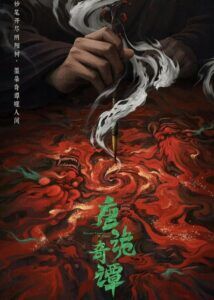



Strange Tales of Tang Dynasty Ⅲ: To Changan Episode 12 Recap
> Strange Tales of Tang Dynasty Ⅲ: To Changan Recap
The Emperor hosted a banquet to reward the Tang Long meritorious officials, tasking Lu Tong with compiling the list of honors. Lu Tong sought out Lu Lingfeng, hoping he would seize this opportunity to regain his position in the Imperial Guards. However, Lu Lingfeng expressed no interest in personal advancement. Instead, he boldly addressed the Emperor, stating that the widespread rumors and public panic in Chang'an threatened the stability of the state.
He passionately urged the Emperor to personally visit Chengfo Temple, believing this action would dispel the rumors of demons and restore peace to the people. Attendant Yang attempted to interject, accusing Lu Lingfeng of outrageous remarks, but the Emperor, recalling their shared youth, dismissed the attendant and allowed Lu Lingfeng to continue.
The Emperor then offered to reinstate Lu Lingfeng to his former Imperial Guard post, but Lu Lingfeng respectfully declined, explaining that his current role as Yongzhou Judicial Official, despite its lower rank, was crucial. He felt that arresting criminals and ensuring the well-being of Chang'an's citizens was a direct way to serve the Emperor and wished to remain in this vital position.
The Emperor, acknowledging Lu Lingfeng's mentor, Master Di, and agreeing that Lu Lingfeng's talents were better suited for his current post, granted his request. The Emperor then announced that he would visit Chengfo Temple in three days. Meanwhile, Su Wuming visited Princess Longyou at her mansion, skillfully persuading her to also visit Chengfo Temple. He explained that although the temple had gained prominence after her invitation to Qin Xiaobai, its current abbot, Guangxiao, was suffering due to the recent scandal.
Su Wuming highlighted the persistent rumors of ghosts in Chang'an, despite official notices, and expressed concern that these tales could plunge the capital into chaos. He suggested that her personal visit to Chengfo Temple to offer incense would instantly dispel the prevailing gloom. When the Princess sought a reason for her visit, dismissing the idea of admiring the controversial "Subjugation of Devils" mural, Su Wuming temporarily faltered.
Princess Longyou then proposed a solution: she would bring the magnificent Seven-Colored Buddhist Robe, personally woven by Empress Wu Zetian and bestowed upon her, to Chengfo Temple for a month. This sacred artifact would be enshrined in the Great Buddha Hall for all devotees to admire, signifying a blessing for the people of Chang'an. She announced she would personally deliver it in three days. Three days later, the Emperor arrived at Chengfo Temple.
Abbot Guangxiao, caught by surprise, quickly welcomed him. Entering the Great Buddha Hall, the Emperor found Princess Longyou kneeling in quiet prayer. Although neither had expected the other's presence, the Princess quickly recovered, expressing her delight at his arrival. She then proudly presented the Seven-Colored Buddhist Robe, explaining its significance as a treasure personally woven by Empress Wu Zetian.
She elaborated on its intricate details, mentioning that it was crafted from seven distinct fabrics sourced from different regions across the land, believed to have gathered the spiritual essence of heaven and earth. Their interaction presented a harmonious picture of aunt and nephew. Du Ming, acting on imperial summons, brought Lu Lingfeng to the palace.
Along the way, he vehemently chastised Lu Lingfeng for failing to notify the Yongzhou Prefecture Office about the Emperor's visit to Chengfo Temple, which left him unprepared to properly welcome His Majesty. Upon their arrival, the Emperor dismissed Du Ming and offered Lu Lingfeng a drink. He then directly questioned Lu Lingfeng about whether the encounter with Princess Longyou at Chengfo Temple was a deliberate arrangement.
Lu Lingfeng denied any such intent, clarifying that the Emperor himself had chosen the date for the incense offering. The Emperor, pleased with Lu Lingfeng's response, revealed his joy, praising the magnificent Seven-Colored Buddhist Robe and expressing how his conversation with his aunt had made him feel like a child again. Concurrently, Princess Longyou, having also questioned Su Wuming about the Emperor's unexpected visit, interpreted it as an attempt at reconciliation from her nephew.
Delighted, she announced her decision to personally dispatch someone to return Empress Wu Zetian's stolen golden tablet to Junji Peak on Mount Song. In the following days, Chengfo Temple saw a surge of devotees eager to behold the Seven-Colored Buddhist Robe. Abbot Guangxiao gratefully welcomed Pei Xijun and Chu Yingtao, crediting them, Lu Lingfeng, and Su Wuming for the temple's renewed glory.
However, Pei Xijun humbly attributed the success to the Emperor, the Princess, and the prosperity of the Tang Empire. Outside the Great Buddha Hall, Pei Xijun and Chu Yingtao noticed a monk who bore a striking resemblance to Qin Xiaobai. Upon inquiry, the monk introduced himself as Kongliao. Chu Yingtao observed that while Qin Xiaobai exuded artistry, Kongliao's face radiated compassion.
Kongliao, who claimed to have walked from the shores of the Eastern Sea, prostrating every three steps for two years and nine months, was drawn to the grandeur of Chang'an and wished to reside at Chengfo Temple, offering to clean the Great Buddha Hall. Pei Xijun and Chu Yingtao facilitated his introduction to Abbot Guangxiao, securing his stay at the temple.
Later, Kongliao was seen sitting alone in the Great Buddha Hall, deeply moved as he gazed at the murals, tears streaming down his face. Later that night, Lu Lingfeng found Pei Xijun still awake, lost in thought. She reflected on the day's encounter with Kongliao, musing that among the countless people in the world, there are often individuals who bear striking resemblances.
Lu Lingfeng, however, expressed his strong disagreement, emphatically stating that no one could ever be like Su Wuming, before launching into a frustrated complaint about his sworn brother. He recalled a recent incident where a hunter claimed to have seen a creature deep in Mount Zhongnan: a colossal beast with a tiger's head, lion's body, deer antlers, goat whiskers, and a segmented tail with three prongs. Pei Xijun immediately recognized the description as Bai Ze.
Du Ming, eager to report this sighting to the Emperor, was met with Lu Lingfeng's staunch opposition. Lu Lingfeng argued that Bai Ze was a mythical creature confined to ancient texts, its appearance in the real world impossible, suggesting the hunter’s account was likely a hallucination induced by fear and mountain mists.
To Lu Lingfeng's dismay, when Du Ming sought Su Wuming's opinion, his sworn brother casually agreed that since someone claimed to have seen it, it was suitable to report. This unexpected endorsement from Su Wuming angered Lu Lingfeng further. Pei Xijun, observing Lu Lingfeng's frustration, gently smiled and explained that Su Wuming was not being muddled but merely "going with the flow."
She pointed out Lu Lingfeng's excessive rigidity, reminding him that while Bai Ze might be a legend, its "appearance" was something the Emperor desired, making his stubbornness unhelpful. She acknowledged his dedication to seeking truth based on evidence but urged him to understand the nuances of officialdom. She stressed that even if Su Wuming had joined him in opposition, it wouldn't have prevented Du Ming from making the report.
Pei Xijun advised Lu Lingfeng to listen more to his sworn brother, Su Wuming, who, as his senior, was always looking out for him. Under her patient guidance, Lu Lingfeng gradually understood and felt his agitation subside. That night, two bandits broke into the Bai Ze Temple, tying up an elderly couple.
To deter them, the old man began telling a chilling tale about a seductive woman who, after feigning being lost, lured a scholar into her home only to reveal herself as a shadowless demon before being killed by him. The bandits, initially annoyed by the ghost story, were unnerved. While one bandit contemplated molesting the old woman, loud growling sounds suddenly echoed from outside.
The old man then revealed their identity: he was the Bai Ze Mountain Hermit, and his wife was A'Zi, both under the protection of the divine beast. He declared that the bandits had angered the divine beast and would be utterly destroyed. Terrified, the bandits attempted to attack the old man, but a mysterious force consumed them, leaving not a trace behind.
Du Ming presented his report to the Emperor regarding the appearance of Bai Ze, clarifying that while it wasn't the first sighting, it was the first detailed account matching the description of the auspicious beast. He further bolstered his claim by stating that Su Wuming, Master Di's erudite disciple, had unequivocally confirmed it to be Bai Ze. Initially, the Emperor expressed skepticism about such a significant claim based solely on a hunter's testimony.
However, reassured by Su Wuming's endorsement and the detailed description, he acknowledged that "Bai Ze has truly appeared in the world." His ministers, seizing the moment, showered him with congratulations, proclaiming the Bai Ze's appearance as an auspicious sign of a virtuous ruler and a harbinger of prosperity for the Tang Dynasty. The Emperor, though delighted, humbly attributed it to the virtues of the Retired Emperor.
He then expressed a desire to personally visit Mount Zhongnan to see the beast, but Lu Tong dissuaded him, citing the mountain's perilous terrain and his own impaired vision preventing him from acting as a substitute. Consequently, the Emperor entrusted the search for Bai Ze to the Yongzhou Prefecture, commanded by Du Ming, and offered immense rewards for its discovery. After receiving the imperial decree, Du Ming immediately summoned Lu Lingfeng and Su Wuming.
He ordered Lu Lingfeng to lead a team into the mountains to search for Bai Ze. Lu Lingfeng flatly refused, citing his ongoing duties with the Mobile Court, which had yet to cover most of Chang'an's districts. Du Ming, however, stressed the Emperor's clear intent and warned that refusal would be defiance of an imperial order, also highlighting the immense reward as an opportunity he had secured for Lu Lingfeng.
Lu Lingfeng, in turn, angrily accused Du Ming of flattery and spouting nonsense. Su Wuming intervened, acknowledging Lu Lingfeng's youth and impulsiveness, and volunteered to go himself. Du Ming initially dismissed Su Wuming, given his lack of official rank, but conceded that the Emperor had allowed Su Wuming to join due to his knowledge, though Lu Lingfeng was still mandated to lead.
Du Ming reminded Lu Lingfeng that Su Wuming had confirmed the Bai Ze sighting, a point Su Wuming attempted to deny. Ultimately, Du Ming reiterated Lu Lingfeng's undeniable duty as Yongzhou Judicial Official and set their departure for the next morning, granting him authority to choose his team but warning of severe consequences should he disobey. That night, Lu Lingfeng, still fuming, refused to dine with the others and vented his frustration by practicing sword in the courtyard.
Pei Xijun found him there and gently persuaded him, acknowledging his integrity but explaining the importance of adapting to circumstances for the greater good of national peace. She also playfully reminded him that this trip could compensate for his recent busyness. Convinced by her words and his team's eager agreement, Lu Lingfeng finally relented. The next morning, Lu Lingfeng, Su Wuming, Pei Xijun, Chu Yingtao, Fei Jishi, and Xue Huan assembled.
Su Wuming quickly highlighted Pei Xijun's artistic skills for documenting the Bai Ze, and Fei Jishi's medical expertise for any mountain perils, while also emphasizing Chu Yingtao and Xue Huan's martial prowess. Du Ming, impressed by the formidable team assembled overnight, expressed his confidence and remained at the Yongzhou Prefecture. He then introduced Ling Ji, the hunter who first spotted the Bai Ze, as their guide, due to his extensive knowledge of Mount Zhongnan's terrain. With all arrangements made, the team departed for the mountains.