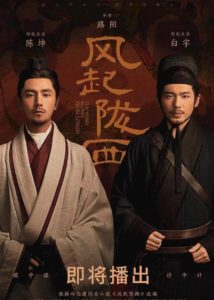



Resumo do episódio 39 de Swords into Plowshares
> Resumos de Swords into Plowshares
In front of the mourning hall, Lady Fu read the imperial edict, ordering Zongxun to inherit the throne. However, before Guo Rong's funeral was over, an urgent report arrived from the front line: the Liao state and Northern Han allied forces were marching south, and the three passes of Waqiao, Yijin, and Yukou were in critical danger. Zhao Kuangyin ordered the three armies to rush to the front.
Before the dust could be brushed off their armor, an even more breathtaking "persuasion to ascend the throne" was brewing at Chenqiao Post. The so-called Liao state's troop deployment was a ruse; the truth was that Zhao Pu and the righteous brotherhood were secretly plotting a military coup. They cited the suffering of the common people and the lack of a ruler for the nation as reasons, earnestly requesting Zhao Kuangyin to ascend the throne as emperor.
Past events flooded into Zhao Kuangyin's dreams: Feng Dao's question, Shi Chonggui's words, and Guo Rong's wish, all led him to decide to take responsibility for the realm. He made a three-point agreement with everyone: upon entering the city, do not disturb the palaces, do not plunder the common people, and do not kill indiscriminately.
His ascension was not for the prosperity of the Zhao family, but to ensure that the people of the world would no longer suffer from war and chaos. In the first month of 960 AD, Zhao Kuangyin led his army back to Bianliang, ascended the throne as emperor, and named his dynasty Song. Historical records often state that the "Chenqiao Mutiny and the donning of the yellow robe" seemed to be the will of Heaven.
However, a closer look reveals that his generals knocked on his tent in the early morning and draped the ochre-yellow robe, symbolizing imperial power, over their commander. This "forced" ascension to the throne was, in fact, a standard pattern for unifying monarchs during the Five Dynasties period. Soon, the news quickly reached the Wuyue royal palace. Qian Hongchu knew that Zhao Kuangyin had always been highly regarded by Guo Rong for his loyalty, integrity, and bravery.
He had not expected that Guo Rong, in his dying moments, would entrust the regency to a usurper, making it difficult for him to accept in his heart. Because avoiding taboos was a major aspect of the central court's rites and laws, and there was a character "Hong" (弘) in the name of the Son of Heaven's father, Zhao Hongyin, although it did not directly clash, with the new dynasty established, the character "Hong" also needed to be carefully avoided.
Therefore, Qian Hongchu publicly announced that he would voluntarily drop "Hong" and be called "Chu," changing his name to "Qian Chu." Cui Renji reported to Qian Chu that Gao Jichong of Jingnan and Zhou Baoquan of Hunan had both submitted their territories to the Song, and Li Yu of Southern Tang was also frequently showing goodwill.
To preserve the foundation of Wuyue, his officials advised him to submit as a vassal as soon as possible, but Qian Chu made no statement. Shen Yin then asked Empress Sun Taizhen for assistance. That night, Sun Taizhen sat with Qian Chu on the palace ridge, chatting and reminiscing about the past while pointing towards Bianjing. Under Sun Taizhen's patient guidance, Qian Chu finally drafted a memorial to declare himself a vassal and dispatched envoys to Bianjing for tribute.
In the same year, Song general Li Chongjin raised an army in Yangzhou in rebellion, refusing to acknowledge Zhao Kuangyin's claim as the Son of Heaven. Zhao Kuangyin personally led an expedition and ordered Qian Chu to dispatch troops to Runzhou to provide support, inviting him to a boat trip on the lake to show intimacy. Although Qian Chu deployed troops in response, he did not personally go to the front, only sending generals to assist in the battle.
This action drew some criticism in the Song court, but Zhao Kuangyin showed trust in Qian Chu. Not long after, the deposed King Qian Zong was critically ill. Qian Chu came to visit him, adopted his eldest son Qian Weizhi as his heir, and Qian Zong passed away with a smile.
Thereafter, Qian Chu appointed Qian Weizhi as the commander of the Imperial Guard (Neiya Zhujun Duduhuishi) and introduced him to his eldest daughter Qian Ying and his legitimate son Qian Weijun. Qian Weizhi was intelligent from a young age and had already prepared gifts. Sun Taizhen felt pity for him, and Qian Chu assured her that he would treat him kindly.
In the winter of 964 AD, Zhao Kuangyin, citing the Later Shu's collusion with Northern Han and their conspiracy to invade, dispatched an army of 60,000, divided into two routes, to attack Shu. The Later Shu army's defenses instantly collapsed, and by the first month of the following year, Meng Chang, the ruler of Later Shu, surrendered. However, after Wang Quanbin captured Shu city, he astonishingly ordered the massacre of nearly 30,000 surrendered soldiers.
Such appalling atrocities instantly turned the hearts of the Shu people against them, triggering widespread uprisings and mutinies, and casting a complete shadow over the Song Dynasty's great endeavor of unification. As soon as the news spread, the states south of the Yangtze River were shocked, having originally believed the Song army to be a "righteous army," but unexpectedly, their wolf-like nature remained unchanged.
Zhao Kuangyin was furious upon hearing the report and immediately stripped Wang Quanbin of his military command, reassigning Cao Bin and others to take charge of military affairs. Following this incident, Zhao Kuangyin realized that the usurpation of power by military commanders and the arrogance of soldiers and generals were the root causes of the chaos during the Five Dynasties.
He then consulted with Zhao Pu, Zhao Kuangyi, and others, deciding to implement two major national policies: first, "curtailing regional powers," gradually centralizing the authority of the jiedushi (military governors); second, "promoting civilian governance," opening imperial examinations to recruit scholars and widely admitting talented individuals from humble backgrounds, using the imperial examination system to balance the power of military generals. One day, Zhao Kuangyin, in disguise, went to Fanlou in Bianjing to secretly observe the demeanor of the examination candidates.
During this time, a failed imperial examination candidate named Sima Pu was ridiculed by others. However, his desire to emulate Feng Dao in seeking welfare for the people caught Zhao Kuangyin's attention.