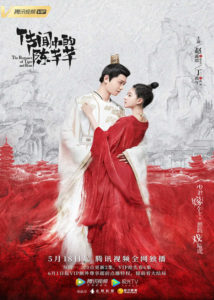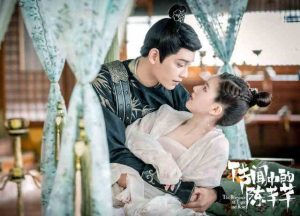



Resumo do episódio 38 de Who Rules The World
> Resumos de Who Rules The World
Bai Fengxi bravely fought against the Youzhou army for an entire day and night in the Wuhui Valley. Just as her forces dwindled and exhaustion set in, Feng Lanxi arrived with his elite Moyu Cavalry. Witnessing the sudden shift in momentum and the weariness of his own troops, Yu Wuyuan advised Huang Chao that their remaining soldiers stood no chance against the fresh Moyu Cavalry and suggested a strategic retreat to plan their next move.
Huang Chao, heeding the advice, ordered his army to withdraw. Upon seeing Bai Fengxi’s injuries, Feng Lanxi declared he would make them pay the price and charged towards Huang Chao and Yu Wuyuan, ordering his aides, Chuanyun and Chuanyu, to protect Bai Fengxi. During his confrontation with Yu Wuyuan, Feng Lanxi was astonished to find Yu Wuyuan also possessed the Lan Yin Bi Yue technique. Yu Wuyuan, realizing he was outmatched, quickly retreated.
Huang Chao was greatly surprised, acknowledging that he had underestimated Feng Lanxi, particularly how he had managed to raise such a powerful and covert force so swiftly. Later, discussing their strategy, Yu Wuyuan explained to Huang Chao that with Qingzhou and Yongzhou now forming a pincer attack, their position was disadvantageous. He firmly stated that Wuhui Valley was not the place for a decisive battle, especially with news arriving that Shangzhou had captured four cities in Qiyun.
He warned that a prolonged battle would severely deplete their vitality, leaving them vulnerable to the Lords of Shangzhou and Beizhou, who would seize the opportunity to strengthen their positions by conquering Qiyun. Yu Wuyuan argued that even a victory in Wuhui Valley wouldn't guarantee control over Qingzhou and Yongzhou, making a temporary truce the most prudent course of action. Huang Chao agreed with his assessment. Meanwhile, Feng Lanxi questioned Bai Fengxi why she hadn't retreated when outnumbered.
Bai Fengxi explained that a retreat would have severely damaged morale and made a counter-attack difficult due to their unfavorable geographical position, adding that she had trusted Feng Lanxi would arrive in time. Feng Lanxi then revealed Yu Wuyuan's use of Lan Yin Bi Yue, which led Bai Fengxi to suspect that Yu Wuyuan was behind the unrest in Yongzhou and the Soultaker Sect, and had been the one who attacked Feng Lanxi in the alley.
She noted the many secrets surrounding the Empyrean Yu family, including the jade pendant and Lan Yin Bi Yue. Feng Lanxi believed Huang Chao was unaware of Yu Wuyuan's true identity, concluding that Yu Wuyuan had been manipulating everyone. He also mentioned that Shangzhou had captured four cities in Qiyun, and the Lord of Beizhou was moving south, implying Huang Chao would likely seek a truce rather than continue fighting Qingzhou.
Soon after, a messenger arrived with a truce proposal from the Lord of Youzhou. Bai Fengxi observed that the proposal, coming amidst widespread opportunistic attacks from other states, was likely a temporary measure to buy time. She voiced her deep concern about Yu Wuyuan, whose public image of benevolence starkly contrasted with his secret schemes, fearing his ability to sway the course of the war.
Feng Lanxi, acknowledging the lingering mysteries of the Empyrean Yu family and the many uncertainties ahead, reassured her that he would always be by her side. He then decided it was time to return to Yongzhou to formally propose their marriage to his father. Bai Fengxi playfully questioned his certainty, to which Feng Lanxi responded that her own trust had given him confidence.
He promised that upon her arrival in Yongzhou, she would be greeted by a "ten li of floral sea." Upon his return to Yongzhou, Feng Lanxi informed his father of his intention to marry Bai Fengxi, who was also the Queen of Qingzhou, Feng Xiyun. The Lord of Yongzhou was quite surprised to learn that the renowned Bai Fengxi was the Qingzhou Princess.
He gave his approval for the alliance but raised concerns about the protocols of such a royal marriage, particularly regarding status. Feng Lanxi clarified that while the alliance was for national strategy, their marriage was a matter of love. The Lord of Yongzhou, however, worried that Feng Lanxi, as a mere Heir, would not be a suitable match for a Queen and that such a pairing would bring dishonor to Yongzhou.
Feng Lanxi insisted that neither he nor Bai Fengxi were concerned with social status. To ensure the marriage was truly a suitable match, the Lord of Yongzhou declared that Feng Lanxi's wedding day would simultaneously mark his own abdication and Feng Lanxi's ascension as the new Lord of Yongzhou.
He expressed that it was time for him to retire, having seen Feng Lanxi's talent, the strength of the Moyu Cavalry, and his growing political support, concluding that the world truly belongs to the young. Feng Lanxi thanked his father, pledging to make Yongzhou prosperous. The old king, reflecting on the loneliness of the throne, felt a sense of relief after making his decision.
One year later, in the Qingzhou ancestral temple, Bai Fengxi spoke to the memorial tablets of her parents, updating them on the past year's events. She proudly reported that Qingzhou, despite battle losses, had not surrendered any land, and Licheng was being rebuilt. She expressed confidence that she had not disappointed them and then announced her impending marriage to a loving man who cherished her above all else.
Shortly after, Feng Qiwu arrived as Yongzhou's envoy to formally propose marriage between Feng Lanxi and Bai Fengxi. Qingzhou ministers immediately objected, arguing that Feng Lanxi, as only an Heir, was not worthy of their Queen. Bai Fengxi, who had prepared for such a diplomatic maneuver, smiled subtly, recalling her instructions for her story with Feng Lanxi to be widely circulated and for her ministers to be briefed.
Feng Qiwu then relayed the Lord of Yongzhou's promise to abdicate and enthrone Feng Lanxi upon the marriage. While this appeased some ministers, others demanded further assurances. Feng Qiwu then conveyed Feng Lanxi's commitment to eternal friendship between Qingzhou and Yongzhou and a willingness to share governance, establishing both the Lord of Yongzhou and the Queen of Qingzhou as "two rulers" with equal authority over both regions.
She also presented a lavish array of betrothal gifts being inventoried by the Court of State Ceremonial. Satisfied by these terms, Bai Fengxi accepted the proposal, proclaiming it a blessing to their subjects, and announced the alliance to the world. The grand wedding ceremony soon took place in the Yongzhou royal palace. As promised, Feng Lanxi had adorned the city with a "ten li of floral sea" to welcome Bai Fengxi.
Feng Lanxi gently led Bai Fengxi, dressed in her exquisite wedding gown, into the main hall. Before the Lord of Yongzhou and numerous officials, they performed the traditional rituals: bowing to Heaven and Earth, to their parents, and to each other. Following the ceremony, the Lord of Yongzhou gifted them a pair of "twin pearls," symbolizing their union and wishing them mutual support, enduring love, and a long life together, as well as a lasting friendship between Yongzhou and Qingzhou.
He then formally announced his abdication, transferring the title of Lord of Yongzhou to Feng Lanxi, and urged him to ensure the continued prosperity of Yongzhou. That night, in the bridal chamber, Feng Lanxi poured two cups of Lanruo liquor. After they drank in the traditional crossed-arm fashion, Feng Lanxi gazed at Bai Fengxi and declared his wish to be "drunk together" with her for the rest of their lives.
Bai Fengxi, her eyes filled with emotion, responded poetically that if his heart was like hers, her love would not be in vain. They shared an intimate moment. Five years later, the continent remained ravaged by war, and its people suffered greatly. Emperor Jing Yan, after much contemplation, declared his intention to remain in the Imperial City with the Empyrean Token, awaiting a truly wise ruler. Feng Lanxi and Bai Fengxi discussed the current geopolitical landscape.
Northzhou had surrendered, effectively dividing the world into two major powers: Yongzhou and Jizhou, creating a fragile peace. Bai Fengxi noted Jing Yan's summons, correctly surmising that Feng Lanxi's next move would be to lead his army into the imperial domain. She recounted how Jizhou had surrounded Shangzhou's capital days prior, resulting in the Lord of Shangzhou surrendering the Xuanshu Token to Huang Chao, and concluded that Huang Chao would likely also head to the Imperial City soon.
Feng Lanxi confirmed that a confrontation with Huang Chao was inevitable. He suspected Jing Yan’s strategy was to prolong his rule by allowing Yongzhou and Jizhou to weaken each other. However, Feng Lanxi saw this as an opportunity to secure the abdication edict, believing that only by claiming the throne legitimately could he truly unite the world, reduce conflict, and establish a rightful succession.
He acknowledged Huang Chao as a powerful and wise adversary, who, despite his ambition, was respected by his people for conquering Shangzhou without harming innocents. Feng Lanxi defined his struggle with Huang Chao as a "battle of kingcraft," with the ultimate goal of prioritizing the safety of the people. His foremost concern remained Yu Wuyuan, who had vanished after the battle in Wuhui Valley.
While the public believed Yu Wuyuan had retired to avoid further bloodshed, Feng Lanxi was certain he had another agenda and expected him to reemerge as the war approached its conclusion. Meanwhile, Han Pu, now a supervisor of the Fengyun Cavalry and known as General Han, visited Feng Lanxi and Bai Fengxi to deliver military dispatches. He expressed a sense of being outpaced by Feng Lanxi's intelligence network.
Feng Lanxi reassured him, stating that Yongzhou and Qingzhou were now one family and there was no need for rivalry, acknowledging Han Pu’s new rank. Bai Fengxi, however, hoped that Han Pu would never have to see real battle. Feng Lanxi then invited Han Pu to the training ground to boost morale as the final battle loomed. In Jizhou, Huang Chao received the military report about Northzhou's surrender, recognizing Feng Lanxi's impending move toward the Imperial City.
He understood that whoever obtained the abdication edict first would gain popular legitimacy. He immediately ordered his forces to integrate and mobilize, aiming to reach the Imperial City before Feng Lanxi. He emphasized the importance of high morale, strict military discipline, and ensuring soldiers received their full pay, vowing to severely punish anyone caught embezzling. He declared that his army fought for the world and would not hurt the innocent.
Shortly after, his wife and sister, Princess Huang Yu, requested an audience. His wife offered him nourishing soup, expressing concern for his health. Princess Huang Yu, however, was preoccupied with Yu Wuyuan's disappearance. She explained that she planned to visit Qionglin Park in the Imperial City during the upcoming Qingming festival, hoping to find him there, believing he might be avoiding witnessing more bloodshed. Huang Chao reluctantly granted her permission, cautioning her to be careful.
He also asked her to convey a message to Yu Wuyuan: that he had never forgotten his promise to him. In the Imperial City, Emperor Jing Yan was engrossed in painting, admiring his own imitation of the "Moonlit Flower" by the Gentry of Moonlight, yet admitting he could not match the original. General Dong Shufang urged Jing Yan to prioritize national affairs, highlighting the perilous situation with Jizhou controlling Youzhou and Shangzhou, and Yongzhou controlling Qingzhou and Beizhou.
Jing Yan deflected, suggesting Dong Shufang discuss military matters with Yu Wuyuan. Dong Shufang openly criticized Yu Wuyuan's strategy, which, he claimed, was designed to make Yongzhou and Jizhou fight each other while the Imperial court reaps the benefit. He voiced his frustration at Yu Wuyuan's repeated refusal to dispatch Imperial troops, implying Yu Wuyuan had ulterior motives, especially given the Imperial City's comparatively small army.
Yu Wuyuan then arrived and calmly explained that his strategy of waiting was because the timing was not right, reiterating his belief that the two rival powers would weaken each other, creating the best timing for the Imperial court to step in. Jing Yan, declaring himself tired, left the two men to continue their discussion. Yu Wuyuan then dismissed the General.