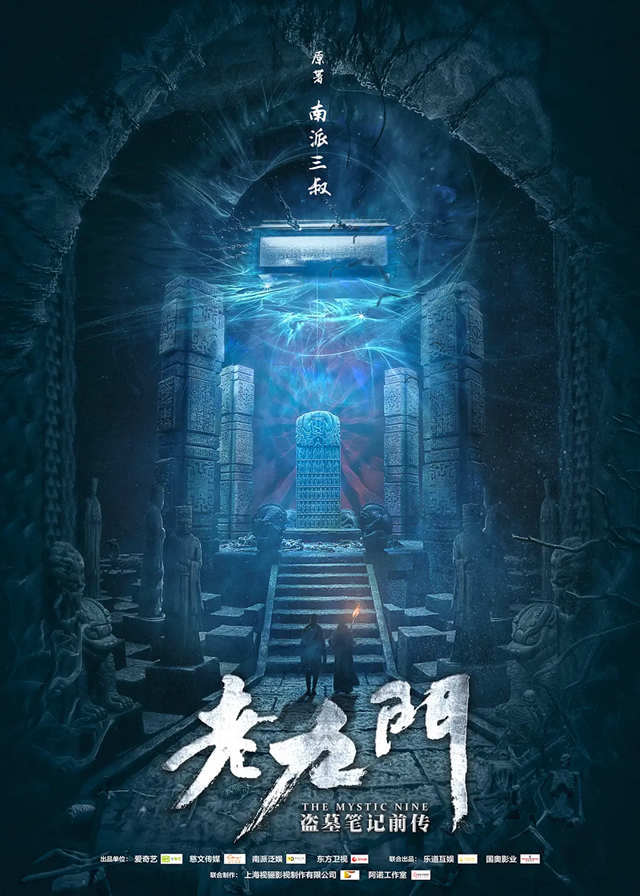



The Mystic Nine Episode 21 Recap
> The Mystic Nine Recap
Lu Jianxun unexpectedly arrived at Tongtai Wharf to find Chen Pi after Chen Pi had eliminated the Fourth Master. Chen Pi immediately sensed Lu Jianxun’s malicious intentions but listened as Lu Jianxun proposed a partnership to eliminate Zhang Qishan. Chen Pi then gave Lu Jianxun some courtesy. One of Lu Jianxun’s subordinates spoke disrespectfully, provoking Chen Pi, who skillfully launched a metal marble by hand, knocking off the subordinate's hat.
Lu Jianxun, impressed by the speed and power of the metal marble, which rivaled a gun’s bullet, humbly acknowledged Chen Pi’s prowess. He then decided it was inconvenient to cause further trouble on Chen Pi's territory and departed. After Lu Jianxun left, he complained to his subordinate about Chen Pi's arrogance, noting Chen Pi’s movements were swift. He confirmed that Chen Pi was indeed the one who killed Fourth Master.
Lu Jianxun reasoned that Chen Pi, having betrayed his own master Er Yuehong, could not be truly loyal to him. However, their shared animosity towards Zhang Qishan meant Chen Pi would have to follow his orders. Lu Jianxun also observed that Chen Pi, despite his ruthlessness, had shown restraint by only targeting the subordinate's hat, not his head, a calculated move perhaps influenced by his desire for revenge for his deceased master's wife.
Lu Jianxun considered Chen Pi a mere hooligan and instructed his men to intensify their gun training, aiming to surpass Chen Pi’s speed with metal marbles. Meanwhile, Chen Pi confronted his own subordinate for allowing Lu Jianxun such easy access, stating he knew Lu Jianxun had intended to kill him.
Chen Pi reiterated his plan to leverage Lu Jianxun against Zhang Qishan, but ultimately intended to deal with Lu Jianxun once Zhang Qishan was out of the way, driven by his long-standing desire to avenge his master's wife. Zhang Qishan and his team continued their descent into the tomb, eventually reaching a chamber filled with numerous, haphazardly placed coffins. Qi Tiezui wondered aloud about the unusual number of coffins.
Zhang Qishan deduced that these coffins were not originally from this site but had been excavated and temporarily stored by the Japanese. Er Yuehong noted that such a large-scale, unorganized mass burial was extremely rare and, observing the surrounding soil, suggested a past cave-in. Despite reaching an apparent dead end, Zhang Qishan decided to press further. His men reported that several potential exits were found but had been blown up and sealed.
Zhang Qishan realized that traps had been triggered, collapsing all the openings. Undeterred, he ordered his men to dig a new path, emphasizing the importance of utilizing their ancestral skills. Qi Tiezui expressed concern about ancestral maps marking such areas as "slim chances of surviving," but Zhang Qishan insisted they could not give up. After some digging, they successfully uncovered another passage.
As they ventured deeper, they encountered numerous booby traps designed to appear supernatural, causing panic among Zhang Qishan’s soldiers. Zhang Qishan, however, remained calm. He adeptly neutralized the traps and reassured his men, maintaining morale. Suddenly, a familiar opera tune, one often sung by Er Yuehong, echoed through the chamber, unsettling them. Er Yuehong suggested they climb to the ceiling, putting down their lanterns, to draw out the source of the sound. Soon, a shadowy figure floated past.
Zhang Qishan waited, then moved to investigate. A terrifying figure lunged out, prompting Zhang Qishan to immediately attack it. Er Yuehong, however, quickly intervened, realizing it was a disoriented old man and not a monster, stopping Zhang Qishan from further harm. The team, initially frightened, then realized the man was both deaf and blind.
Zhang Qishan observed that the old man seemed intimately familiar with the surroundings, being able to lead them from the mine and find his own bed, leading Zhang Qishan to believe he was not truly delirious, but rather severely traumatized. Qi Tiezui noticed the bells on the old man's uniform and deduced he was a former miner, whose eyes were likely blinded by the Japanese who once operated the mine.
The old man began to sing a fragment of an opera, a tune that Er Yuehong recognized as belonging to his own family's repertoire. Deeply moved, Er Yuehong questioned how the old man knew the song and revealed that his ancestors had also ventured into this place, none of whom had survived, and he was desperate to understand their fate. Qi Tiezui suggested the old man was likely delirious from years of isolation in the dark, cramped mine.
He then advised Er Yuehong to sing along with the old man, believing the opera tune held significant meaning for him. Er Yuehong followed the advice, singing the next line of the opera, to which the old man surprisingly responded, mumbling "three meters," which Qi Tiezui interpreted as a reference to digging.
Zhang Qishan further noticed that the bed the old man was sitting on had the number 39 carved into it, matching a number on the old man's uniform, leading him to conclude that many miners had once lived there. Qi Tiezui, in turn, joked that Zhang Qishan's initial beating was likely the cause of the old man's trauma. Feeling a profound connection to the old man, Er Yuehong expressed his desire to learn more from him.
Qi Tiezui encouraged Er Yuehong to continue building rapport, hoping the old man could guide them further, which would save them considerable trouble. Zhang Qishan decided they should rest there for the night. Qi Tiezui wondered how the old man survived so many years in the mine. Zhang Qishan, offering some of their best provisions to the old man, admitted it must have been an incredibly difficult existence.
Qi Tiezui then asked Zhang Qishan why the Japanese would blind the miners, speculating it might be connected to the hair-like creatures that had previously attacked them, and reiterated his feeling that the place was ominous. Er Yuehong, inspecting his surroundings, discovered his family's emblem carved into one of the beds, confirming that one of his ancestors had indeed ventured into the mine to investigate.
He pondered what crucial secret in the mine could have compelled his ancestor to undertake such a perilous endeavor. Suddenly, a series of bells rang, and a sound indicated something was approaching them. Qi Tiezui grew fearful. As Zhang Qishan prepared to lead his team to confront whatever was coming, the old man, roused from his sleep, urged everyone to stay put, assuring them that remaining inside was the safest option, as "mine things" could not enter.
Grateful for the warning, Zhang Qishan sat down with the old man to converse. He confirmed that they were indeed from The Mystic Nine Families of Changsha. Er Yuehong then explained that the emblem on the bed was his family's, confirming the ancestor was his. The old man asked why Er Yuehong had only come now. Er Yuehong humbly admitted his limited knowledge of his ancestors' affairs and apologized.
The old man hinted that the past events were too terrifying, perhaps deliberately withheld by Er Yuehong's ancestors. Zhang Qishan interjected, explaining the critical importance of understanding the past for the safety of Changsha and to uncover the Japanese conspiracy. Er Yuehong supported Zhang Qishan, citing a sense of ancestral will, and urged the old man to disclose the truth. Seeing their sincere determination, the old man began to recount his past.
He was fifteen years old, impoverished, and working in the mine when a supervisor began whipping him. Er Yuehong's maternal great-uncle intervened and saved him by suggesting to the supervisor that using explosives could accelerate their work, despite the Japanese prohibition against it, arguing that failure to meet deadlines would result in everyone's death. It was then that the old man learned to sing opera from Er Yuehong's maternal great-uncle.
Later that night, Er Yuehong's maternal great-uncle told the old man that this would be the last time he would save him, instructing him that once he escaped, he was to deliver a message to The Mystic Nine in Changsha, saying simply "he has left." The old man, now recounting the memory, realized that Er Yuehong's maternal great-uncle had spoken with a resolve to die, intending to perish with the Japanese.
Zhang Qishan understood that such a desperate act implied the Japanese had discovered something so significant in the burial chamber that Er Yuehong’s maternal great-uncle felt compelled to stop them at all costs.